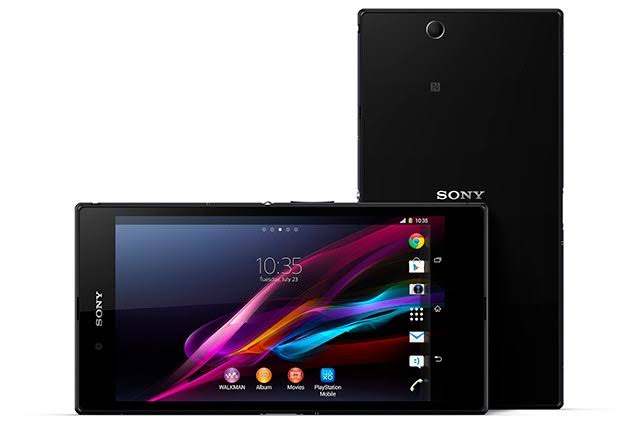
The Sony Xperia Z Ultra topped every benchmark I threw at it this summer, the 6.4-inch slab nobody asked for and I could not put down, and the reason was the chip inside: the Snapdragon 800. It is in the Z Ultra, it is in LG’s G2, it is in the Galaxy Note 3 that landed last week, and a Nexus is clearly next. For the first time in a while, the most interesting Android phones of the season all run the exact same silicon, and that silicon is Qualcomm’s.
Start with the name, because Qualcomm blew up its own naming this year, and it was overdue. At CES in January the company retired the S1-through-S4 ladder and replaced it with a clean four-tier scheme: 200 for entry, 400 for mid, 600 for the upper-middle, 800 for the flagship. It reads like Intel’s i3/i5/i7 borrowing, and that is the point. Normal people were never going to parse “S4 Pro APQ8064 versus S4 Plus MSM8960.” A 200/400/600/800 ladder, anybody can rank at a glance. The 600 already did the heavy lifting earlier this year as the step up from the old S4 Pro. The 800 is the part that resets the ceiling.
The chip itself is the MSM8974, a quad-core Krait 400 running up to 2.3 GHz, an Adreno 330 GPU, a 28nm high-performance process from TSMC, dual-channel LPDDR3, a 600 MHz Hexagon DSP, and an integrated Category 4 LTE modem. Qualcomm claims 75% more performance than the old S4 Pro, and in practice, it clears that bar comfortably. The Adreno 330 is the part I keep poking at, because it finally pushed Snapdragon’s GPU past Apple’s A6X in my graphics tests, which is not something I have been able to say before. And the 800 is the first mobile chip that can both shoot and play back 4K video at 30 frames a second, which sounds like a gimmick until you watch the file it produces.
Qualcomm is not running unopposed. Nvidia’s Tegra 4 is a quad Cortex-A15 design with serious GPU ambitions, and Samsung’s Exynos 5 Octa is doing its eight-core big.LITTLE thing, with the Note 3 sold in both Snapdragon and Exynos flavors depending on where you buy it (Happy I got the Snapdragon variant). I am not going down the regional-variant rabbit hole here; it is a mess of LTE bands and HMP scheduling that deserves its own headache. In real use the Snapdragon 800 has the edge that matters: it is fast, it has the modem nobody else integrates this well, and it has the design wins. When LG, Sony, Samsung, and Google all reach for the same chip in the same six months, the argument is effectively over for this generation.
And then, ten days ago, Apple changed the question. The iPhone 5s shipped with the A7, and the A7 is 64-bit, built on Samsung’s 28nm line. Not faster in a way most apps can use yet, but architecturally a generation ahead, because every Krait core Qualcomm ships, the 800 included, is 32-bit. Qualcomm’s public response has been some version of “64-bit is a marketing checkbox in a phone,” and on today’s workloads that is even mostly true. It is also exactly what a company says when a competitor just jumped a fence it has not figured out how to climb. The 800 is the best Android chip you can buy right now and it is not close. The interesting story is what Qualcomm does next year, because Apple just set the homework.