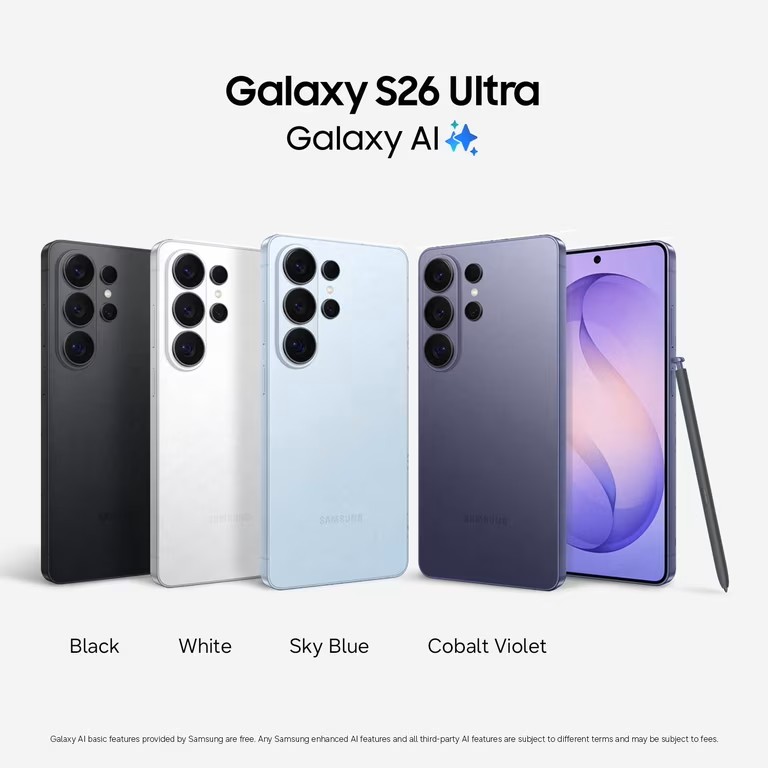
Samsung’s Galaxy Unpacked 2026 in San Francisco delivered the Galaxy S26 Ultra, powered by the Snapdragon 8 Elite Gen 5 For Galaxy, with pricing held steady at $1,299. In a year when rivals are hiking prices, Samsung’s discipline sends a clear signal. The full lineup (S26, S26+, and S26 Ultra at $799, $999, and $1,299) continues the pricing strategy that made the Galaxy S25 Ultra such a strong seller, highlighting Samsung’s tactical approach in a competitive landscape.
The pricing strategy reflects Samsung’s confidence in its competitive position and understanding of market dynamics. With Apple’s iPhone 18 lineup expected to see modest price increases, signaling its own market response, and Chinese manufacturers like OnePlus and Xiaomi aggressively pushing into premium segments, it becomes clear that Samsung is keenly aware of the need for value. By holding the line on prices while delivering meaningful hardware and software improvements, Samsung aims to capture market share from consumers who may feel priced out of more expensive flagships. This approach is not merely a tactic; it’s part of a broader vision to maintain Samsung’s premium brand positioning while reaching a wider audience.
The S26 series represents Samsung’s most refined flagship generation yet, incorporating years of iterative improvements across displays, cameras, battery technology, and software integration. The enhancements highlight how Samsung continually innovates while ensuring its devices meet the evolving needs of its user base. Features that address consumer desires for better camera systems, longer battery life, and greater integration with everyday technology are at the forefront of the company’s strategy.
Charging gets a major upgrade, a long-standing point of contention in consumer conversations. The S26 and S26+ jump to 45W, while the Galaxy S26 Ultra leaps to 60W wired charging, plus Qi2.2 magnetic wireless charging across the entire lineup. This shift not only showcases Samsung’s commitment to technological advancement but also addresses long-standing criticisms regarding charging speed. Competitors like OnePlus and Xiaomi have offered 80W+ charging for years, putting pressure on Samsung to enhance its offerings. While 60W remains slower than some rivals, it represents significant progress, charging the S26 Ultra’s large battery to 80% in approximately 35 minutes, signaling a step forward in consumer convenience and usability.
The new M14 OLED display is a highlight of the S26 series, delivering over 3,000-nit peak brightness and debuting Privacy Display, a feature that automatically narrows viewing angles for sensitive apps, making it a protective tech advancement for personal data privacy. The M14 OLED display represents Samsung Display’s latest manufacturing breakthrough, delivering unprecedented brightness levels that make the screen usable even in direct sunlight while maintaining color accuracy and power efficiency. Privacy Display utilizes liquid crystal layers that dynamically adjust viewing angles based on whether sensitive content is displayed—for instance, when accessing financial apps, medical information, or password fields. This triggers narrower viewing cones to prevent shoulder surfing in public spaces, showcasing Samsung’s innovation in user experience and security technology.
In terms of software, Galaxy AI 3.0 integrates third-party agents, including Perplexity, enabling “Hey Plex” voice commands alongside the traditional Bixby interface. This integration demonstrates Samsung’s understanding that users appreciate having choices and specialized capabilities from different AI providers rather than being locked into a single assistant. Seven years of OS and security updates ship across all models in the S26 lineup, positioning the Galaxy S26 Ultra as the Android flagship to beat in 2026. The seven-year support commitment matches Google’s Pixel guarantee and extends two years beyond Apple’s typical iOS support window, thereby addressing enterprise customers’ device lifecycle requirements.
For a different Samsung form factor, the Galaxy Z TriFold stunned attendees at CES just weeks earlier. Samsung’s ability to deliver both conventional and foldable flagships showcases the company’s manufacturing depth and willingness to experiment with various form factors while maintaining mainstream appeal with traditional designs. The S26 Ultra targets the broadest possible audience with proven form factors and refinement, while innovative devices like the TriFold explore future possibilities and generate brand excitement. This dual approach underlines Samsung’s strategic vision: to lead the market by offering cutting-edge technology while fostering consumer engagement and excitement around new device formats and innovations. In doing so, Samsung not only enhances its portfolio but also reinforces its position as a leader in the smartphone industry.
Source: Samsung Newsroom
Related reading: how the same Snapdragon flows into Xiaomi’s flagships via the Qualcomm deal.
// THREAD · 3 REPLIES