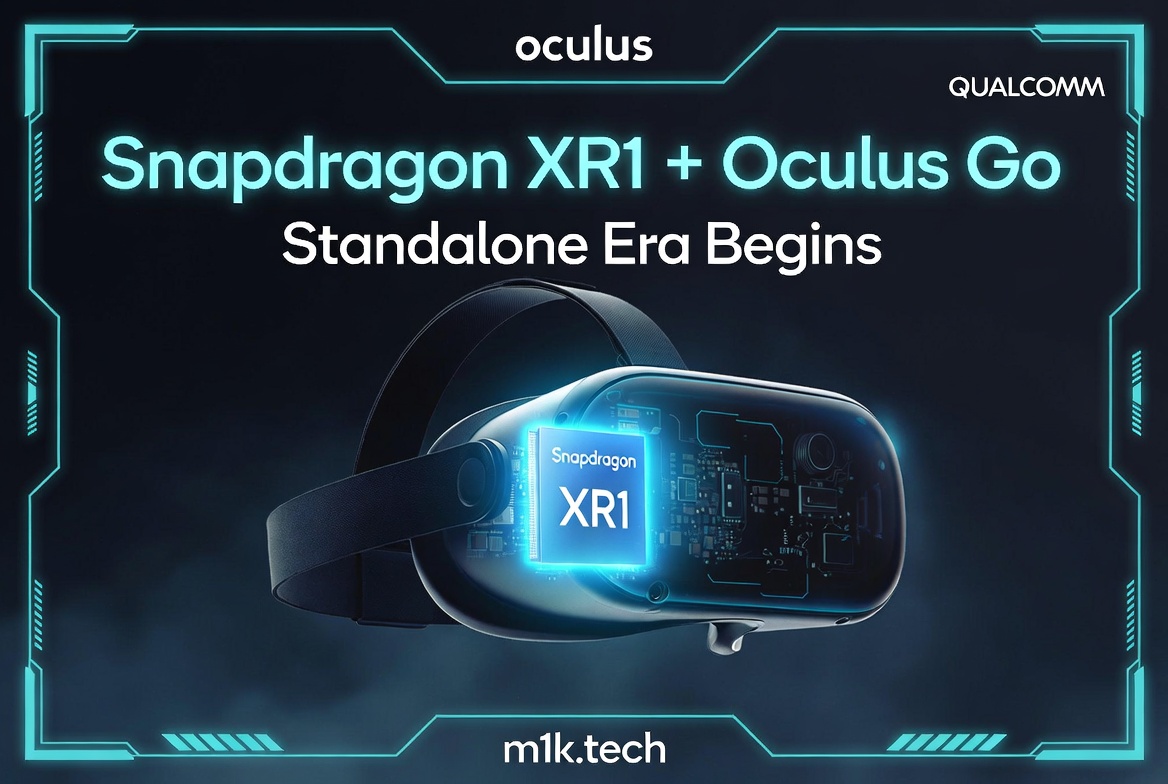
Qualcomm just did the thing I have been waiting for: a chip built specifically for XR. The Snapdragon XR1, announced at the Snapdragon Technology Summit, is the first dedicated extended reality platform, designed from the ground up for the power, thermal, and display demands of a headset rather than repurposing a phone chip. Snapdragon Insider bias declared, because this matters: a purpose-built chip is the signal that XR is a legitimate product line, not a side project.

The Oculus Go makes standalone real
Facebook’s Oculus Go shipped earlier this month at $199, and it is the first VR headset that works completely on its own: no phone, no PC, no cables. It runs on a Snapdragon 821, not the XR1, which will power the next wave. The experience is 3DoF, meaning you can look around but not walk around, which is a genuine limitation. It is also $199 and works the moment you switch it on. The standalone era just started.
The trend for the year ahead
Standalone is the direction, and Qualcomm putting a dedicated XR platform on the roadmap confirms it. Expect the next standalone headsets to use purpose-built silicon and deliver full 6DoF tracking: both position and movement, not just looking around. That is the step that turns standalone from interesting to transformative.
The Go proves standalone works. The XR1 tells you where this goes next. The cable was always the thing keeping VR from normal people, and Qualcomm is building the chip that cuts it permanently.
Part of Two Decades of XR, my running diary of virtual, augmented, and mixed reality.