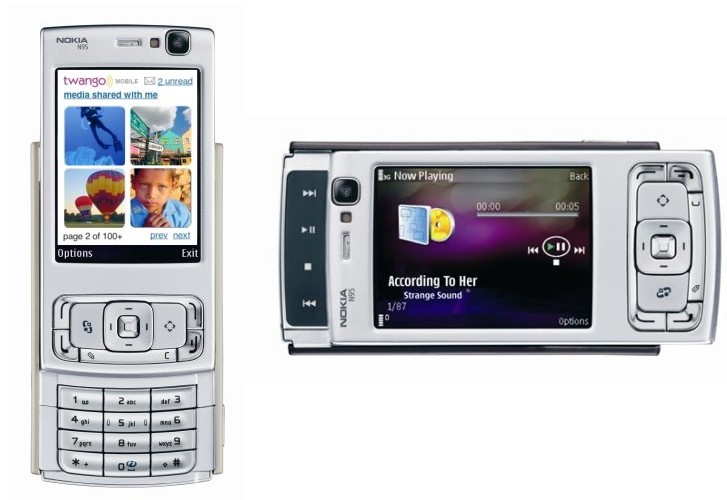
There is a satellite receiver in this telephone. Not a cell-tower triangulation trick that puts you somewhere on the right road, an actual GPS chip that talks to actual satellites, in a thing you were already carrying. Six months after Nokia stood up in Amsterdam and described the N95, it is finally on sale, and that one component is the part I keep pointing at when people ask me what the fuss is.
The rest of the list is close to absurd. Five megapixels behind a Carl Zeiss lens with autofocus. Wi-Fi. HSDPA. A screen that slides two ways, up for the keypad and down for a set of media keys, which is the kind of mechanical over-engineering Nokia does when it is feeling confident. TV output. Symbian underneath. Somewhere around five hundred and fifty euros before an operator takes the edge off, which is a startling number to say out loud about a phone.
Nokia is not calling it a phone. The official phrase is multimedia computer, which reads like marketing and is actually a fairly precise statement of intent. What they are saying, and they are saying it to the entire consumer electronics industry rather than to you, is that the standalone camera, the satnav unit, the music player and the portable video device are all now features of something else, and that something else is made in Espoo.
I think that claim is broadly right and about two years early, which is a distinction that matters enormously to anyone deciding what to buy this month. A five megapixel sensor in a phone is not a five megapixel camera, because the lens is the size of a lentil and the processing has to happen on a chip that is also running a phone. The GPS is real but the maps cost money and the fix takes long enough that you will swear at it. Every one of these features is genuinely present and every one of them is worse than the dedicated box it is meant to replace.
That does not matter as much as the people selling dedicated boxes think it does. The camera you have with you beats the camera in a drawer, and this is the first device where the compromise stops being embarrassing.
The timing is what makes this interesting. Apple stood on a stage in January and described a phone that does considerably less than this one, ships in June, and has most of the industry talking about it anyway. Nokia has responded by shipping the maximalist answer first: everything, all of it, now, at a price that assumes you want everything. Two completely opposed bets about what a telephone is for, six months apart.
What I cannot tell you yet is what living with it is like, and with a device this crowded that is the only question that finally counts. I will have spent a few weeks with it before I say anything about the battery, which I already suspect is the whole story.