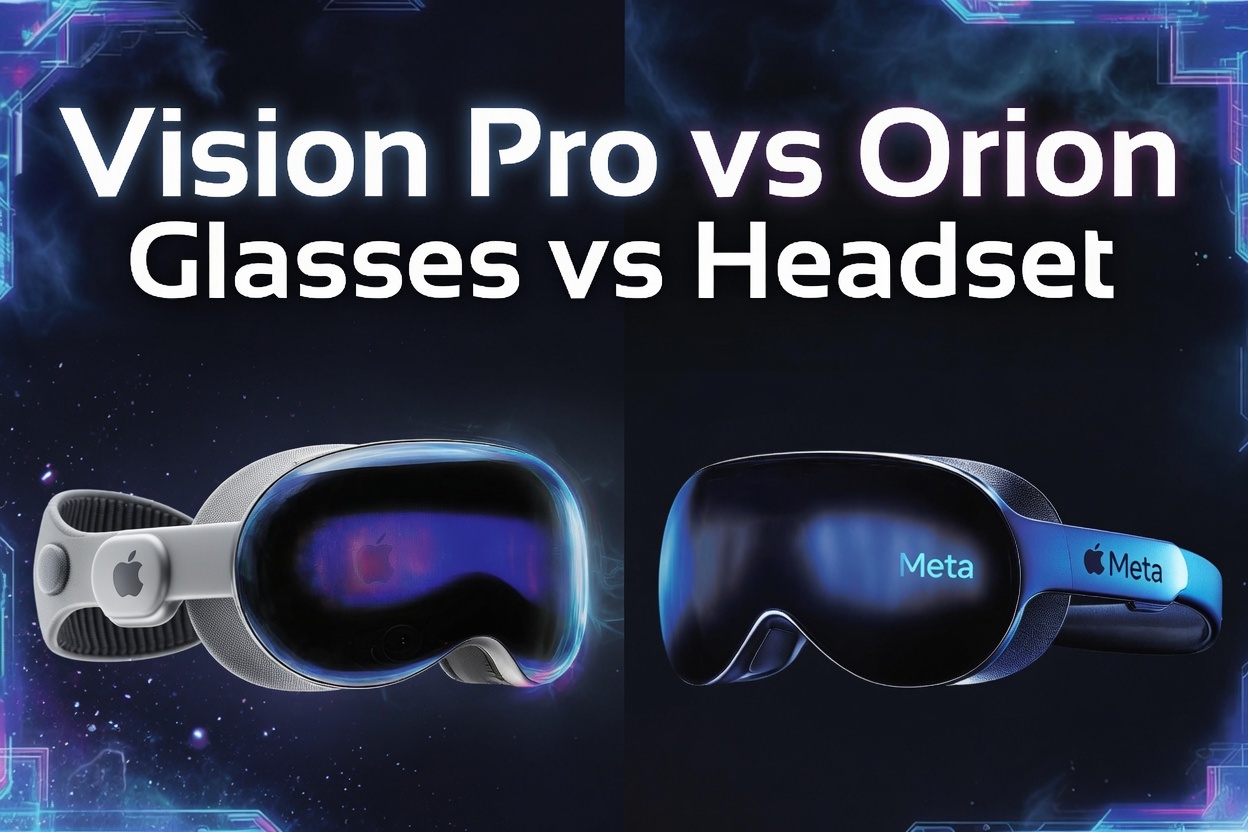
Apple shipped Vision Pro in February at $3,499, and the reviews settled into a predictable pattern: the hardware is astonishing, the use case is unclear, and the weight on your face becomes a problem faster than expected. It sold to early adopters and developers. The mainstream stayed on the sidelines. Now, at Meta Connect this week, Zuckerberg pulled out the thing everyone has been waiting for: Orion, a working prototype of true AR glasses that look almost like regular eyeglasses.
The glasses versus the headset
Orion is not a product. Meta is clear about that. It is a prototype. But the form factor matters: lightweight glasses with a wide field of view, holographic waveguide lenses, and a wrist-worn neural interface for input. Apple went big, heavy, and self-contained. Meta is pointing at lightweight and open, though it is years from shipping. The XR future has now clearly split into two form factors: the full headset for immersive experiences and the everyday glasses for ambient ones.
The trend for the year ahead
The headset market settles while the glasses race heats up. The next competition is about who can ship AR glasses light enough to wear all day, cheap enough to reach a real audience, and useful enough that people actually reach for them. That is a harder problem than the headset, and nobody has solved it yet.
Vision Pro proved the technology works and the price does not. Orion proved the form factor everyone wants is still years away. The gap between what spatial computing can be and what anyone is willing to wear for eight hours is the defining problem of XR right now.
Part of Two Decades of XR, my running diary of virtual, augmented, and mixed reality.