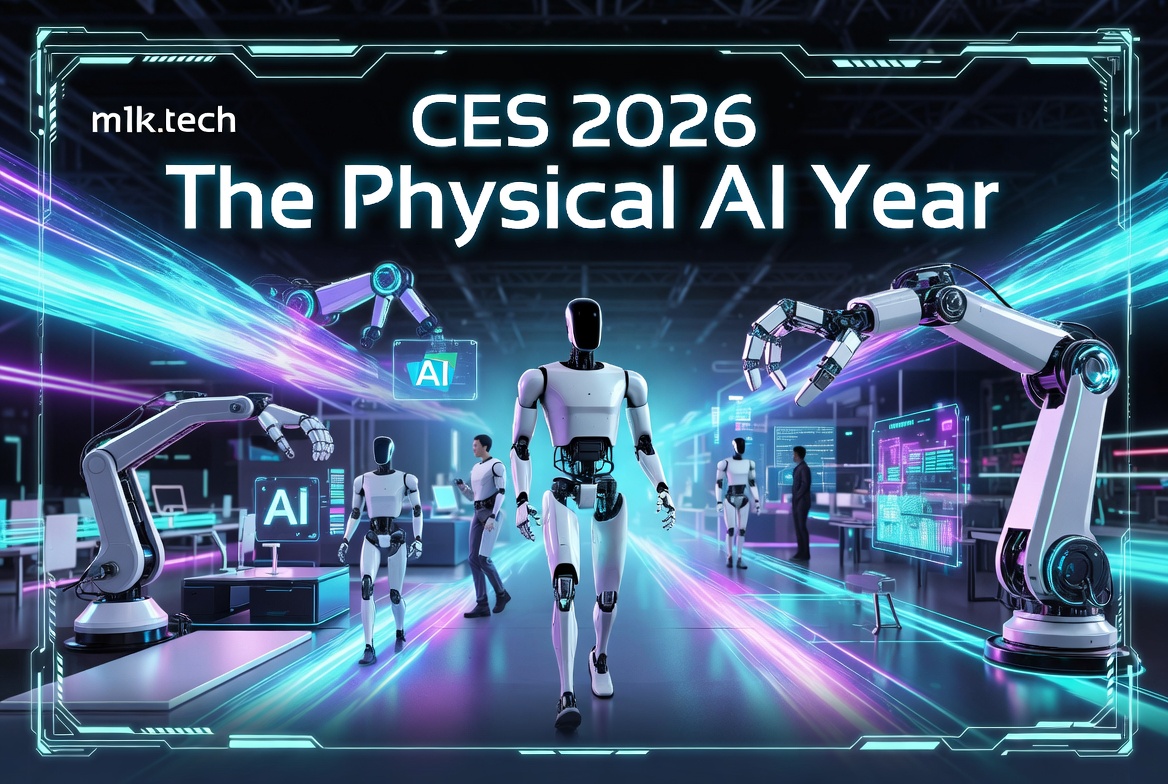
This is the one I am at in person, walking the floor with a Snapdragon Insider badge and zero objectivity, so let me put the bias right up front. CES 2026 belongs to physical AI. The intelligence that lived in chat windows and then climbed into laptops is now reaching for robots, and the whole show has reoriented around it.
Lisa Su’s keynote and Qualcomm’s robotics push
AMD’s Lisa Su delivers a keynote built around AI compute everywhere, from the data center down to the edge. Qualcomm’s side of the show is the one I care about most: the new Snapdragon X2 Plus pushes Copilot+ PCs forward, and the Dragonwing IQ10 platform aims squarely at robotics and physical AI, with humanoid ambitions and a partnership with Figure that puts Qualcomm silicon inside actual robots. Sony and Honda’s Afeela hits production and shows a fresh concept beside it, closing a loop that started back in 2020 with a sensor demo nobody believed.
The trend for the year ahead
Physical AI is the headline, and the race is to put capable, efficient intelligence into machines that move through the real world. Expect humanoid robots, agentic devices, and a lot of silicon fighting to be the brain inside them.
Standing here, the throughline of two decades clicks into place. The assistant that started as a voice in a speaker is now reaching for a body. Qualcomm going hard at robotics is exactly the bet I would make, and yes, I am biased, and yes, I think it is the right one.
Part of 20 Years of CES Through My Lens, my year-by-year diary of the show.