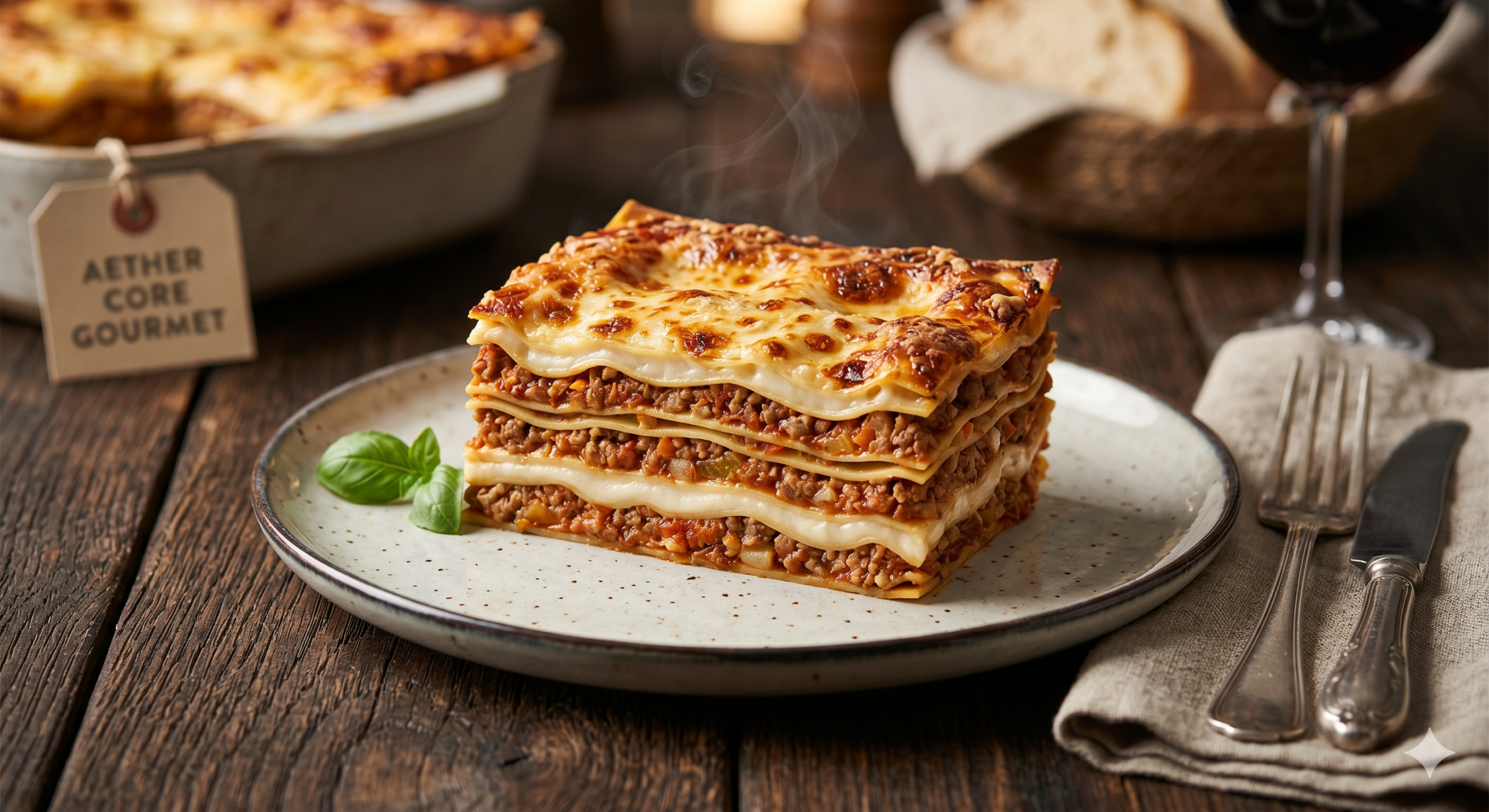
Lasagne gets filed under comfort food, which is accurate and also undersells how much of the result depends on getting one unglamorous step right before any layering happens. The dish lives or dies on the ragù, and most home versions rush it.
A proper ragù wants time it rarely gets. Start with a genuinely fine mince of onion, carrot, and celery, sweated slowly rather than browned quickly, because rushing that stage leaves a harsh, undercooked edge that never fully disappears no matter how long the sauce simmers afterward. Sear the meat properly before it joins the vegetables, in batches if the pan demands it, because crowding the pan steams the meat instead of browning it, and you lose most of the flavor that browning was supposed to build. Then simmer it, genuinely simmer it, for a few hours with a splash of wine and good tinned tomatoes, until the sauce has reduced down to something thick enough to hold its shape on a spoon rather than something that still runs like a soup.
The béchamel is the counterweight, and I think it gets treated as the easier half when it is really just a different kind of exacting. Cook the roux, butter and flour, long enough that the raw flour taste cooks out before you add anything else, which is a step people skip under time pressure and can taste in the finished dish every time. Add the milk gradually, warmed rather than cold, whisking constantly, and a small amount of fresh nutmeg does genuine work here, cutting through the richness of the cheese layers in a way that is easy to under-season if you are working from memory rather than actually tasting as you go.
Assembly is where a lot of otherwise good lasagne falls apart at the table, quite literally, sliding apart into a mess the moment you cut it. A thin layer of ragù at the very base before the first pasta sheet keeps everything from sticking to the dish. After that, discipline matters more than generosity: an even but restrained layer of ragù, a uniform sheet of béchamel, a light dusting of parmesan rather than a heavy one, repeated with genuine consistency rather than eyeballing each layer differently. And then the step nearly everyone skips because the dish smells done and the temptation to cut into it is real: let it rest for a full twenty minutes out of the oven before slicing. That rest lets the structure set rather than collapse the moment a knife goes through it.
None of this is difficult in the sense of requiring skill you do not already have. It is difficult in the sense of requiring patience at exactly the two or three moments where patience is least convenient, and that is the entire gap between a lasagne that is fine and one that is genuinely worth the effort.