Electronic music in the early nineties had largely sorted itself into two temperatures: the icy, mechanical precision of German techno and the aggressive speed of British rave, and neither particularly wanted to sound warm. A handful of Parisian producers built something that ran counter to both, taking disco and funk samples from the seventies and running them through heavy sidechain compression until the whole track seemed to breathe in time with the kick drum.
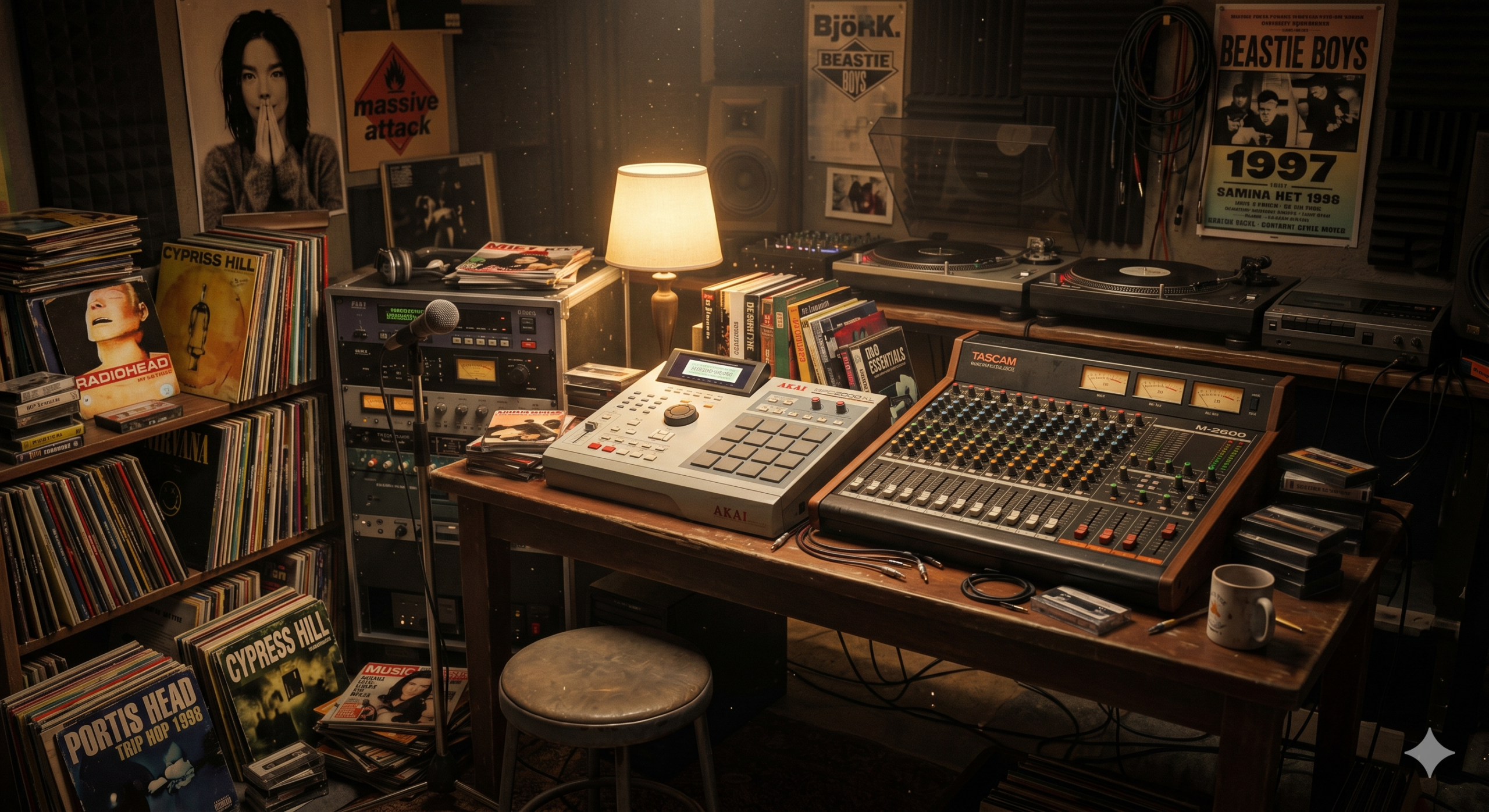
That pumping effect, the melody visibly ducking and surging against the beat, is the technical signature the whole movement gets remembered for, and it came out of genuinely modest equipment. An E-mu SP-1200 sampler and an Alesis 3630 compressor weren’t exotic studio gear even then, and I think that is part of why the sound spread the way it did. The barrier to making something in this style was a few hundred dollars of hardware and a crate of old disco records, not a professional studio budget.
What separated Daft Punk, Cassius, Étienne de Crécy, and Alan Braxe from the techno and rave scenes they were nominally adjacent to was a refusal to be cold about it. Where German techno treated repetition as a kind of discipline and British rave treated speed as the whole point, French Touch reached backward into disco and funk specifically because those genres were built to feel good rather than austere, and grafting that warmth onto a four-on-the-floor house structure produced something that could be genuinely euphoric on a dancefloor without abandoning the mechanical groove the genre depended on.
I do not think the movement’s influence gets fully credited for how far it traveled outside electronic music specifically. The sidechain pump these producers were doing by hand, tweaking a compressor’s attack and release until the ducking landed exactly on the beat, is now a one-click preset in every modern production suite, used constantly in pop and hip-hop by people who may have no idea where the technique originated. A trick that started as a workaround for cheap seventies-era compressor hardware became one of the most recognizable sonic signatures in mainstream music decades later.
What I find most durable about the whole era is how little of it depended on technical complexity. The entire method was finding one perfect four-bar loop, a bassline or a vocal fragment nobody else had noticed, and building an arrangement disciplined enough to let that one loop carry the whole track. That is a genuinely useful lesson for anyone making music now, with infinitely more tools available than an SP-1200 and a crate of vinyl, and it is the opposite of what most of that extra tooling tends to encourage.