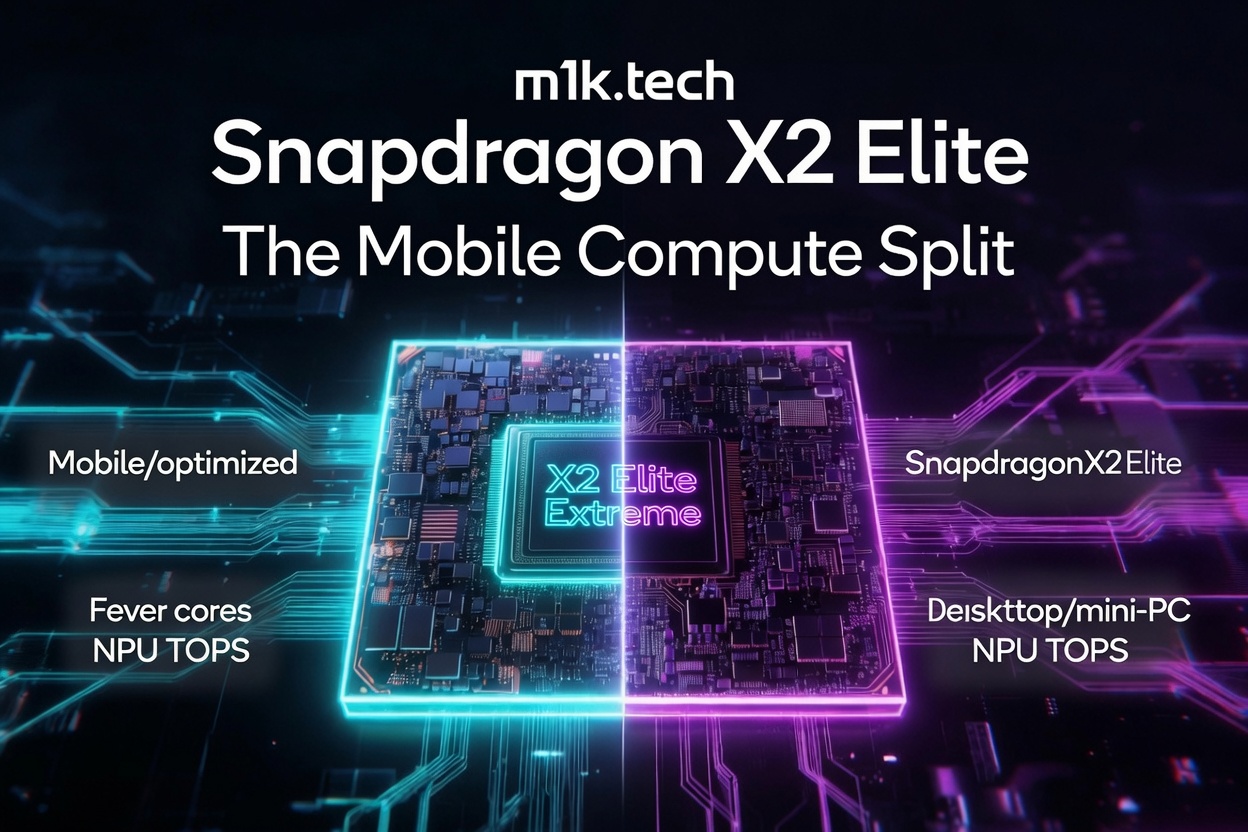
I am writing this from my desk, the morning after Qualcomm’s Computex 2026 keynote, and the desktop shift is finally real. The ASUS Ascent QN10 mini-PC is the proof, the first machine built around the desktop-class Snapdragon X2 Elite, a deliberate push of Snapdragon compute into the rooms Intel and AMD have owned for decades, the same desktop turf Intel is scrambling to defend with 18A, not another thin-and-light AIPC running a warmed-over phone SoC.
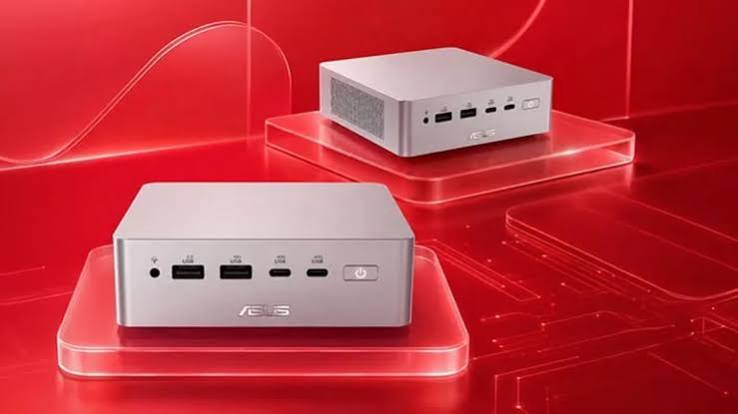
Fifteen watts is the line a mobile chip lives and dies on. The Snapdragon X2 Elite in the Ascent QN10 blows straight past one hundred twenty-five with active cooling and liquid-metal TIMs, and once you are there, the whole design philosophy changes. I have seen the board layouts. PCIe Gen5 x8 lanes route directly to NVMe, and the thing takes DDR5 RDIMMs instead of soldered LPDDR5X. Nobody at Qualcomm is trying to squeeze phone efficiency into a tower anymore. They are handing developers raw multi-threaded headroom for local agent workloads, with enough memory bandwidth that the cores do not sit there starving.
The mobile side moved in the other direction, and much more quietly. Leaks of iQOO 16 engineering prototypes point to a new SM8975, internally dubbed Gen 6 Pro, sitting above the standard SM8974. The logic writes itself: OEMs want a way to charge more without respinning an entire reference board. So the standard SM8974 stays at ten cores, and a thirty-five TOPS NPU, and the Pro unlocks twelve performance cores and pushes the NPU to seventy-five, with the memory bus widened to LPDDR5X-9600 on top. No new transistors do this. Relaxed timing and tighter binning do, which is the cheapest sustained-throughput win Qualcomm has ever sold twice.
Sovereign cloud talk keeps drifting into orbit, because orbit is where governments love to park a compliance budget. Put the raw datasets in radiation-hardened SSDs above the atmosphere, and you have technically solved storage sovereignty. Compute sovereignty is a different animal, and it does not survive contact with physics. I ran the numbers on inter-satellite links myself. One hundred gigabits per second reads impressively until you set it next to terrestrial NVLink fabrics moving seven terabits per second. Distributed gradient sync across a laser constellation is not merely hard today; it is physically impossible. The orbital pitch survives only as long as nobody asks where the training actually happens.
Capital follows the physics, and right now it is flowing into cars. Qualcomm expects to exit fiscal 2026, which closes in September, at an automotive annualized run rate above $6 billion, with the longer-term target set at $10 billion by fiscal 2029. The expanded Stellantis alliance feeds that pipeline; it does not define it. From my FDI seat watching cross-border silicon flows, software-defined vehicles stopped being a hedge for Qualcomm a while ago. This is the growth engine now, the same off-phone expansion that put Dragonwing silicon into robots at Computex. Snapdragon Ride Flex platforms swallow the domain controllers, retire dozens of legacy ECUs per vehicle, and the part that actually matters is what they leave behind: OEMs locked into licensing loops that renew for the life of the car. The silicon margin on that is thin, and nobody at Qualcomm cares, because the subscription line underneath it compounds.
The roadmap hides its real intentions in binning spreadsheets and thermal targets, never in the keynote slides. Pay up for the Pro, and you get the extra cores; everyone else gets a memory ceiling they will not notice until the day an agent workload walks straight into it. I will have an Ascent QN10 on the bench next week to find out whether desktop agents finally outgrow their mobile DNA or inherit its bad habits in a bigger chassis. Watch the automotive revenue line while you wait. It is the only number on any of these slides that Qualcomm cannot massage with a binning trick.