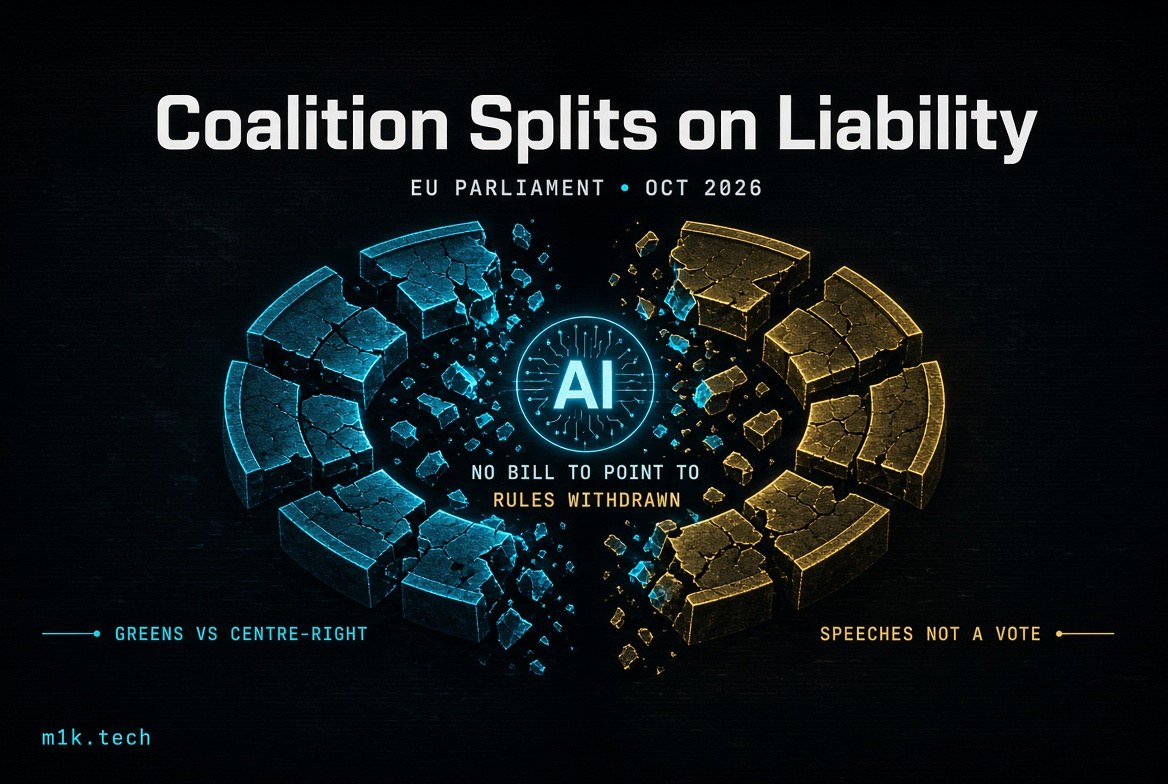
AI liability rules came back onto the European Parliament floor on Thursday, and the centrist parties that back Ursula von der Leyen spent the plenary debate shouting across the aisle at each other, according to Politico’s account.
The Commission had considered AI-specific liability rules in 2022 and withdrew them last year as part of its simplification drive. Socialist vice-president Alex Agius Saliba called the withdrawal “a big mistake” and urged the Commission to bring the directive back. Green MEP Kim van Sparrentak went for the image: if a phone charger explodes in your house, nobody calls it innovative, they call it dangerous junk and make the manufacturer pay. On the other side, Arba Kokalari, the centre-right lawmaker who led the AI omnibus that delayed a core part of the AI Act, said the Greens and Socialists were living on a different planet, that the AI Act is already a comprehensive framework (parts of it aren’t even in force yet), and that Europe should be asking for less bureaucracy, more private investment and better access to data and computing.
Commissioner Jozef Síkela supplied the dry footnote: the rules were withdrawn because member states and Parliament couldn’t agree on them.
The detail I keep returning to is where the push for new rules is coming from. Politico notes that Sam Altman floated a similar liability idea for companies whose models can carry out autonomous cyberattacks, after this summer’s breach of Hugging Face by OpenAI’s agents, an incident I wrote about in September. So the chief executive of the company involved is on record wanting a liability framework while the largest group in the Parliament is arguing about whether one is worth the trouble. Brando Benifei, who led the Parliament’s work on the AI Act in the previous term, put it more sharply: lead with liability rules “or we will need to wait for the next blogpost of a CEO to know what is happening.”
I made the case in July that Europe was missing the plumbing, a withdrawn liability law and standards that didn’t exist yet, and the comparison with California was the part that bothered me most. Nothing in this debate changes that picture. The coverage describes speeches, not a vote and not a proposal, and the AI Act that these lawmakers are defending is the one I described when it went live minus the parts that bite.
I only have one outlet’s account of the debate, so treat the quotes as Politico’s reporting until Parliament’s own record is up. My guess, and it is only that, is that no Commission proposal appears before the omnibus fight is over.
Sources
Politico Europe, Von der Leyen’s coalition fractures over need for AI liability rules, October 22, 2026