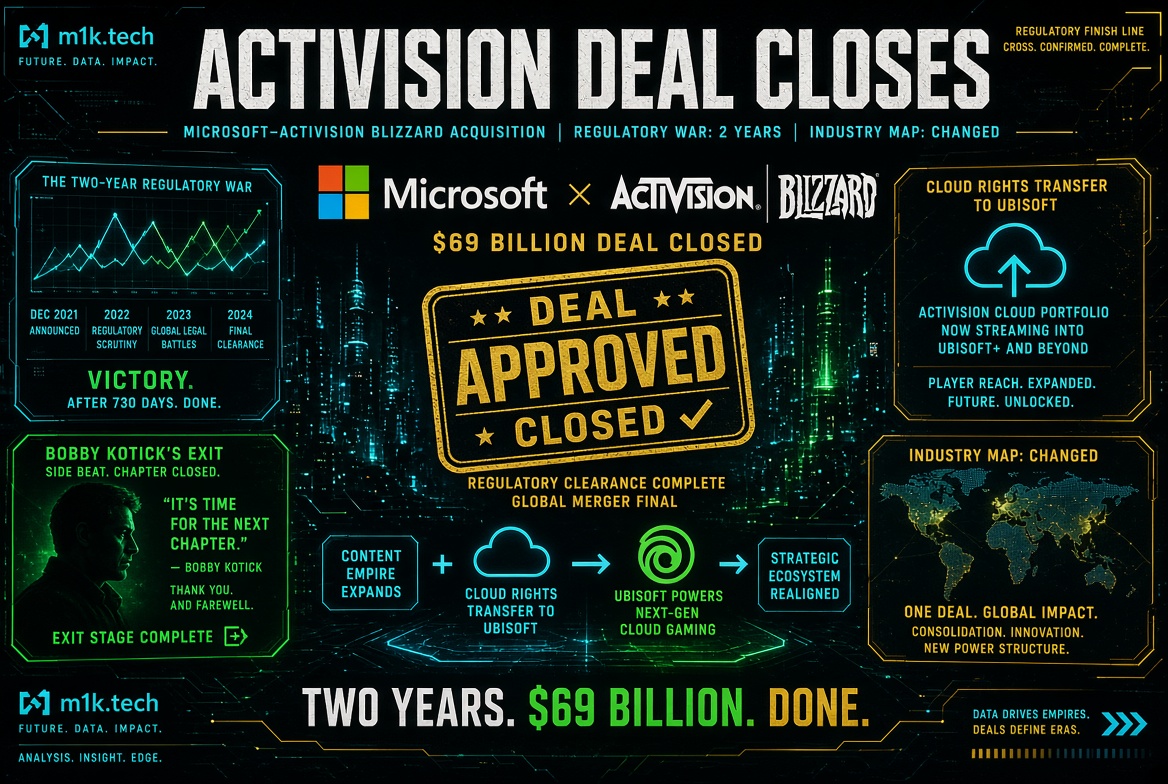
The Activision Blizzard acquisition closed on October 13, 2023, nearly two years after it was announced, and only after Microsoft fought its way through the toughest regulatory gauntlet gaming has ever seen. The $68.7 billion deal finally crossed the finish line, but not in the form it started in; it underwent numerous revisions and negotiations during its tumultuous journey. The acquisition aimed to significantly strengthen Microsoft’s gaming division by adding Activision Blizzard’s extensive library of popular franchises, such as Call of Duty and World of Warcraft, to its portfolio. During the lengthy approval process, Microsoft faced scrutiny from regulators worldwide, prompting it to address concerns about market competition and consumer welfare. Despite these challenges, the deal’s successful closure marks a pivotal moment in the gaming industry, potentially reshaping the landscape as Microsoft seeks to leverage Activision Blizzard’s strengths to deliver innovative gaming experiences and expand its global reach.
The price of approval
The UK’s Competition and Markets Authority was the hardest obstacle, initially blocking the deal over cloud-gaming concerns that raised red flags regarding competition and consumer choice in the gaming industry. To navigate this complex regulatory landscape and get the deal through, Microsoft strategically restructured the transaction, handing over the cloud-streaming rights for Activision Blizzard games to Ubisoft for a long-term period to ensure competition would remain vibrant in the market. Meanwhile, the US Federal Trade Commission continued to fight against the merger in court, raising various legal challenges and expressing concerns about potential monopolistic practices. However, Microsoft remained resolute and closed the deal anyway, betting correctly that the regulators had run out of road and lacked the leverage to stop such a transformative acquisition that could reshape the gaming landscape.
What changed on day one
With the deal done, Activision CEO Bobby Kotick departed at the end of 2023, marking a significant turning point for the company and its future direction. As Microsoft began folding the franchises in, excitement surged through the gaming community as it anticipated how the merger would reshape the video game landscape. The headline payoff was Call of Duty heading to Game Pass, a move that not only broadened accessibility for players but also introduced a vast new audience to one of gaming’s most iconic franchises. Adding to the anticipation, Black Ops 6 later landed on the subscription service on day one, delivering exactly the kind of marquee content the service was built to attract and solidifying Game Pass as a must-have for any serious gamer. This strategic integration not only enhances the value of the subscription service but also signals a new era for franchise management and distribution in the rapidly evolving gaming industry, where exclusivity and accessibility are becoming essential to gaining market share.
Why it matters
Closing this deal made Microsoft the third-largest gaming company in the world, an impressive feat that not only solidified its position in the gaming industry but also handed it the largest annual franchise in the business, significantly boosting its market influence. This monumental acquisition also raised the pressure enormously: a purchase this size has to pay for itself, and that math is a big part of why the layoffs, closures, and the aggressive multiplatform pivot followed so quickly. The urgency to recoup investments and demonstrate profitability became paramount, leading Microsoft to rethink its strategies and streamline operations.
Getting this across the line was a genuine display of corporate will; Microsoft outlasted the regulators, showcasing its resilience under intense scrutiny and pressure. The harder truth is that a deal this expensive sets a financial clock ticking, and the people who later felt that pressure were developers, not dealmakers, as they were the ones tasked with the implementation and innovation that would justify the monumental investment. The close was both a triumph and a liability in the same breath, creating a duality in which the success symbolized progress and ambition while also imposing heavy burdens on the technical teams expected to deliver results under tight timelines and scrutiny. As the dust settled, the merger’s ramifications echoed throughout the organization, shaping not only immediate outcomes but also the company’s long-term vision and strategy in an ever-evolving tech landscape.