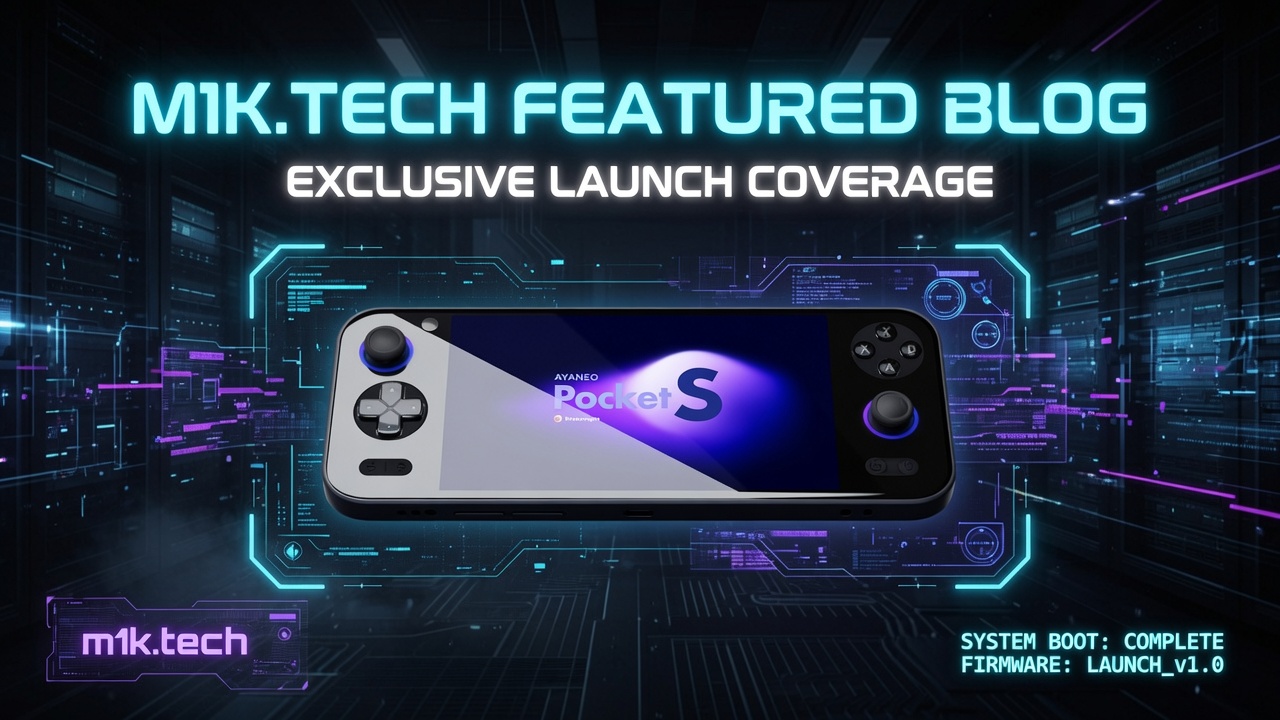
The Ayaneo Pocket S is CNC metal, a borderless 1440p mirror screen, and the first handheld anywhere running Qualcomm’s Snapdragon G3x Gen 2, the new top of the gaming-chip line. It is the nicest Android handheld I have put my hands on, and it is priced as Ayaneo knows it. The 1080p model starts around four hundred dollars, the 1440p Advanced a bit more, and by the time you spec it toward the 16GB and 1TB ceiling, you are past five hundred, a lot of money for a device whose main job is running games from consoles two decades old.
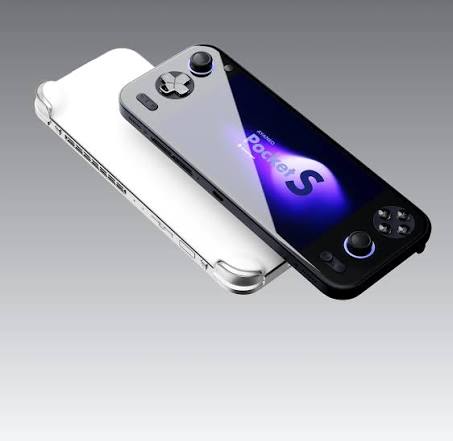
The chip is the headline. G3x Gen 2 is essentially an overclocked Snapdragon 8 Gen 2 with a faster GPU, and Qualcomm claims roughly a third more CPU and double the graphics of the Gen 1 that Razer used. In practice, it is the fastest thing in the category, and Ayaneo backed it with a real cooling solution, so it holds that performance instead of throttling into a puddle. The screen earns its own sentence: at 1440p on a six-inch panel, the pixel density is absurd, and the borderless glass makes every other handheld on my desk look like a prototype.
Here is the thing I keep circling. The AYN Odin 2 runs a Snapdragon 8 Gen 2, costs a fair bit less, and, for the emulation this whole category exists to do, the gap between the two chips is barely noticeable. G3x Gen 2 is maybe fifteen percent faster where it counts, and the emulators that would actually stress it, the PS2 and Switch cores, are either mature enough to run fine on last year’s silicon or, in a couple of high-profile cases, no longer even in active development. So Ayaneo is selling more power into a use case that has largely stopped asking for it, and charging a premium for the privilege. The build is real and the screen is real, but you are paying luxury-goods money for a marginal performance lead.
| Category | G3x Gen 1 (2021/2022) | G3x Gen 2 (2023) | 8 Gen 2 (2022) | Winner & Notes |
|---|---|---|---|---|
| Process Node | 4nm Samsung | 4nm (improved) | 4nm TSMC | 8 Gen 2 (edge in efficiency) |
| CPU | Octa-core Kryo (8 Gen 1 level) | 8-core Kryo (~30% faster than Gen 1) | 1× X3 @3.2GHz + 2× A715 + 2× A710 + 3× A510 | 8 Gen 2 (strongest raw CPU) |
| GPU | High-end Adreno (730-level) | Adreno A32 (~2x faster than Gen 1) | Adreno 740 | G3x Gen 2 / 8 Gen 2 (very close; Gen 2 excels in sustained handheld) |
| Memory | LPDDR5 | LPDDR5X | LPDDR5X | Tie (Gen 2 & 8 Gen 2) |
| ISP | Advanced Spectra | Improved Spectra | Next-gen Spectra | 8 Gen 2 |
| AI / NPU | Strong Hexagon | Stronger Hexagon | Very strong Hexagon AI Engine | 8 Gen 2 |
| Modem | X65-level 5G | Advanced 5G | X70 5G | 8 Gen 2 |
| Connectivity | Wi-Fi 6E | Wi-Fi 7 | Wi-Fi 7 | Gen 2 & 8 Gen 2 |
| Gaming Features | Elite Gaming (handheld optimized) | Enhanced Elite Gaming + ray tracing | Elite Gaming with advanced ray tracing | G3x Gen 2 (best sustained) / 8 Gen 2 (features) |
| Sustained Performance | Excellent in handhelds | Even better (optimized cooling) | Very good (phone limits) | G3x series (handheld advantage) |
| Target | Gaming handhelds | Premium gaming handhelds | Flagship smartphones | Segment-specific |
| AnTuTu (approx) | ~700k–900k+ | ~1M–1.3M+ | ~1.3M–1.5M+ | 8 Gen 2 (peak); Gen 2 very close in practice |
The strategy is the interesting part because it runs counter to the category’s momentum. AYN won the enthusiast by undercutting on price and selling raw value. Ayaneo is doing the opposite, going upmarket, betting there is a buyer who wants the nicest possible object and will pay for the aluminum and the mirror finish even when the number-one benchmark barely shows up in practice. That buyer exists; I have met versions of him, but it is a thinner slice than the value crowd, and it leaves Ayaneo exposed the moment someone ships an eighty-percent device for sixty percent of the price.
I love this thing as an object, and I have a hard time recommending it as a purchase, which is an uncomfortable place to land. If you want the best-built, best-looking Android handheld and money is not the deciding factor, it is obviously this. For everyone else, the Odin 2 is sitting right there, doing 90% of the job for a lot less. I am watching to see whether premium can hold in a category that got interesting precisely because it was cheap, and I have my doubts.