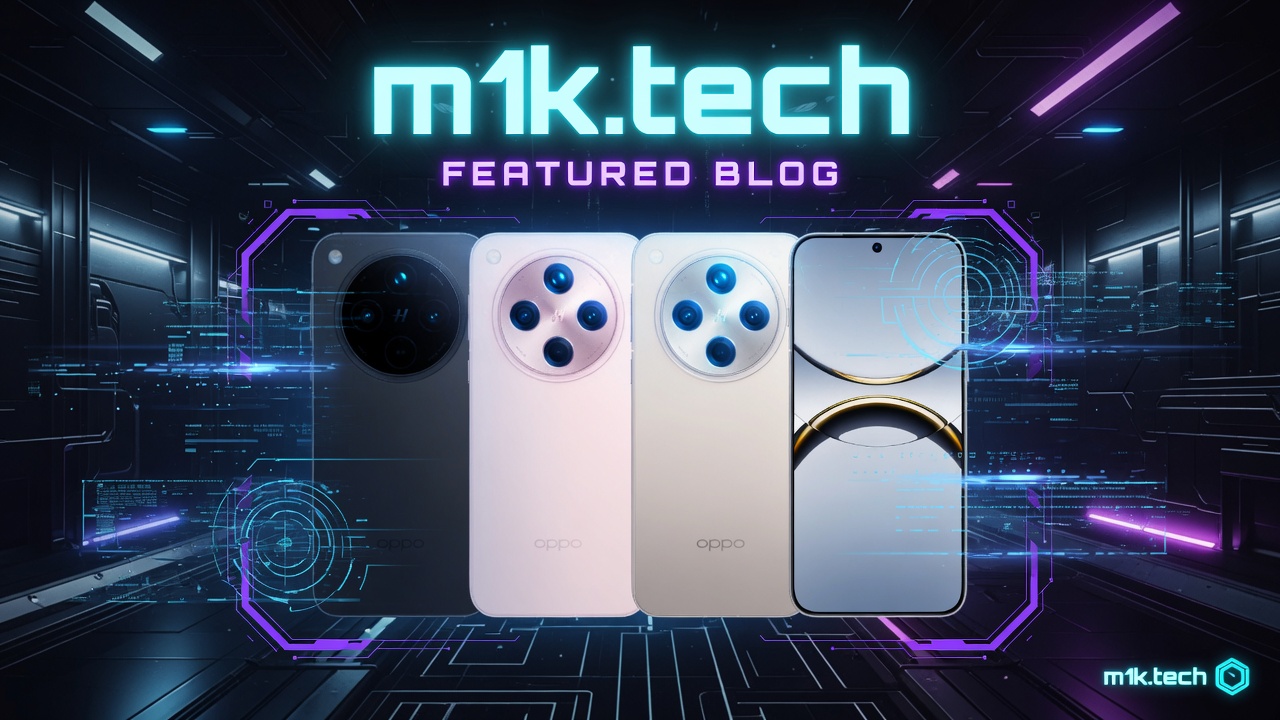
November 2024. OPPO is turning 20, and it is marking the anniversary in Europe with the Find X8 series and a three-year partnership with Telefónica that provides OPPO with distribution through O2, Movistar, and other Telefónica carriers across 10 European countries. After two years of post-Nokia patent war recovery, OPPO is back in European retail in a way it has not been since its 2022 exit. The Telefónica partnership is not just distribution. It is the carrier certification, marketing co-investment, and service infrastructure that make OPPO a brand European consumers can buy with the same confidence they buy Samsung or Apple from the same carrier store.
The Find X8 series is the product that arrives alongside this European commitment, and the first thing to note about it is what is not on the back: no Hasselblad branding. The partnership with Hasselblad that OPPO has carried since the Find X5 Pro has ended, and OPPO is moving to a self-described “Hasselblad-level” color calibration and camera tuning approach built entirely in-house. The Hasselblad name gave OPPO cameras instant Western credibility in reviews. The question now is whether the camera quality is good enough that OPPO can maintain that credibility without the badge.
The Find X8 Pro specifications and what they represent
MediaTek Dimensity 9400, which is OPPO’s first flagship without Qualcomm since the Find 5’s Snapdragon S4 Pro in 2012. The switch to MediaTek is a strategic as well as commercial decision: Dimensity 9400 benchmarks suggest it competes with and, in some workloads, surpasses the Snapdragon 8 Elite in efficiency, and MediaTek’s licensing terms for its NPU technology align better with OPPO’s imaging pipeline than Qualcomm’s equivalent. The battery: 5910mAh with 80W SuperVOOC wired and 50W wireless. The display: 6.78-inch BOE AMOLED at 2780×1264 resolution, 120Hz LTPO, 4500-nit peak brightness. The camera: 50MP Sony LYT-808 main, 50MP periscope telephoto, 50MP ultrawide, all rear cameras at 50MP for the first time on any OPPO flagship.
The 50/50/50 rear camera configuration is new and deliberate: OPPO is positioning the Find X8 Pro as a professional photography device where every focal length has equivalent resolution, meaning professional-grade image quality from ultrawide through telephoto without the resolution cliff that most flagships impose on non-primary cameras. Whether the sensor quality and optics support the 50MP ultrawide claim in real-world conditions is what reviewers are testing this week. Early samples circulating look competitive with the Pixel 9 Pro and the iPhone 16 Pro in balanced daylight conditions.
104 million smartphones and the global fourth position
2024 is OPPO’s largest annual shipment total: 104 million smartphones, 8.5% global market share, fourth place overall. The Find X8 series posted a 66% year-on-year increase in first-quarter shipments. The Reno series is performing strongly in Middle Eastern and African markets, where OPPO’s offline retail strategy is generating the same results it generated in China a decade earlier. The company shipping the Find X at the Louver as an ambitious statement in 2018 is now shipping 104 million units per year as a baseline. Whatever the patent disputes, the organizational restructurings, and the MariSilicon timeline delays have cost, OPPO has maintained the scale and market position that make those costs manageable.
The 20th anniversary year ends with OPPO in European carrier channels for the first time since 2022, shipping its most ambitious camera configuration yet, without a Hasselblad badge, on a MediaTek chip. If the camera delivers on its specifications, the Find X8 Pro earns its place alongside the iPhone 16 Pro and Galaxy S24 Ultra on merit. The Western market has not always rewarded OPPO on merit. I am cautiously curious whether 2025 is different.
Part of OPPO: The Complete Story, my full history of OPPO from DVD players to the BBK empire.