Over three million on AnTuTu, edging out the Snapdragon 8 Elite. A Geekbench multi-core score that noses past Apple’s A18 Pro. Nineteen billion transistors on TSMC’s second-generation 3nm. Eight years after the Surge S1 fizzled into a mid-range footnote, Xiaomi has a genuine flagship system-on-chip, the XRING O1, and it launched it tonight at the company’s fifteenth-anniversary event inside the Xiaomi 15S Pro. And then, in that exact same phone, there is a MediaTek modem. That one detail is the whole story.
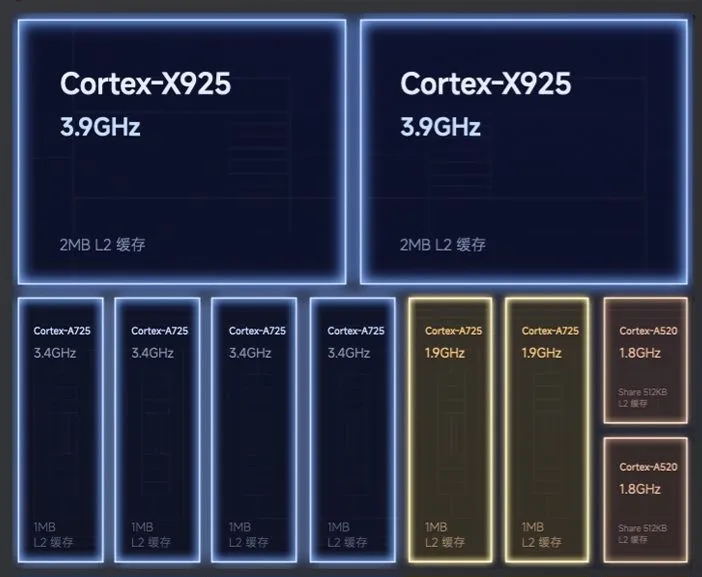
Take the chip on its own terms first, because it deserves it. The XRING O1 is built on TSMC’s N3E process and runs a ten-core CPU, two Cortex-X925 prime cores at 3.9GHz, six A725 cores in the middle, two A520 cores for efficiency, paired with a 16-core Immortalis-G925 GPU that does hardware ray tracing and a six-core NPU rated at 44 TOPS. There is a custom Xiaomi image processor in there, LPDDR5T memory, UFS 4.1 storage, Wi-Fi 7. It is also, apparently, the first China-developed phone SoC to use silicon capacitors for power delivery. Xiaomi has been loudly insisting this is not a rebadged ARM reference design, and the nineteen-billion-transistor budget backs that up. It debuts in the 15S Pro and the Pad 7 Ultra.
The benchmark numbers are the kind you do not post on your first attempt by accident. An AnTuTu run of 3,004,137 clears Qualcomm’s current best, and brushing the A18 Pro in Geekbench multi-core is not something Samsung’s Exynos team managed after years of trying. I treat AnTuTu as a vibe rather than gospel, but for a debut flagship chip from a company whose last serious silicon swing landed in 2017, this is a stunning opening line.
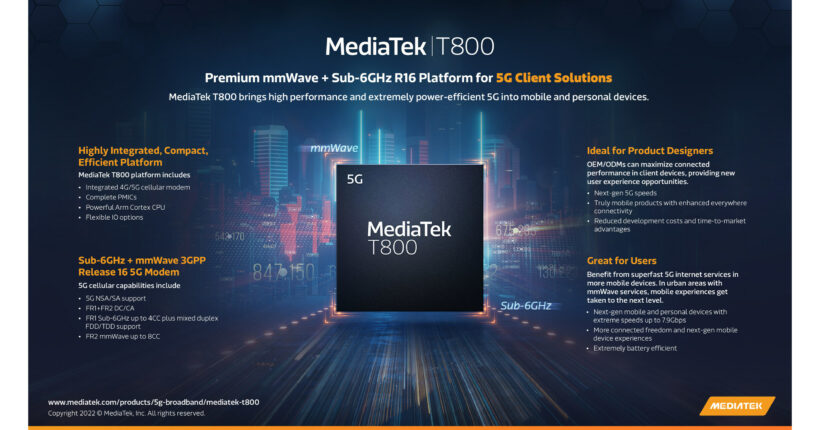
Here is the detail I cannot stop looking at. The 15S Pro drops Qualcomm’s SoC, but it carries a MediaTek T800, the MT6980W, as its 5G modem. Xiaomi designed a world-class application processor and still had to go buy the radio. Back when I wrote about the Surge S1, the point I kept hammering was that the modem is where in-house silicon dreams go to die, that it is the reason Apple kept buying Qualcomm basebands for years after it was designing its own A-series chips. The XRING O1 just proved that point in public. Drawing a CPU, GPU, and NPU is hard, but it is well-trodden ARM-IP territory. Designing a cellular modem that works on every carrier on earth and survives Qualcomm’s patent thicket is a different mountain, and Xiaomi did not climb it.
Step back and this is the 2021 Plan B finally cashing out. After the US blacklist scare, Xiaomi said it would pour money into Chinese-controlled silicon to cut its dependence on suppliers Washington could reach. Four years later, it owns a 3nm flagship SoC. It still leans on TSMC for fabrication, ARM for core designs, and MediaTek for the radio, so “independence” is doing some heavy lifting in that sentence. But the application processor, the most valuable and most differentiating piece of the bill of materials, is now Xiaomi’s own. That is a real strategic shift, not a vanity project.
It is also, unmistakably, the Apple move. Own the SoC, tune the hardware and HyperOS together, and stop handing Qualcomm the fattest single margin in the parts list. Huawei did exactly this with Kirin until sanctions choked off its access to leading-edge fabs, and Xiaomi is attempting it from a safer perch, still able to walk into TSMC. The XRING T1 smartwatch chip and the Surge P3 battery controller launched alongside it tell you this is meant to be a silicon family, not a one-off stunt.
I will not pretend the 15S Pro is a global product. It is China-only at 5,499 yuan, essentially a 15 Pro with a Xiaomi brain swapped in, sold in limited numbers to make a point. The real test is not the benchmark screenshot, it is thermals and battery life over months, and whether XRING shows up in a mainstream Xiaomi flagship next year or stays a halo experiment. A chip that wins AnTuTu and then cooks itself after twenty minutes of gaming is a press release, not a platform.
The headline writes itself: Xiaomi beats Snapdragon. That is real, and it is impressive, and Lei Jun has every right to the victory lap. But the part I keep circling back to is the modem it had to borrow. You can design the smartest chip in the room and still be tethered to whoever owns the radio. Xiaomi just joined the tiny club that can build a flagship SoC. It has not joined the even tinier club that can cut the cellular cord, and until it does, “in-house silicon” carries an asterisk I suspect Lei Jun privately hates.
Related: Five Years Inside the Xiaomi Ecosystem, my history of how Xiaomi built the machine that got it here.