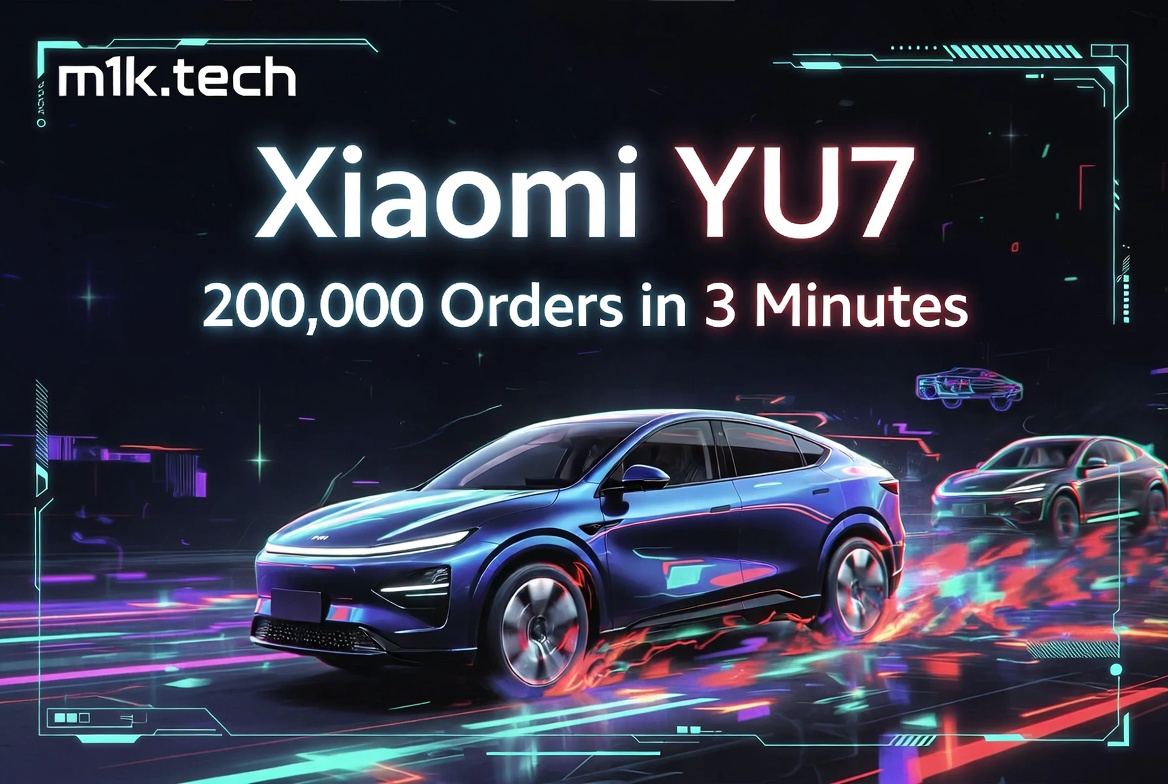
Two hundred thousand firm orders in three minutes. Two hundred and eighty-nine thousand inside the first hour. Xiaomi’s first SUV, the YU7, launched tonight, and the opening-day numbers are somehow more absurd than the SU7’s were. This is the company’s second car in fifteen months; it is aimed like a rifle at the Tesla Model Y, and it undercuts it.
The price knife is out again. The YU7 starts at 253,500 yuan, compared with the Model Y’s 263,500 yuan, with the Pro at 279,900 yuan and the Max at 329,900 yuan. It is the exact SU7 playbook: pick Tesla’s volume seller, slide in just underneath, and pile on specifications until the comparison looks embarrassing. The YU7 is the bigger car at almost five meters long, and it comfortably out-ranges the Model Y, which is not how this segment usually goes for a newcomer’s first SUV.
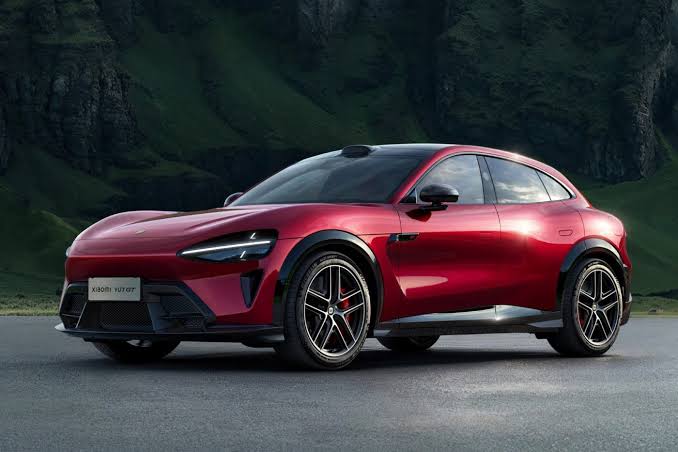
Underneath it shares the SU7’s Modena platform and 800-volt silicon-carbide architecture. The standard car is a single-motor rear-drive five-seater making 320 PS, doing zero to 100 in 5.88 seconds, riding on a 96.3 kWh LFP pack rated at 835 km on the CLTC cycle, while the Model Y’s variants sit closer to 600 and 700 km. The Max goes dual-motor for 690 PS and a 3.23-second sprint on a 101.7 kWh battery, and LiDAR shows up on the higher trims. Deliveries start in July.
What I keep noticing is how fast this has become a real car company. In fifteen months, Xiaomi has shipped a sedan, a record-setting super-sedan, and now an SUV aimed at the highest-volume segment in the market, and it is building a second Beijing factory to supply them all. The 2021 line about cracking the global top five automakers sounded like a founder’s bravado at the time. It is starting to read like a timetable.
This launch also lands while Xiaomi is under real scrutiny over assisted driving, after a fatal SU7 highway crash this spring put the company’s smart-driving marketing under a microscope. I notice the YU7 leans on LiDAR for its upper trims, which reads to me like a hardware answer to exactly that criticism, since the base SU7 in the crash had no LiDAR at all. I am not going to do that accident justice in a launch post; it deserves a sober piece of its own, but it is the shadow hanging over every Xiaomi car event right now, and pretending otherwise would be dishonest.
I half-distrust the three-minute order figure, for the record. Refundable deposits inflate these launch numbers across the whole Chinese industry, and the gap between an order and a delivery is exactly where EV hype usually collides with reality. The question that actually matters is whether Xiaomi’s factories can build SU7s and YU7s at the same time without wait times ballooning past a year and the goodwill curdling into canceled deposits.
A phone company now sells a sedan, a Nurburgring record-holder, and an SUV, fifteen months after building its first car at all. That is not a side project; that is an automaker. The global top-five ambition that sounded delusional in 2021 now sounds like a schedule with deadlines. Whether the factories can keep pace, and whether the smart-driving questions get honest answers, is the rest of this year’s story.
Related: Five Years Inside the Xiaomi Ecosystem, my history of how Xiaomi built the machine that got it here.