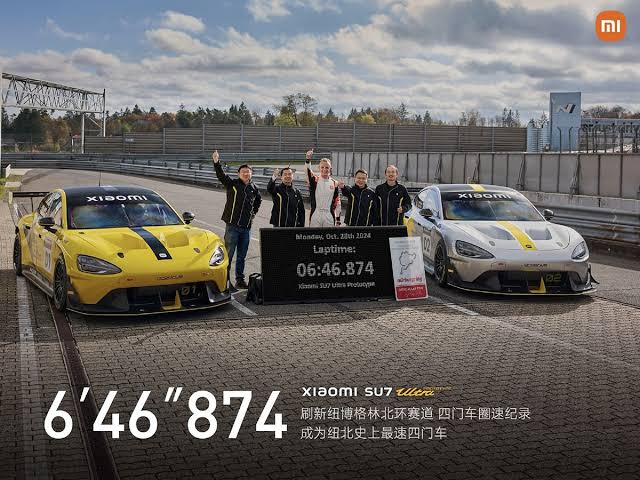
1,548 horsepower. Zero to 100 in 1.98 seconds. A 6:46.874 lap that makes it the fastest four-door car ever to go around the Nurburgring. Then the twist that actually made the room gasp tonight: the SU7 Ultra launches at 529,900 yuan, not the 814,900 Xiaomi floated back in October. The company just knocked nearly 300,000 yuan off its own halo car, and the order book detonated, 6,900 firm orders in the first ten minutes and 10,000 inside two hours.
The pricing is a magic trick, and I tip my hat to it. Xiaomi teased the Ultra at 814,900 yuan in October and let everyone assume that was the number, let the spec sheet and the Nurburgring footage marinate for four months, then came in a third cheaper at launch so the car reads like a steal. A 529,900-yuan price on something doing Porsche Taycan Turbo GT numbers feels like a bargain even though half a million yuan is not remotely cheap. Anchor high, undercut yourself, look generous. It is the oldest move in the book and it worked.
The hardware earns the noise. It runs three motors, two Xiaomi V8s units making 578 horsepower each and spinning to 27,200 rpm, which Xiaomi claims is the most powerful mass-production drive motor going, plus a V6s for another 392, combining for that 1,548-horsepower figure. It clears 0 to 200 in 5.85 seconds, tops out north of 350 km/h, sits on an 800-volt platform, and takes a 5.2C charge that refills ten to eighty percent in eleven minutes. There is carbon fibre everywhere, active aero front and rear, and Xiaomi keeps calling it a road-legal race car, which for once is not pure hyperbole.
Sit with the Nurburgring number for a second, because it is genuinely absurd. Xiaomi sold its first car eleven months ago, and it just set the fastest four-door lap in the circuit’s history. This is the phone playbook ported straight onto an assembly line: build one technically outrageous halo product, price it to embarrass companies that have been doing this for decades, then let the glow sell everything cheaper down the range.
I am not going to pretend a 1.98-second launch means anything to a real buyer. Almost nobody who puts down a deposit on this will ever use that number, and a half-million-yuan Xiaomi is a flex, not transport. The question that interests me is not the lap time, it is whether Xiaomi can make money on a halo it only plans to sell about 10,000 of this year, or whether the Ultra is marketing spend wearing a product’s clothes. Lei Jun more or less admitted the point is to prove the brand can play at the top, and on that narrow goal it is already winning.
The Ultra is not really a car, it is an argument. Three years ago people laughed at a phone company that said it would build cars and crack the global top five. A sub-two-second, record-setting four-door is Xiaomi’s way of ending the laughter, and whether it ever turns a profit on this thing is almost beside the point. The halo has already done its work by the time deliveries start on March 3.
Related: Five Years Inside the Xiaomi Ecosystem, my history of how Xiaomi built the machine that got it here.