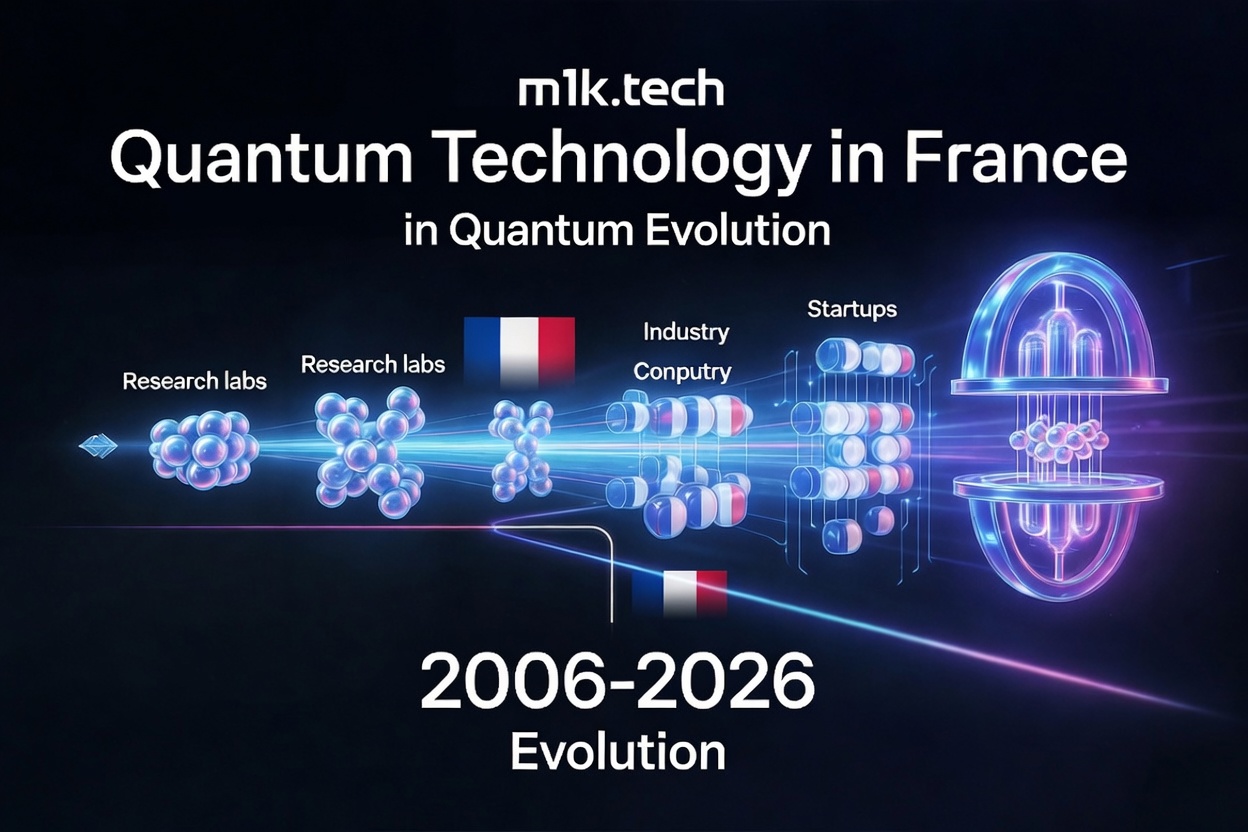
France develops its position in quantum technology from 2006 to 2026 through several reinforcing layers that contribute to its growing influence in this vital field. Sustained research at institutions such as CNRS, universities, and INRIA builds deep technical capability in quantum physics, information, and related fields, enabling the country to foster a generation of experts and innovative thinkers. Early startups such as Quandela, Pasqal, and Alice & Bob are translating research into commercial efforts in computing and communication, paving the way for advancements in quantum computing hardware and software. National strategy and investment programs, including elements of France 2030, provide coordinated support and signal long-term priorities, ensuring a robust framework to nurture talent and accelerate innovation. Furthermore, international collaborations and expansion integrate French activity into the global quantum ecosystem, allowing for knowledge exchange and positioning France as a key player in multinational quantum initiatives, thereby enhancing both its technological prowess and its competitive edge on the world stage.
These layers interact over time, creating a dynamic ecosystem that fosters innovation and development. Research output feeds talent and methods into startups and industrial projects, continually refreshing the pool of ideas and approaches being utilized. This influx of talent is crucial, as it not only enhances these startups’ capabilities but also drives collaboration with established companies, creating new opportunities for breakthroughs. Additionally, policy support and public investment help address the high capital requirements and long timelines typical of quantum technology, ensuring that projects have the financial backing needed to advance. This support is particularly important in an industry characterized by significant technical hurdles and risks. International engagement further augments this process by providing access to additional talent, capital, and markets, allowing for a richer exchange of knowledge and resources. The combination of these factors creates an environment in which progress can occur across multiple parts of the quantum stack rather than in isolated areas, enabling comprehensive advancements and a more integrated approach to tackling the challenges in the field.
From a business perspective, this layered development creates multiple entry points and more resilient advantages than ecosystems that rely on any single element. Companies can participate through research collaboration, startup formation, industrial partnerships, or direct investment, enabling them to tap into a diverse range of resources and expertise. The presence of multiple reinforcing layers means that progress in one area can support progress in others, creating a synergistic effect that fosters innovation and competitiveness. For instance, technological advancements can spur new research initiatives and attract funding, which in turn can lead to the formation of new startups. Organizations that integrate capabilities across these layers often move forward more efficiently than those that attempt to build everything independently, as they leverage existing networks and shared knowledge to reduce duplication of effort and accelerate their growth trajectory. This interconnected approach not only enhances individual company performance but also contributes to a more robust and vibrant economic ecosystem overall, paving the way for sustainable development and long-term success.
The period also shows how external conditions and deliberate choices interact in strategic technology fields. Global interest in quantum computing and communication creates substantial opportunities for French organizations, provided that the supporting foundations are firmly established and nurtured. In this evolving landscape, policy decisions regarding strategy, investment, and talent acquisition play a crucial role in determining how quickly and effectively those opportunities are identified, captured, and leveraged for growth. Furthermore, the interplay among academic research, industry partnerships, and government initiatives fosters an ecosystem in which innovation can thrive. The combination of existing technical depth and a well-coordinated system of support structures tends to produce steadier progress than either element could achieve alone. This synergy ultimately enhances France’s overall competitiveness in the global technology arena, enabling sustained advancements that can significantly contribute to economic development and societal benefits.
Organizations operating in or near this environment often reach meaningful technical milestones and partnerships more quickly because the supporting pieces already exist in the surrounding ecosystem. The structure rewards execution that effectively integrates existing strengths, enabling teams to leverage established resources and collaborative networks. In a field where both technical performance and long-term positioning matter, this kind of connected, layered environment fosters innovation by facilitating knowledge sharing and accelerating development. As organizations navigate the complexities of their respective markets, the synergy created by these interconnections promotes not only efficiency but also the ability to adapt to evolving challenges. Ultimately, this interconnected framework creates measurable differences in outcomes across multiple years and development cycles, ensuring that organizations are better equipped to sustain growth and remain competitive in their industries.
Sources: CNRS/INRIA quantum research reports, company announcements (Pasqal, Quandela, Alice & Bob), France 2030 and quantum strategy documents, international quantum ecosystem assessments (2006–2026).