Malaysia AI Chip Export Controls and the Phone in Your Pocket
Malaysia's new 30-day permit window on H100-class accelerators is the part of the directive that actually changes procurement, and the same export coalition is…
The Snapdragon X Elite NPU and NVIDIA's H20 are the same story from opposite ends of the compute stack. Memory bandwidth, not TOPS, decides…
Nvidia and AMD regained export licenses for China, reviving significant revenue potential after prior restrictions. Concurrently, a Senate vote ended a federal AI moratorium,…
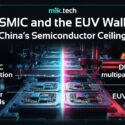
SMIC 5nm means leading-edge logic on DUV at punishing cost, driven by China's need to build Huawei's Ascend AI chips after the US banned…
SMIC 7nm shipped in the Huawei Mate 60 Pro's Kirin 9000S, a DUV-built chip that proved export controls could not cap China at 14nm.…
SMIC N+1 is a 7nm-class node built without EUV, after the 2020 Entity List cut SMIC off from the one machine the industry uses…
On January 14 the US Department of Defense added Xiaomi to its list of “Communist Chinese Military Companies,” and within a day it became…
TSMC's 5nm node put EUV across a full process for the first time and built the Apple M1, ending Intel's hold on the Mac,…
SMIC 14nm was China's first homegrown FinFET, architected by Liang Mong Song and built for Huawei, proving SMIC could do leading-edge engineering at last.
SMIC 28nm reached volume in 2015, four years late after a long yield struggle, just as the leading edge moved to FinFET and left…
SMIC 65nm arrived in November 2009, the week TSMC won its trade-secret case, took a stake of up to 10 percent, and founder Richard…
SMIC 90nm put the Shanghai foundry two nodes behind the leaders and closing, climbing alone on imported tools and hired talent while the settled…