Eighteen point seven million phones this year, the fifth-biggest brand in China, and the company just poached the vice president of product management for Android straight out of Google. Three years after it shipped a ROM for other people’s hardware, Xiaomi is doing what only real companies do, and the Mi 3 is the phone carrying it all.
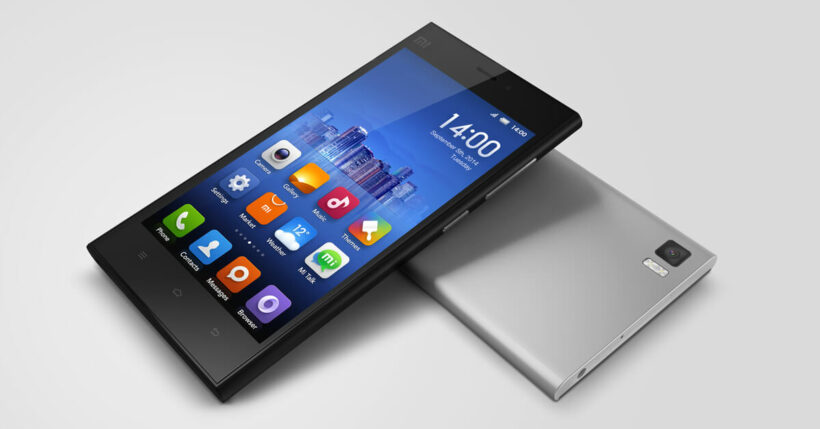
The Mi 3 landed last month with a 5-inch 1080p screen, 2 GB of RAM, a 3,050 mAh battery, and in its headline version a Snapdragon 800 clocked at 2.3 GHz, the exact quad-core chip sitting inside this year’s proper Android flagships. It starts around 1,999 yuan, roughly $325. The trick has not changed since the Mi 1: take the best silicon Qualcomm sells, put it in a clean industrial design, and charge half of what the flagship price is supposed to be.
That number stops being a curiosity and starts being a threat when you line it up against the competition. The Galaxy Note 3 and the LG G2 run the same Snapdragon 800 and cost close to double in China. Xiaomi is not alone in pushing premium specs at lower prices here either, since OPPO put a 1080p screen in the Find 5 before most of the big names did, and the whole Chinese premium-on-a-budget race is getting crowded fast. But nobody is undercutting a flagship chip this aggressively.
The hire is the part that actually tells you where this is going. Pulling Hugo Barra out of the Android team is the first time anyone has yanked a senior executive away from Google to sell phones, and his job is explicitly to take Xiaomi global. Right now this is a China-only company with a China-tuned sales model, and I read the Barra move as ambition running a step ahead of the product. Flash sales and a heavily skinned MIUI are one thing in Beijing. Exporting them to markets that run on carrier contracts and Google services is a completely different fight, and it is the fight Barra was bought to win.
There is also a television now, a 47-inch Android set assembled by Wistron, the same Taiwanese manufacturer that builds for Sony. I am not going deep on the TV because, right now, it reads more like a toe in the water than a real product line, but it tells you the phone was never meant to be the whole company. The endgame is a house full of Xiaomi hardware all talking to a Xiaomi phone, and the TV is the first piece of furniture in that room.
So here is Xiaomi at three years old: 18.7 million phones sold, a real seat in the Chinese premium conversation, a television, and a globally credible executive it just bought from Google (that I worked with during Android’s first steps back then). The phones are still half-price flagships, and the model still leans entirely on flash sales nobody outside China has watched work. Barra’s actual assignment is to find out whether any of this survives contact with the rest of the world. I would not bet against the price. I would bet against it being anywhere near this easy once the carriers get involved.