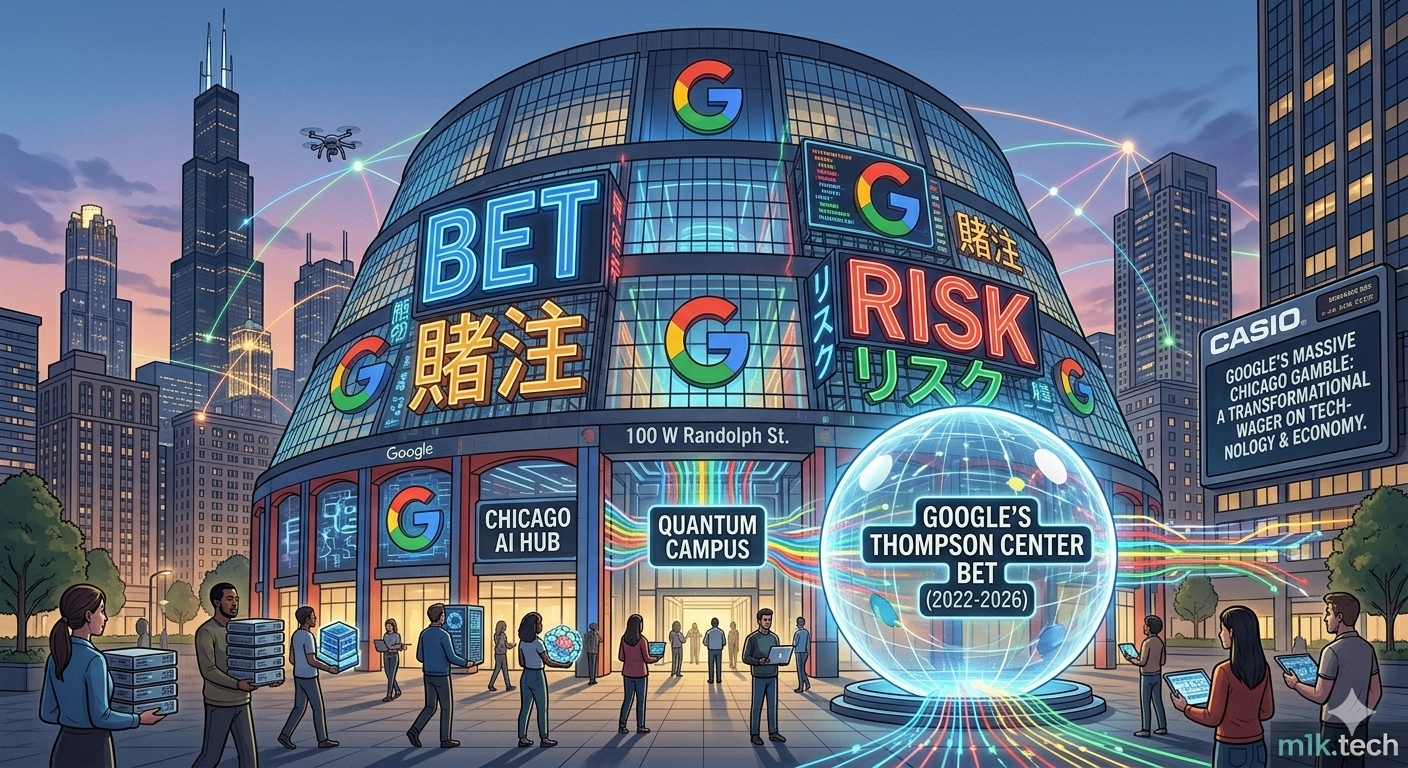
Google just made the single biggest tech-company real estate investment in Chicago history, signaling a major shift in the tech landscape of the Windy City. The Thompson Center, the controversial Helmut Jahn-designed government building in the Loop that Illinois has been trying to offload for years, is being redeveloped by Google into a sprawling 1.2-million-square-foot regional hub that promises to attract thousands of employees and bolster the local economy. The deal, struck with developer Prime Property Fund and the state, represents a substantial commitment of hundreds of millions of dollars, illustrating Google’s confidence in Chicago as a thriving urban center. This investment also serves as a strategic bet that downtown Chicago is worth building into, rather than fleeing from, as other companies have considered more suburban alternatives. By transforming the Thompson Center, Google aims not only to revitalize a historic site but also to create a vibrant workspace that fosters creativity, innovation, and collaboration among its workforce, ultimately contributing to the overall revitalization of the Loop area.
The signal in the noise
This matters because of timing. Google announced the Thompson Center deal in the same stretch when Boeing, Caterpillar, and Citadel were leaving Chicago. While the departures made national headlines and fed the narrative of a city in decline, Google was quietly buying into the Loop, demonstrating a strategic vision that contrasts sharply with the departing companies’ decisions. The contrast is instructive: legacy industrials left for political reasons, often influenced by the changing regulatory landscape and tax structures, while a platform tech company saw a real estate opportunity in a city with deep talent, boasting two world-class research universities and a vibrant tech ecosystem. Additionally, Chicago offers a cost structure that is dramatically lower than in the Bay Area or New York, providing Google and similar companies with access to a skilled workforce at a fraction of the cost, enabling innovative growth and long-term investment in an urban environment poised for a resurgence. This proactive approach signals a belief in the city’s potential and resilience, contrasting sharply with the retreat of traditional corporations and highlighting an evolving economic landscape.
What Google is building
The Thompson Center renovation not only preserves the atrium and exterior, paying homage to the building’s historical significance, but also completely overhauls the interior, transforming it into modern, state-of-the-art office space designed to foster innovation and collaboration. Google already operates multiple offices in the vibrant Fulton Market district, and with the Thompson Center expansion, Chicago is set to become one of Google’s largest footprints outside of California and New York, highlighting the city’s growing importance in the tech landscape. The new roles created by this expansion will encompass a diverse mix of engineering, cloud sales, and operations, reflecting the company’s commitment to strengthening its presence in the region. Furthermore, there is a strong tilt toward enterprise cloud positions, which directly aligns with the corporate customer base prevalent in the Midwest, thereby enhancing Google’s ability to serve local businesses and establish stronger connections with its stakeholders. This strategic move not only signifies Google’s robust investment in Chicago but also underscores the city’s role as a key player in the technological advancement and digital transformation of the Midwest.
When Boeing left, it hurt deeply, reverberating through the local economy and affecting countless jobs. When Google doubled down and invested significantly in expanding its presence in the city, almost nobody noticed or appreciated the magnitude of this positive development. That asymmetry is, in fact, the crux of the Chicago tech narrative problem encapsulated in a single sentence. A Fortune 10 tech company is now putting over a million square feet of office space in the bustling Loop, yet despite this substantial investment, the city continues to be portrayed in media narratives as a place where companies leave rather than thrive. This persistent narrative overlooks the robust growth and potential that exists within Chicago’s tech ecosystem. The Thompson Center bet stands as a powerful counterargument that deserves a louder microphone, highlighting the city’s ongoing transformation and the opportunities it presents for both startups and established firms.