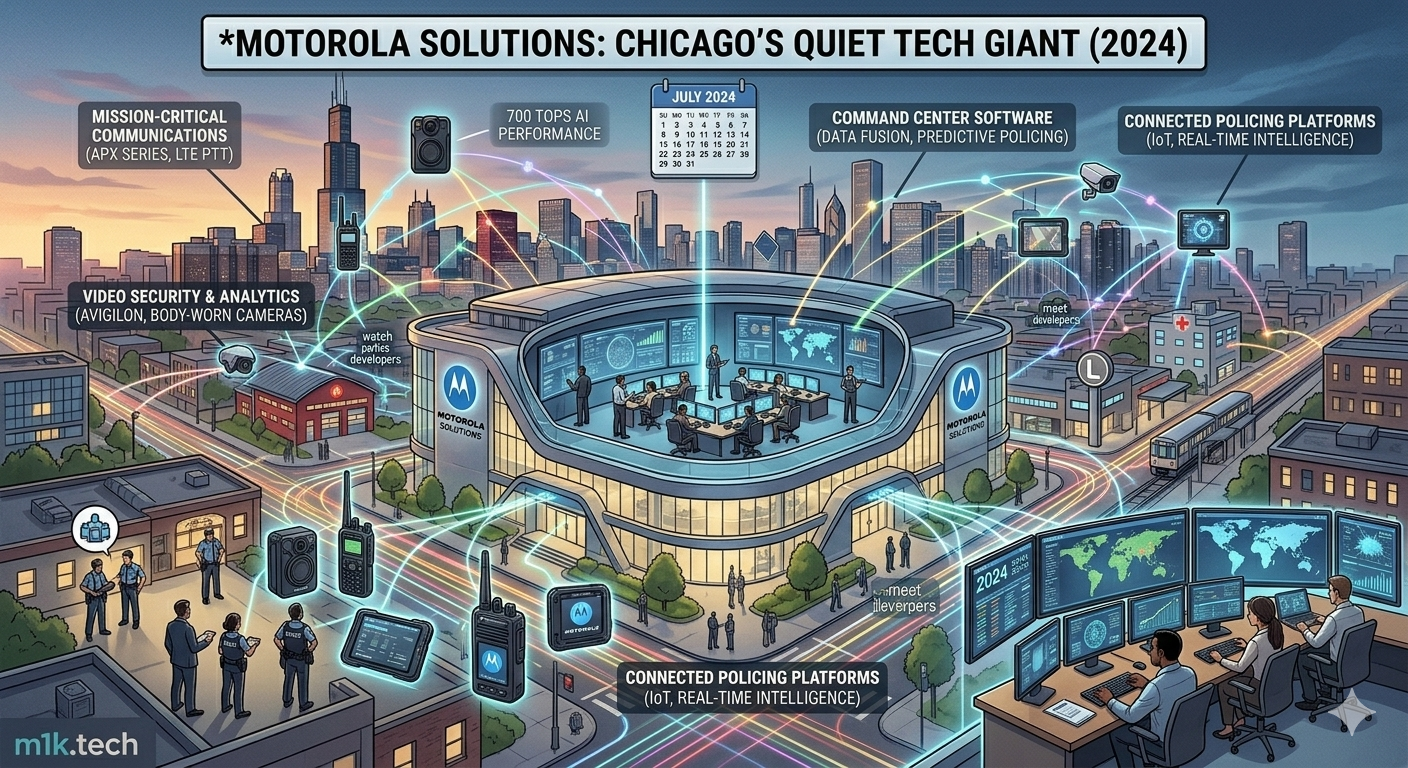
Motorola Solutions has been in Chicago since 1928. Nearly a century of building communications and public safety technology, without chasing hype cycles or trending on X, and most people in the city do not think of it when someone says “Chicago tech.” That is a mistake.
What Motorola Solutions actually does
After Motorola split into two companies in 2011, the handset and consumer business went to Motorola Mobility (eventually acquired by Lenovo). What stayed in Chicago as Motorola Solutions was the enterprise and public safety business: the radios police officers carry, the dispatch systems 911 centers run, the body cameras officers wear, and the AI-powered video analytics and command center software that cities use to manage real-time incident response. The company does about $10 billion in annual revenue and employs thousands in the Chicago area.
The quiet Snapdragon parallel
This is a company that understands what it means to build technology for the physical world: ruggedized, reliable, always-on hardware that runs critical infrastructure. Chicago’s tech identity is not defined by chatbots and consumer apps but by applied technology that runs essential systems people depend on every day. Motorola Solutions is the oldest and largest example of that identity.
Every time someone says Chicago does not have big tech companies, I point to Motorola Solutions. A $10 billion public safety and enterprise tech company headquartered here for nearly a century, developing AI-powered command center software deployed in cities worldwide. That is not a startup story. That is infrastructure, and infrastructure is what Chicago has always done best.