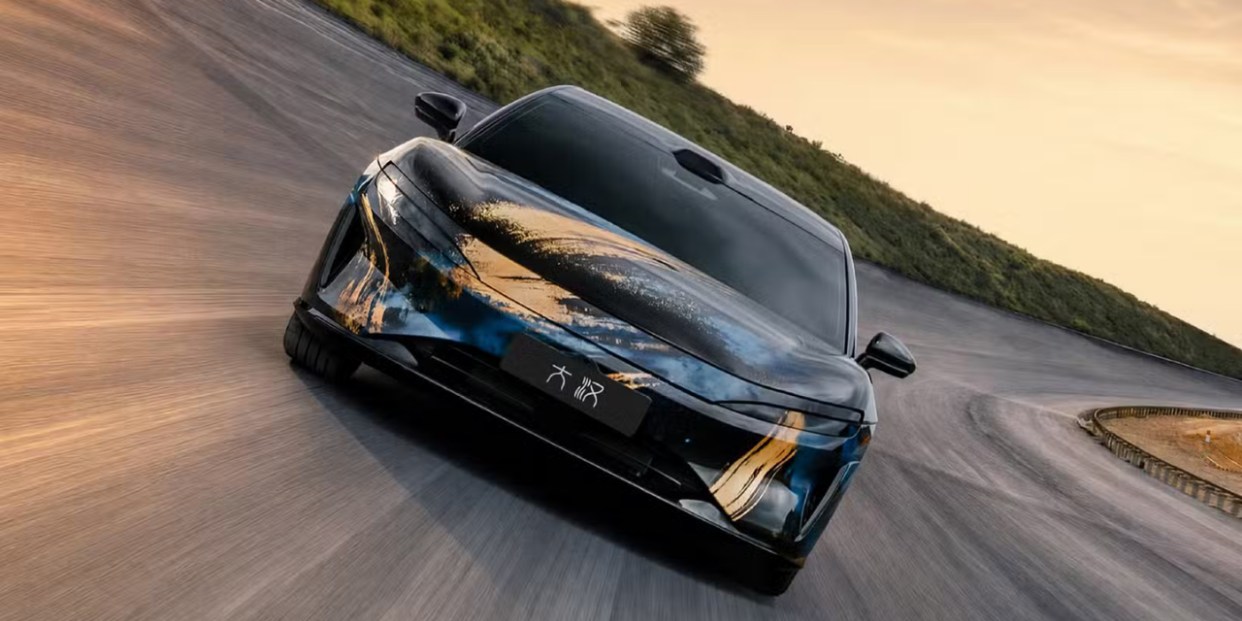
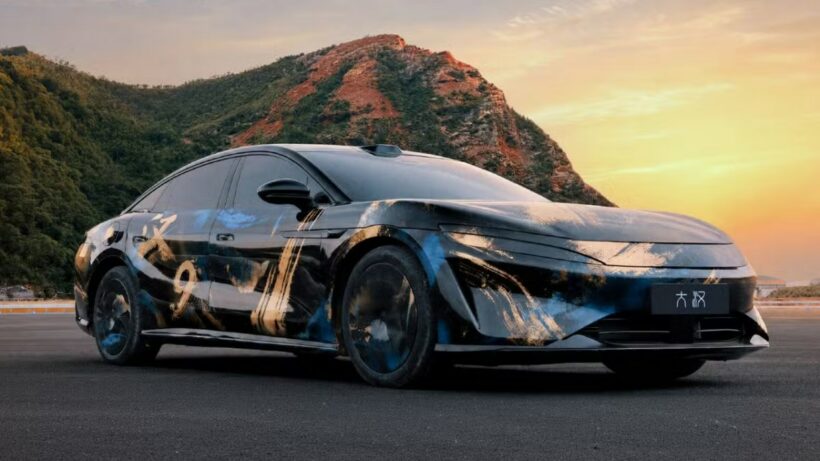
The BYD Great Han just got its first official photos, and it is the clearest signal yet of where BYD is actually headed. This is not another cheap city runabout. It is a D-segment flagship sedan, the sedan sibling to the Great Tang SUV, and together they are BYD’s move into the premium end of the market it spent a decade undercutting.
First, that name
BYD did something fun here. Back on June 4, Lu Tian, who oversees sales for BYD’s Dynasty lineup, posted six possible names for the new flagship sedan on Weibo and let people vote. They landed on Great Han, also written Da Han or Han 9. It slots in above the existing Han and Han L, and the dynasty naming is very much on purpose. BYD likes to position itself as a carrier of Chinese culture, and naming your flagships after imperial dynasties is about as on-brand as that gets.
The tech that actually matters
Here is where it gets serious. The Great Han rides on BYD’s second-generation Blade Battery and its flash charging system, and the numbers are eye-opening. The rear-wheel-drive version is rated for up to 1,008 km on a charge under China’s CLTC cycle, while the all-wheel-drive version is rated for around 880 km. Charging is the real flex: BYD’s flash-charging stations deliver up to 1,500 kW, enough to take a compatible car from 10 to 70 percent in about five minutes, and the Blade 2.0 pack is quoted at 10 to 97 percent in roughly nine minutes.
One honest caveat. CLTC range figures are optimistic, so knock a healthy chunk off that 1,008 km for real-world driving. But even discounted, a sedan that adds hundreds of kilometers in the time it takes to grab a coffee is a different category of convenience. It comes in both plug-in-hybrid and pure-electric flavors, so BYD is covering both bases as usual.
The dual-flagship plan
The Great Han does not arrive alone. It is the sedan half of a two-car premium push, paired with the Great Tang, BYD’s first D-segment flagship SUV. The Great Tang gives you a sense of the ambition: a 1,000-volt system, around 950 km of range, a starting price near 250,000 yuan, roughly $37,000, and over 100,000 pre-orders in under two weeks, enough that BYD pushed the launch back just to keep up with demand. The Great Han is expected to follow a similar path, with regulatory filings around June or July, pre-sales in late summer, and a market launch in the third quarter to ride China’s Golden October sales peak.
Why this is the interesting BYD story right now
Think about how BYD got here. It built its reputation on the bottom and the middle: the $10,000 Seagull that redefined what an affordable EV could be, and the relentless volume that let it overtake Tesla in pure-electric sales. The Great Han is the opposite move. It is BYD reaching up into the premium D-segment, where the margins actually live.
And the timing tells you why. BYD still sits on top, with total sales of around 377,000 units in May. But its April domestic deliveries were down nearly 39 percent year over year, as China’s brutal EV price war continues to erode volume. When the cheap end stops growing, you go where the money is. Going premium is pure strategy, not vanity. It is margin and mix. Meanwhile, legacy luxury is still fumbling the transition, see Ferrari’s rocky Luce EV reveal, which makes the lane look even more open.
BYD’s real weapon was never any single car. It is the vertical integration: it builds its own batteries, its own chips, its own charging. That is what lets it attack the $10,000 and $50,000 tiers at the same time without flinching. The Great Han is BYD proving it can play premium too, on its own tech stack, while everyone else is still buying the pieces.
The catch for those of us in the West is the usual one. With US tariffs on Chinese EVs at 100 percent and the EU running its own probes, the odds I ever park a Great Han in Chicago are slim.