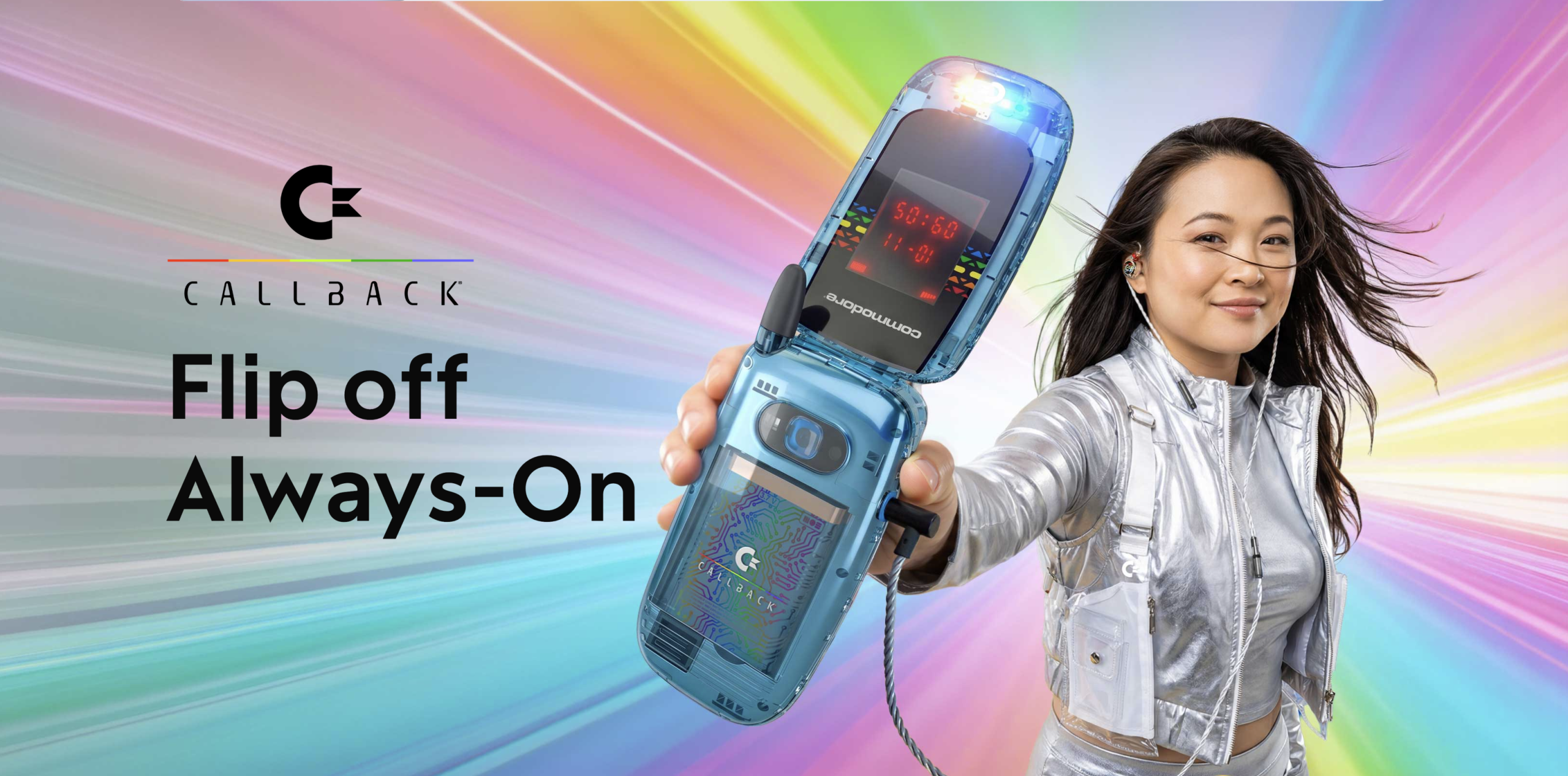
Commodore is back in the phone business after 25 years. That’s the headline most outlets ran with on June 16. The actual story is the operating system.
The Commodore Callback 8020 is a flip phone. It costs $499. It blocks social media at the system level. Those things are real, and I’ll get to them. But the part that matters is what’s underneath: Sailfish OS, made in Helsinki by Jolla, which is the last independent European mobile operating system still being shipped on consumer hardware in 2026.
I should say up front, I don’t follow the digital-detox phone segment closely. Light Phone, Punkt, Boring Phone, all those exist and I haven’t tested any of them. What pulled me into this one wasn’t the back-to-basics pitch. It was watching Commodore pass on Android and pick a Finnish OS that almost nobody under thirty has heard of.
The Jolla story almost nobody covers
Jolla was founded in 2011 in Helsinki by former Nokia engineers. When Nokia abandoned MeeGo and went all-in on Windows Phone (and we all know how that ended), some of the engineers picked up the codebase and walked out the door with it. Sailfish OS is what they built from those bones.
The company has been at this for over fourteen years now. They shipped the original Jolla Phone in 2013, the Jolla Tablet in 2014 (a Kickstarter that ended badly), and they’ve been quietly maintaining and licensing the OS since. They pivoted to licensing in 2017, restructured, and kept going. There’s a real technical lineage here, MeeGo to Sailfish, with continuous development through every Android and iOS generation while staying outside both ecosystems.
What makes Sailfish OS interesting in 2026 isn’t that it’s a Linux phone. There are a few of those. It’s that Jolla has been doing the unsexy infrastructure work for over a decade: the Android app runtime compatibility layer, the gesture-based UI, the contracts with public sector clients in Europe and Russia (which they cleaned up in 2024). They’re not a hobby project, they’re a 30-person company that ships a real product.
And until last week, almost nobody outside the Finnish tech scene was talking about them.
The hardware sits where you’d expect
Let me get the spec sheet out of the way because it’s not the interesting part.
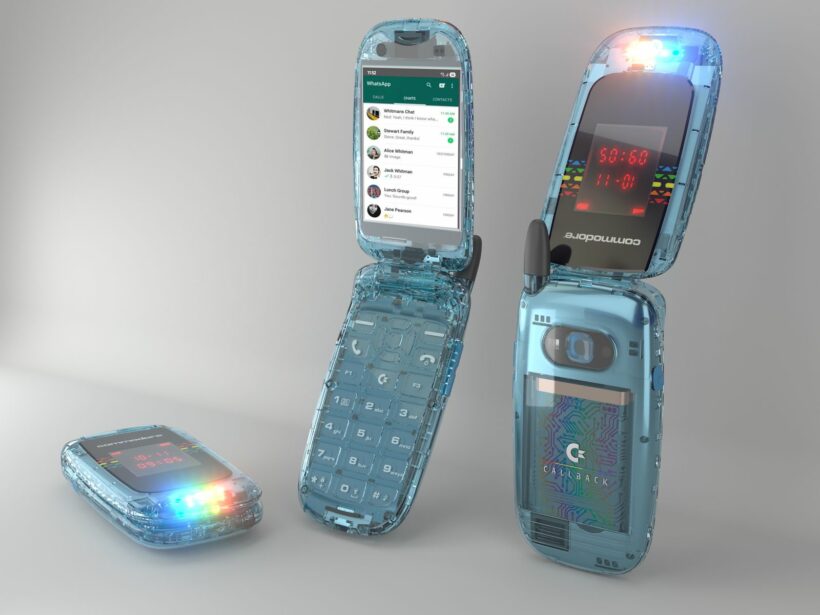
MediaTek Helio G81 SoC, 4GB RAM, 64GB internal storage with a 32GB microSD included in the box. A 3.25-inch IPS main display at 480×640. A second VFD-style 1.77-inch outer display that shows the time and notifications when the flip is closed. 48MP Sony rear camera, selfie camera, 1550 mAh removable battery, USB-C, Wi-Fi, Bluetooth, GPS, global LTE bands. There’s an ESS and Cirrus Logic DAC for audio, a 3.5mm jack, FM radio, an 8-bit SID music player with SID ringtones, and Nokia Snake plus a few C64 games preloaded.
It’s a midrange flip phone, basically. The specs are honest about what the product is. You’re not buying this to play Genshin Impact, you’re buying it because you want a phone that physically closes.
Five colorways at launch: ProtoPET White, SX Silver, BASIC Beige, Starlight, and a $640 Founders Edition with a PVD gold finish and a 24k gold “C+” button. Base is $499, Starlight is $550. Pre-orders open June 30 at 10:00 CEST on commodore.net/callback, with $50 off if you’re on the waitlist. Shipping is targeted for Q4 2026, which in Finnish hardware launch terms means winter and probably a little later than that.
The block is the engineering claim
Here’s where it gets technically interesting. Most digital-detox phones rely on you, the user, having willpower. They show you a stripped-down launcher but the apps are still there if you really want them. The Callback takes a harder line.
According to the press materials and what Engadget pulled from their briefing, the social media block is implemented at two layers, DNS-level filtering and OS-level enforcement, and Commodore says the combined approach is patent-pending. The blocked categories are social media apps, web browsers, and email clients. You can sideload an APK for almost anything else (the Android runtime layer claims 99% Android app compatibility), but you can’t sideload around the block itself.
If that holds up in practice, it’s a meaningful piece of engineering. The honest test will come in a few months when someone smart on XDA-Developers or GitHub tries to break it. I’m curious whether the OS-level enforcement is robust or whether it’s a polished UI gate sitting on top of something more porous.
The privacy framing is the other half. No data collection without consent, no built-in tracking, no monetization layer. This is Jolla’s existing posture, Commodore just inherited it. And every other mobile OS on the market right now treats user data as the product, whether they say so out loud or not.
Why the OS choice is the real news
Step back from the Commodore brand for a second.
Europe has been trying to build a sovereign mobile OS story for the better part of fifteen years. Mistral is doing it for AI, Gaia-X tried it for cloud, and Symbian was the last European mobile OS that mattered at scale before Nokia capitulated. Since then, the European mobile platform story has been a story of dependency on Google and Apple, full stop.
Sailfish OS doesn’t change that overnight. Jolla is small, the install base is rounding-error compared to Android, and “European mobile alternative” has been a press release pitch for a long time. But this is the first deal in years where a recognizable consumer brand picked Sailfish over Android for a shipping product. That’s a different kind of validation than another EU-funded research project or a government procurement deal.
It connects to a broader pattern I keep coming back to. When Anthropic pulled Fable 5 and Mythos 5, the response in Europe wasn’t outrage, it was a quiet acknowledgment that the dependency problem has gotten serious. Commodore picking Jolla is a much smaller version of the same conversation, just in mobile rather than AI. You can build on top of someone else’s platform, or you can pick a partner who answers to a different set of incentives.
The Callback isn’t going to win market share. It’s going to put Sailfish OS on a few hundred thousand phones with a brand name people recognize. That’s the win for Jolla. Sami Pienimäki, their CEO, basically said this in the press release without saying it.
Pricing and availability
$499 base, $550 Starlight, $640 Founders Edition. Pre-orders open June 30 at 10:00 CEST. Shipping winter 2026, probably real shipping in Q1 2027 once you account for hardware launches actually hitting schedules. Waitlist signup at commodore.net/callback gives you $50 off. There’s also a new Jolla Phone launching alongside the Callback at the same Helsinki event on July 8, which is a separate device with a similar OS and a more conventional smartphone form factor.
If you actually want a flip phone in 2026 and you’re tired of the always-on grind, this is a real option. If you want a phone that makes a sovereignty statement about where the software stack comes from, this is the only option that ships with a recognized brand on the front.
The Jolla validation is the actual win here, not the Commodore revival. A 30-person company in Helsinki just got handed a consumer-facing distribution channel by an iconic brand that could have done what every other phone maker on Earth does and picked Android. They didn’t. Whatever you think of the digital-detox category, that’s the first time the European mobile OS conversation has had a real pulse since Symbian quietly went away. It’s worth paying attention to who picks Sailfish next, because if this works, it stops being a one-off and starts being a precedent.