A two-years-later review of the Nothing Ear (a), the $99 earbud launched alongside the flagship Ear in April 2024, examines how it introduced Nothing’s budget tier and undercut its own higher-priced sibling. It covers hardware specs, cost-cutting choices like diaphragm material and case durability, ANC performance, and software features fenced off from the app.
The review concludes that while the Ear (a) was a strong recommendation at launch, its successor, the Ear (3a), now offers better performance at the same price, making the original worthwhile only when heavily discounted. The piece frames the Ear (a) as the start of a recurring pattern where Nothing’s cheaper models undermine its flagship lineup.
Yellow. The Nothing Ear (a) shipped in yellow, and for a $99 earbud in April 2024, the color was somehow treated as the headline. Two years on it is still the least interesting thing about them. The interesting thing is the date. On 18 April 2024, Nothing did two things in one keynote: it killed its own numbering, and for the first time it shipped a deliberately cheaper model next to the flagship. The (a) is the more revealing of the pair, because it is the exact point where Nothing’s product ladder started eating itself.
I bought mine a few weeks ago, on Prime Day, for about fifty dollars. So treat this less as a long-term ownership diary and more as a straight question: is a two-year-old earbud worth fifty bucks in the middle of 2026, and does the flagship it embarrassed at launch still matter to anyone? Before the drivers and codecs, let me explain what the (a) actually was, and why a budget earbud turned out to be the most strategically important thing Nothing’s audio team has done.
The fork nobody circled on the calendar
Nothing’s very first product was an earbud, the Ear (1) back in July 2021, at 99 pounds / 99 dollars / 99 euros. The company numbered its way forward from there: Ear (1), Ear (stick), Ear (2). Then in April 2024 the numbering just stopped. The new flagship was called “Ear,” no number, a naming decision people still argue about and still call Ear (2024) because nobody knew what else to do with it. It sold at 149 dollars. And underneath it, in yellow, sat the Ear (a) at 99.
That 50-dollar gap is the whole story of this earbud, and I am not going to re-walk the full seven-model lineage here because I already did that in the Ear (3a) review. What matters is that the (a) was the first rung of what became the three-tier ladder Nothing spent the next two years building: CMF at the floor, an (a)-suffixed value tier, and bare-number flagships on top. On paper it was clean. In practice, the value tier kept doing something awkward to the tier above it, and the (a) is where that started.
The hardware, and where the money was not spent
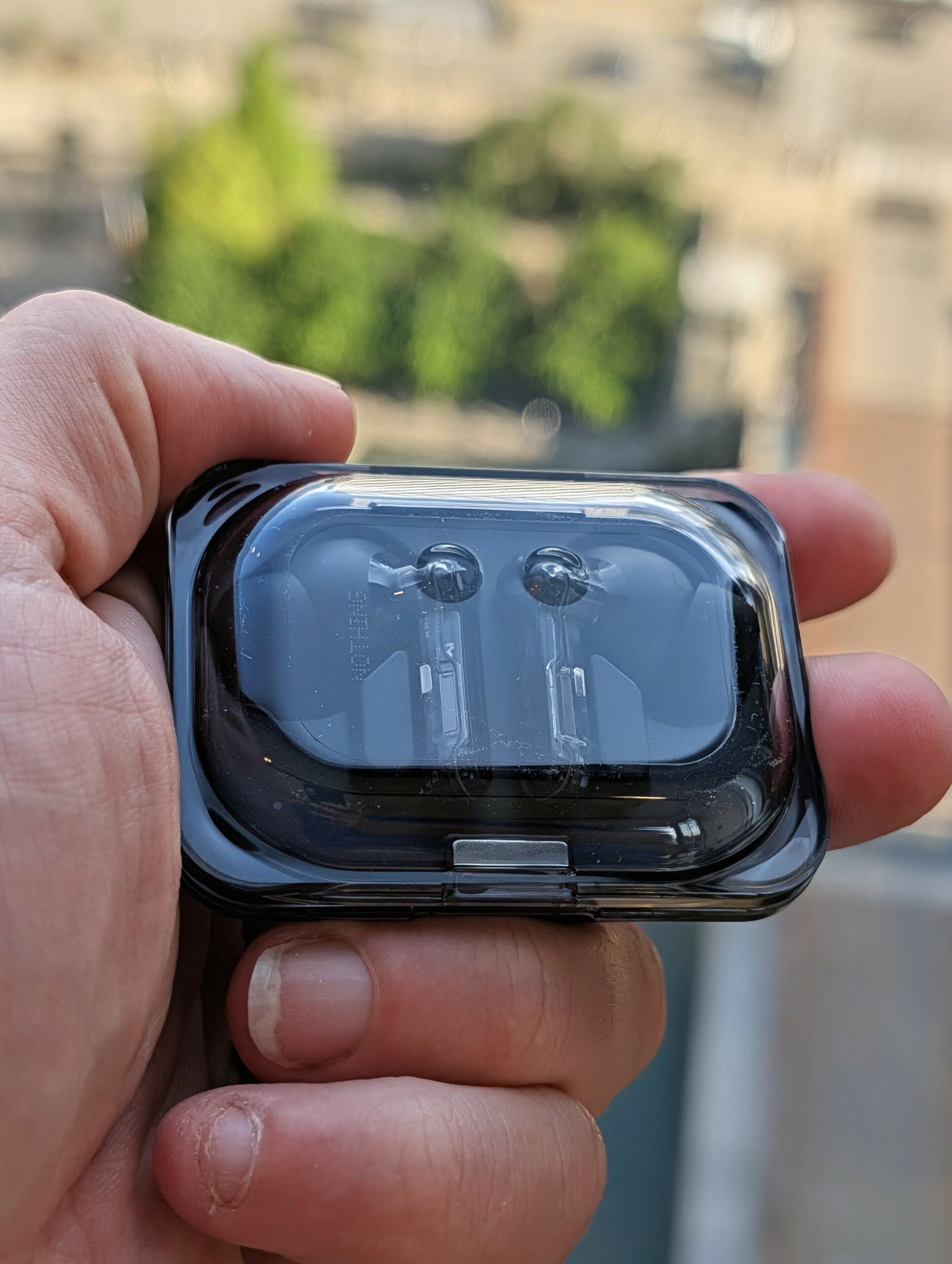
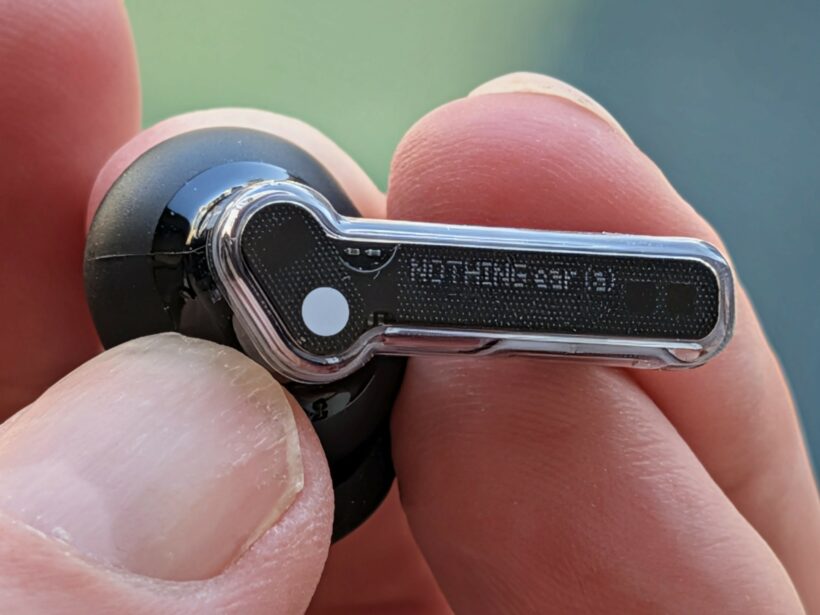
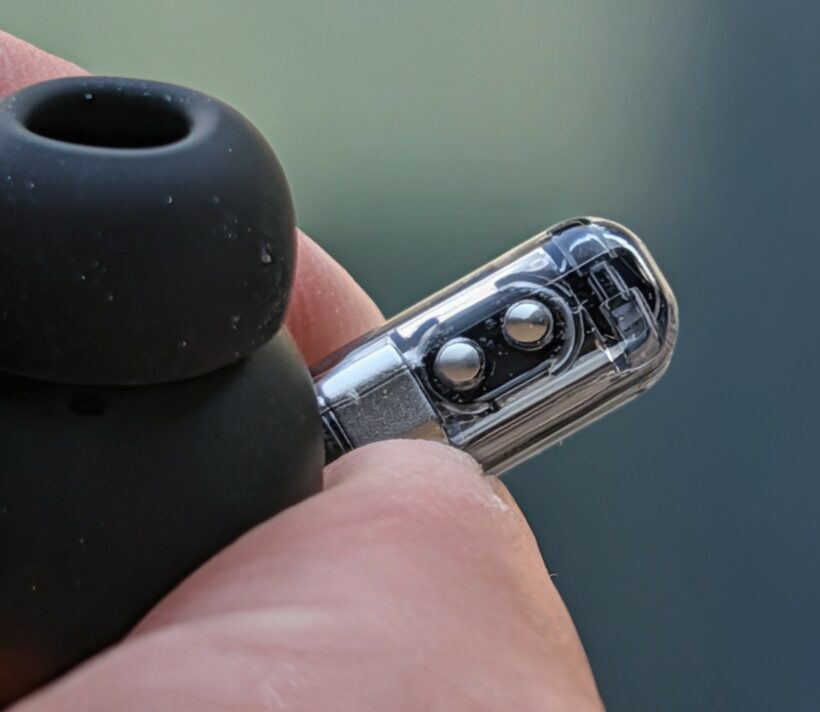
Each bud runs an 11mm dynamic driver in a dual-chamber housing, and Nothing’s own line at launch was that it delivered double the driving power of the Ear (2), with two extra vents to move air inside the bud. It weighs 4.8g per side and speaks Bluetooth 5.3 with SBC, AAC, and LDAC up to 24-bit/96kHz. There is no LHDC. If you want the cheapest single line separating this from the flagship Ear, that is it, and I will come back to how little it matters.
The driver is where the cost-cutting actually lives, and it is subtle. The flagship Ear used a ceramic diaphragm. The (a) uses a PMI and TPU diaphragm instead, which Nothing was upfront about and which nobody without measurement gear is going to hear in a coffee shop. It is a real difference on a distortion chart and a rounding error in your ears.
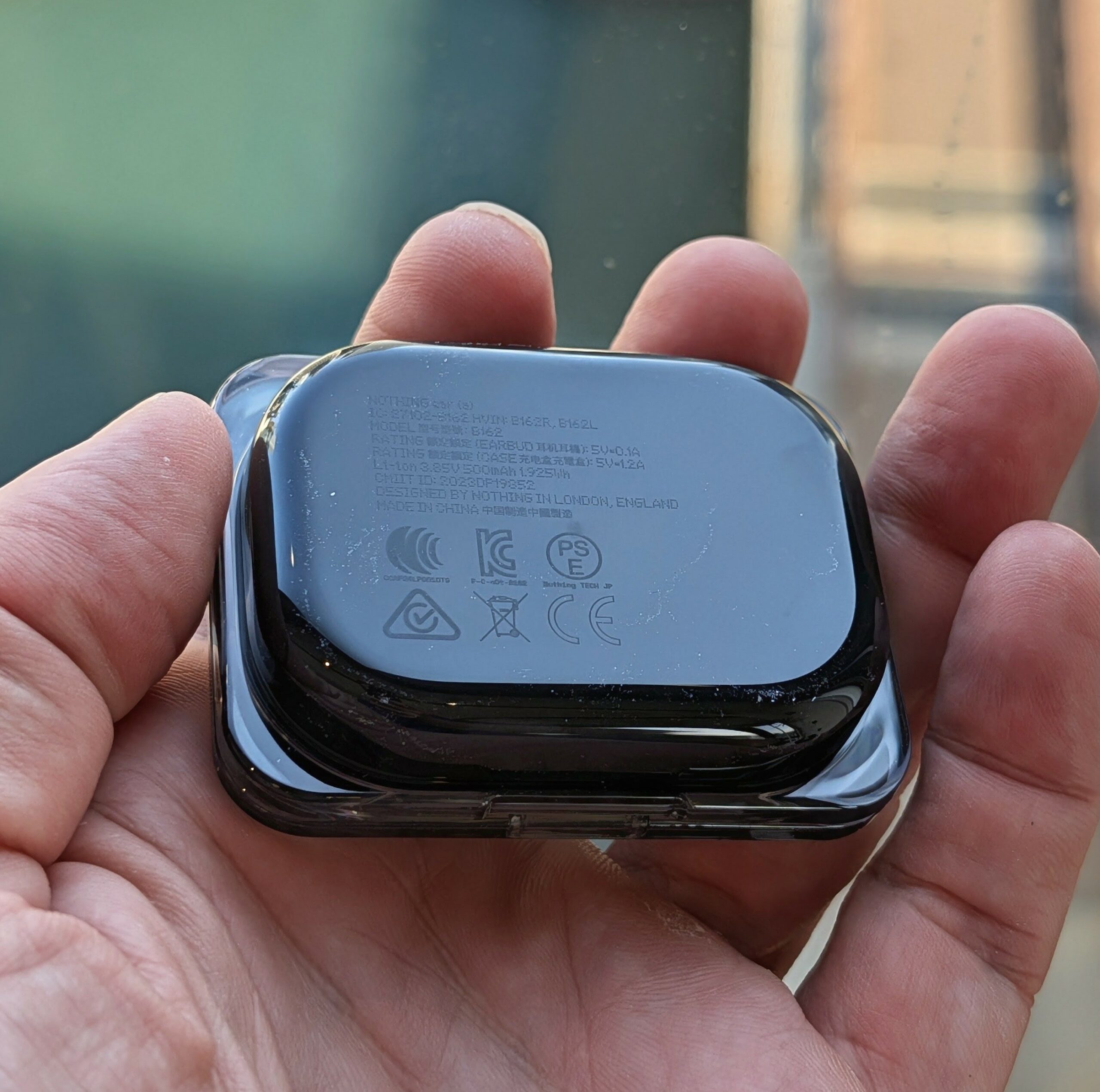
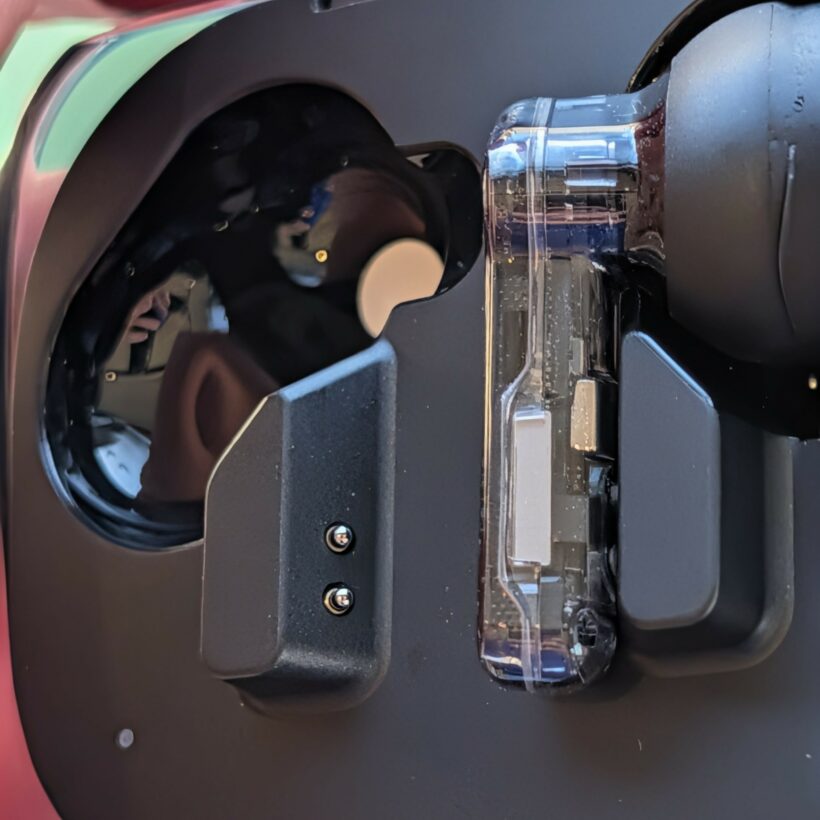
Batteries are 46mAh per bud and 500mAh in the case, and Nothing rates the buds at up to 9.5 hours with ANC off, 42.5 hours with the case, and a 10-minute charge for roughly 10 hours of playback. Turn ANC on and crank the volume, and independent testing put the buds at just under 4.5 hours, which is honest for the class. There is no wireless charging. It is wired USB-C or nothing, and at what I paid, I have never once minded topping them off from the bottom of my phone with a short cable.
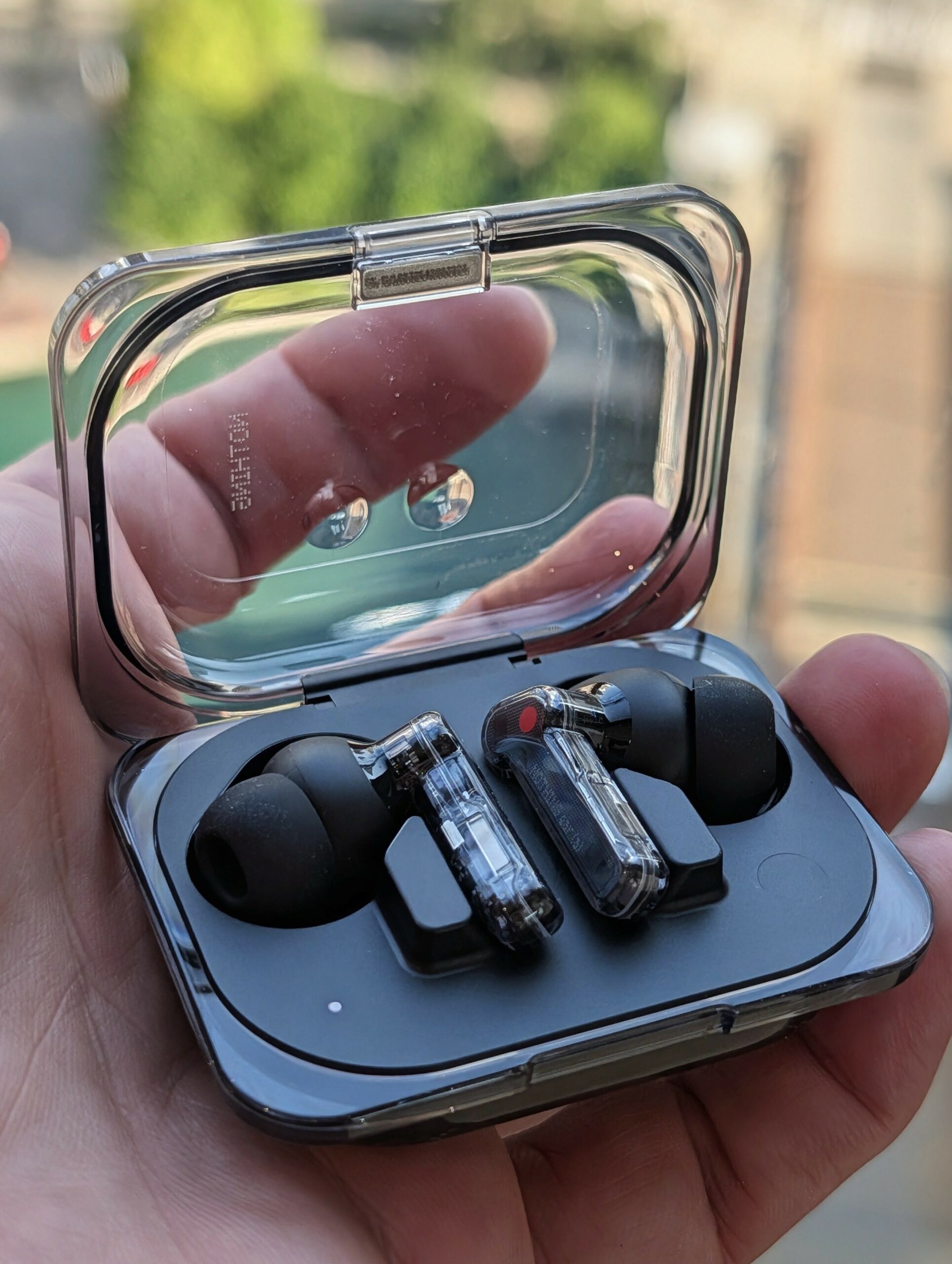
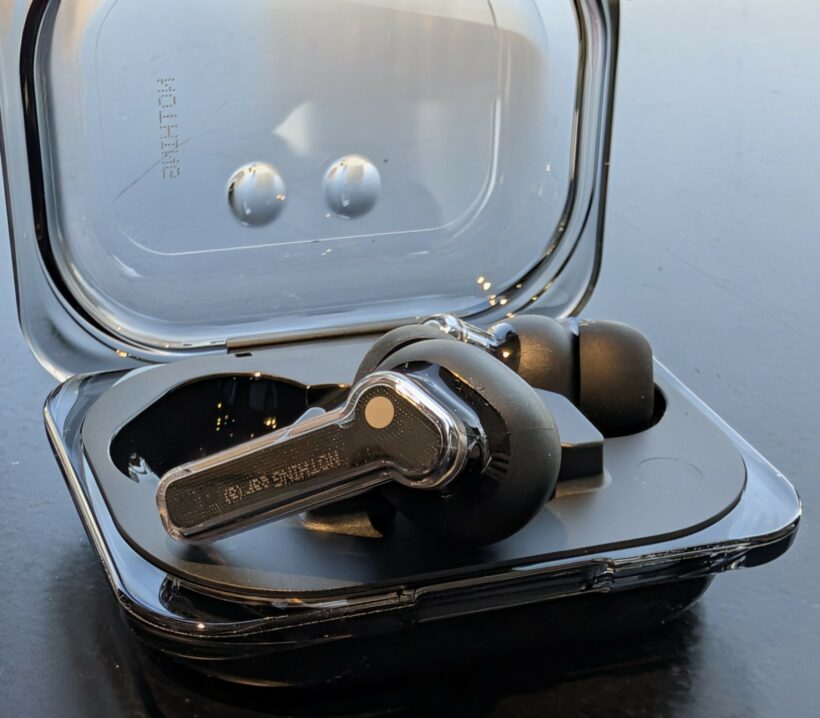
Then the case, which is the one place I want to be picky. The buds are IP54, fine, splash-proof and dust-resistant. The case is only IPX2, meaning it survives a few drips and nothing more, where the flagship Ear got an IP55 case. It is a small thing until you leave it in a jacket pocket in the rain, and it is the exact inversion of what the Ear (3a) later fixed, where the case finally got the same IP54 as the buds. On the plus side, the (a) case is the small, light, genuinely pocketable one, well under the flagship’s roughly 52g squircle, which is more than I can say for the blister-pack monstrosity Nothing bolted onto the (3a).
Three mics handle calls with Nothing’s Clear Voice processing, in Black, White, and the Yellow everyone photographs. Here is how the (a) sits against its own flagship sibling and against the successor that now shares its price.
| Ear (a) | Ear (2024) | Ear (3a) | |
|---|---|---|---|
| Launch | Apr 2024 | Apr 2024 | Jul 2026 |
| Price | $99 | $149 | $99 |
| Driver | 11mm | 11mm | 12mm |
| Diaphragm | PMI + TPU | ceramic | PMI + TPU |
| ANC | 45dB adaptive | 45dB adaptive | 45dB adaptive |
| Bluetooth | 5.3 | 5.3 | 6.0 |
| Codecs | SBC/AAC/LDAC | SBC/AAC/LDAC/LHDC 5.0 | SBC/AAC/LDAC |
| Wireless charging | no | 2.5W | no |
| Case IP rating | IPX2 | IP55 | IP54 |
| Bud battery | 46mAh | 46mAh | 55mAh |
| Playback (ANC off) | 9.5h / 42.5h | 8.5h / 40.5h | 10h / 42h |
| Advanced parametric EQ | no | 8-band | 8-band |
| Onboard storage | none | none | 32MB |
The 45dB number and the 45dB reality
Nothing claimed up to 45dB of adaptive cancellation, driven by a library it says covers 28 million sound scenarios, picking one of four levels for you based on what is around your head. That is a big marketing number, and the reality is more modest. RTINGS measured overall attenuation of around 18dB across the range. Good enough to take the drone off a bus or the hum off an open-plan office, not good enough to delete a train. And riding on the bus and on the streets, I tend to agree with this measurement, but I don’t have the equipment anyway, so just IMO.
What it will not do is stop a nearby voice or a PA announcement, and there is no conversation detection, so it never pauses when someone talks to you at the counter. I do not hold that against a budget earbud. What I do notice, a couple of weeks in, is that this is roughly the wall Nothing lived at for two years, because the (3a) is the first (a)-tier bud to blow past it with a genuinely wide margin. In 2024, 57 percent at this price was a headline. By 2026, it is the number you tolerate until you can find the successor on sale.
The best app in the category, and the part they fenced off
Nothing X is still the reason I recommend Nothing buds over spec-equivalent rivals, and the (a) gets most of it: the ear-tip fit test, dual-device multipoint, Find My, in-ear detection, a low-lag gaming mode, remappable pinch controls, and firmware updates that actually keep landing years later. The whole panel is clean, fast, and free of the ad-riddled nonsense most budget brands ship.
And then there is the one thing that annoys me every time I open it. The (a) does not get the advanced parametric EQ. Nothing kept the real 8-band tool, the one where you set gain, center frequency, and Q per band, for the flagship Ear and the Ear (2), and left the (a) with four presets (Balanced, More Bass, More Treble, Voice) plus a five-level Bass Enhance slider. This is not a hardware limit. It is a line drawn in software to protect the more expensive bud, the exact restriction I traced through the firmware in my full breakdown of the Nothing X app, and it is the single clearest signal of where the (a) sits in the family. The buds can clearly render whatever curve you feed them; you are just not trusted with the knobs. On the (3a), Nothing finally handed the parametric EQ and the community-profile marketplace down to the cheap tier, which quietly tells you the (a)’s biggest limitation was a decision, not a component.
The launch-day party trick was ChatGPT: pinch and hold to summon it hands-free. The asterisk nobody put in the headline is that it only works if you own a supported Nothing phone, which rules out most of the people buying a 99 dollar earbud to pair with whatever they already have. Every reviewer who tried it, me included, filed it under more hype than help. It is a demo, not a reason to buy.
What Nothing quietly took out
Line the (a) up against the 149-dollar Ear it launched beside, and the subtractions are easy to list. The ceramic diaphragm became PMI and TPU. LHDC disappeared, leaving LDAC to carry hi-res on its own. Wireless charging was cut. The advanced EQ was fenced off. The case dropped from IP55 to IPX2. Five deliberate cuts, all sensible on a spec sheet.
Here is the part that mattered, and the part that should have worried Nothing’s product managers more than it apparently did: almost none of those cuts change how the thing sounds to a normal listener in a normal place. The seal, the tuning, and the ANC do the heavy lifting, and those came over nearly intact. So a buyer looking at the 99 and the 149 side by side in April 2024 was mostly paying the extra 50 for a nicer case, a codec their phone probably could not use, and knobs in an app. Plenty of them did the maths and bought the (a). I am not getting into how the (a) stacks up against the wider sub-100 field, the EarFun and Soundcore and QCY crowd, because that comparison wants its own listening time and its own post. Within Nothing’s own range, though, the (a) was the value pick that made you question the tier above it, which is exactly the trap the company keeps walking back into.
At launch, the Ear (a) was the easiest earbud recommendation I could give anyone with 99 dollars and an Android phone. Two years later, I cannot give it at full price, and the reason is entirely Nothing’s own doing. The Ear (3a) sits at the same 99 dollars and beats the (a) on ANC by a wide margin, adds Bluetooth 6.0, hands down the parametric EQ and the profile marketplace, fixes the case to IP54, and throws in the 32MB storage experiment on top. Same money, a clear generation ahead. The only situation where the (a) still makes sense is the one the market keeps creating for it: heavily discounted, dropping toward 70 dollars or lower, at which point it is a genuinely good pair of budget buds with a great app and a mediocre case. That is exactly the trade I made: fifty dollars on Prime Day, below even the floor I just described, which is the only price at which I would tell anyone to bother with it in 2026. At full list, I would have sent them back and waited for the (3a) to dip.
What stays with me is not the earbud; it is the pattern it kicked off. Nothing spent five years building a flagship audio tier and then, starting with this exact yellow bud (okay, mine are black, no comment), kept shipping a cheaper one that ate most of its reason to exist. The (a) was the first crack.