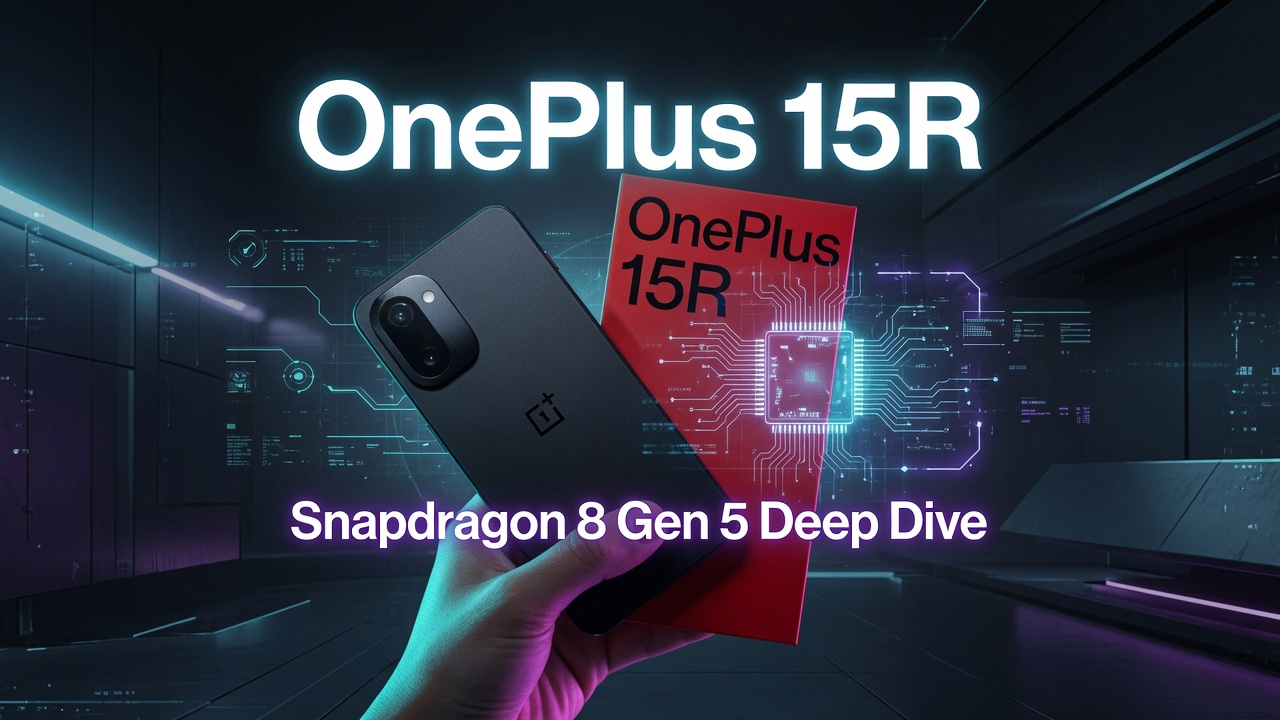
The OnePlus 15R proves that the cheaper Snapdragon was the one to buy
Seven months on the market, and the OnePlus 15R still holds a higher sustained graphics score than the pricier OnePlus 15, sitting one rung above it, because the flagship’s Snapdragon 8 Elite Gen 5 cooks itself under load while the 15R’s plain 8 Gen 5 keeps its head. That inversion is the whole reason this phone interests me, and it is not the reason OnePlus wants you to buy it.
It is also, as of this morning, a review of a phone from a company that is leaving my country. So the interesting question stopped being whether the 15R is worth $699 and became what $699 buys you from a brand halfway out the door.
The first R-series phone that got a new chip, and the last one that will
The R-series exists because the flagship costs too much for most of the people who want a OnePlus. The formula for years was simple and slightly insulting: take last year’s flagship Snapdragon, wrap it in this year’s cheaper body, cut the camera, charge $499 or $599. The 12R ran an 8 Gen 3 the year after the 12 did. The 13R did the same trick a rung down. It worked because last year’s flagship silicon is more than fine, and because OnePlus was still, at that point, a company that priced its way into the conversation.
The 15R breaks the formula. It is the first R-series phone to launch on a brand new Qualcomm part, the Snapdragon 8 Gen 5, which OnePlus says it co-developed with Qualcomm and which is why it got first dibs. That is a real change in how OnePlus is positioned inside Qualcomm’s stack, and it is the reason this phone benchmarks the way it does. It is also, given what Bloomberg reported this morning, almost certainly the last time an R-series phone will get that treatment in the US.
Pricing at launch was $699.99 for 12GB/256GB and $799.99 for 12GB/512GB, a hundred dollars over the 13R and two hundred under the 15. Twelve gigs is the only RAM configuration; the 16GB option the 13R offered is gone. Pre-orders opened December 17, open US sales January 8. Since then the 512GB model has been discounted to $699.99, which is the number that matters now, and I will come back to what that does to the argument.
The chip: same cores, shorter leash
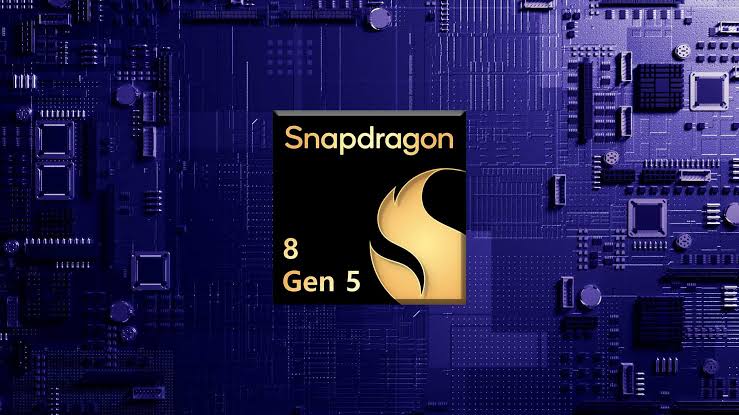
Start here, because as a Snapdragon guy this is the part I keep turning over. The 8 Gen 5 is Qualcomm’s second-tier late-2025 silicon on a 3nm node, and it is not a warmed-over last-gen part. It runs the same third-generation Oryon cores as the 8 Elite Gen 5 in the same 2+6 arrangement. What changed is the leash.
Two prime cores at 3.8 GHz against the Elite’s 4.61, which is better than 17% off the top. Six performance cores at 3.32 GHz, roughly 8% down. Memory tops out at 4800 MHz where the Elite runs 5300. The modem steps from X85 to X80, dropping peak downlink from 12.5 Gbps to 10, which matters to precisely nobody on a US network in 2026. Qualcomm’s own claim for the part is 36% more CPU and 42% better efficiency over the previous generation, and that second number is doing quiet work here that I will get to when I talk about the battery.
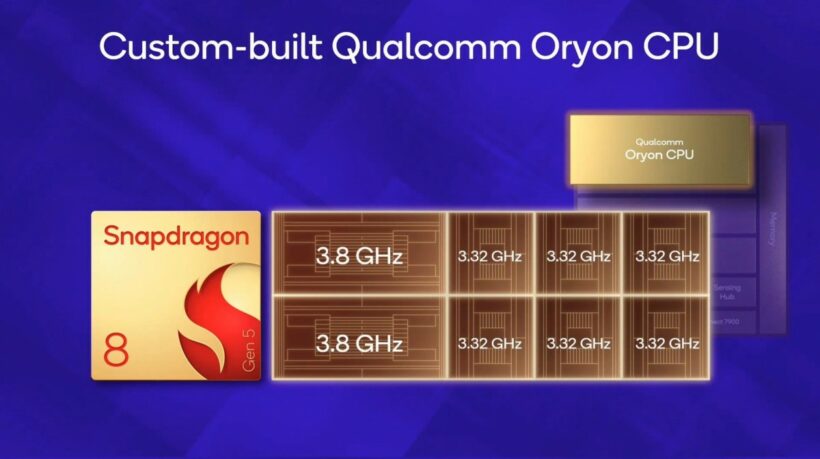
Here is the sheet, because two chips this close on paper are the one case where a table beats me at narrating every clock speed.
| Snapdragon 8 Elite Gen 5 | Snapdragon 8 Gen 5 | |
|---|---|---|
| In | OnePlus 15, Galaxy S26, Xiaomi 17 | OnePlus 15R |
| Process | 3nm | 3nm |
| CPU layout | 2+6 Oryon (3rd gen) | 2+6 Oryon (3rd gen) |
| Prime cores | 2x @ 4.61GHz | 2x @ 3.8GHz |
| Performance cores | 6x @ ~3.6GHz | 6x @ 3.32GHz |
| GPU | Adreno 840 | Adreno 829 |
| Memory | LPDDR5X @ 5300MHz | LPDDR5X @ 4800MHz |
| Storage | UFS 4.1 | UFS 4.1 |
| Modem | X85 (12.5 Gbps down) | X80 (10 Gbps down) |
| Geekbench 6 (in these phones) | ~3,773 / 11,293 | ~2,857 / 9,512 |
The row that actually decides things is the GPU, and it is the one Qualcomm’s naming works hardest to obscure. The Adreno 829 is not a slightly smaller Adreno 840. It is a higher-clocked Adreno 825, the part from the Snapdragon 8s Gen 4, and it is nowhere near the 840 on compute units or graphics memory. I have complained before about how Qualcomm’s own naming buries which chip is actually better, and the 829-versus-840 gap is the same trick at a higher tier: two numbers eleven apart, two very different pieces of silicon.
Where the deficit is real, and where it evaporates
CPU first, because it is the boring answer. Geekbench 6 lands around 2,850 single and 9,450 multi. The OnePlus 15 posts roughly 3,773 and 11,293. That is a 22 to 27% gap, and you will not feel one point of it opening an app, scrolling a feed, or doing anything a phone is normally asked to do. AnTuTu sits near 3.08 million, which quietly beats a Galaxy S25 Ultra that still costs several hundred dollars more. Against the 13R it replaces, the 8 Gen 5 is worth about 27% single-core and 45% multi-core, the largest generational jump the R-series has ever had. Against the OnePlus 13, a phone that was the flagship eighteen months ago, it lands about 9% behind on single and marginally ahead on multi.
GPU is where the Adreno 829 shows its tier, and it lands in Snapdragon 8 Gen 3 territory on graphics-heavy work while the CPU is outmatching Elite-class phones. That is a strange-shaped phone, and it is the shape OnePlus chose.
Then thermals flip the whole thing on its head. The 15R holds around 89.6% of peak after twenty loops of 3DMark’s Wild Life stress test. During an AnTuTu run it climbs from about 33°C to a peak near 44°C, which is nothing. GSMArena’s stress testing put it at 70% on CPU and 66% on GPU sustained, warm but never unpleasant. Meanwhile the OnePlus 15, with the better chip, ran into thermal trouble on the harder Steel Nomad Light Unlimited run. OnePlus buried a 360-degree cooling stack in here: aerogel insulation over a 5,704 mm² hand-tearable steel vapor chamber with a graphite layer on top, paired with a chip that generates less heat to start with. Genshin Impact maxed-out holds a steady 60 fps on the 15R and on the 15, and the 15R will hit 165 Hz in the handful of games that support it without complaint.
I keep coming back to how badly this is communicated. A buyer standing in front of two OnePlus phones sees the word Elite and assumes the expensive one is faster at everything, forever. It is faster for about fifteen minutes. Then the cheap one is faster, because it is not busy trying to survive itself. Is this the SoC and supplier fault, nah! OEMs need to rethink their cooling system, not at the point of adding a fan, but with smaller motherboards, circuitry packed so close, and thinner devices don’t help heat dissipation. And during these times, all of them are cutting corners here and there, including this part. I would trade the 165hz panel for a 120Hz (LPTO for AOD) and a better cooling system too.
The four-column reality check
| OnePlus 15R | OnePlus 15 | OnePlus 13R | OnePlus 13 | |
|---|---|---|---|---|
| Launch | Dec 2025 | Nov 2025 | Jan 2025 | Oct 2024 |
| Chipset | Snapdragon 8 Gen 5 | Snapdragon 8 Elite Gen 5 | Snapdragon 8 Gen 3 | Snapdragon 8 Elite |
| Display | 6.83″ LTPS AMOLED, 1272×2800, 165Hz | 6.78″ LTPO AMOLED, 1272×2772, 165Hz | 6.78″ LTPO AMOLED, 120Hz | 6.82″ LTPO AMOLED, 1440×3168, 120Hz |
| RAM/storage | 12GB / 256-512GB UFS 4.1 | 12-16GB / 256-512GB | 12-16GB / 256-512GB | 12-24GB / 256GB-1TB |
| Battery | 7,400 mAh | 7,300 mAh | 6,000 mAh | 6,000 mAh |
| Wired charging | 80W (55W brick in US box) | 120W | 80W | 100W (80W US) |
| Wireless | None | 50W | None | 50W |
| Main camera | 50MP Sony IMX906, OIS | 50MP Sony IMX906, OIS | 50MP Sony LYT-700, OIS | 50MP Sony LYT-808, OIS |
| Telephoto | None | 50MP periscope, 3.5x (85mm) | 50MP 2x, no OIS | 50MP LYT-600 periscope, 3x (73mm) |
| Ultrawide | 8MP IMX355, fixed focus | 50MP | 8MP, fixed focus | 50MP JN1 + macro |
| Tuning | DetailMax Engine | DetailMax Engine | Hasselblad | Hasselblad |
| Alert slider | No | No | Yes | Yes |
| IP rating | IP66/68/69/69K | IP66/68/69/69K | IP65 | IP68/69 |
| Weight | 213g | 211g | 206g | 213g |
| Launch price (US) | $699.99 | $899.99 | $599.99 | $899.99 |
| Street price now | $699.99 (512GB) | $799.99 | gone | gone |
Read that one column at a time, and the 15R looks like a phone assembled by subtraction. Read it one row at a time and something stranger shows up: on the rows that decide how a phone feels hour to hour, the cheap one wins or ties. Biggest battery of the four. Highest refresh rate, tied with the 15. Same main sensor as the flagship. Best IP rating, tied with the 15 and a real jump from the 13R’s IP65. What it gives up is optics, wireless charging, and charger wattage, and OnePlus knew exactly which cuts a spec-sheet shopper forgives.
The 13 column is the one that stings. That phone is from October 2024, it had a 3x periscope and 50W wireless charging and a Hasselblad partnership, and it cost the same $899 the 15 launched at. Two years of progress bought you a bigger battery and a faster chip and cost you a camera system.
The battery is a brute, and I mean that as a compliment and a complaint
7,400 mAh in a 213-gram body. The largest cell OnePlus has ever shipped and the largest in any mainstream Android phone sold in the US. In PCMark’s work-battery run, it has posted anywhere from 18 to nearly 23 hours depending on who’s testing, outlasting even the OnePlus 15 with its more efficient panel. At three hours of screen-on time a day on Wi-Fi, people are getting two and a half days. Two days on a normal routine is still a marketing line here; I was able to go from the morning 6 to the evening at 11 with my current usage, and that’s good, but no way I can last 2 full days. I have watched reviewers describe struggling to drain it below half in a single day, but guys don’t have a SIM card, multiple push email accounts, and their devices connected to the wifi, resting in a drawer. At the same time, they rarely show their SoT too (IYKYK)
The technology underneath is the Glacier cell, a high-density silicon-carbon design OnePlus developed with CATL and split into a dual-cell pack so it can physically fit and shed heat. The reason silicon matters is that it stores roughly ten times as much lithium per gram as graphite, so you can shrink the anode and spend the volume on capacity, which is how a 7,400 mAh cell ends up in a body thinner than a Pixel 10. The historical objection to silicon has always been swelling and cycle death, and OnePlus’s answer is a claim of 80% health after four years of daily charging. I cannot verify that in seven months, and neither can anyone else. I will also note that the company making a four-year durability promise is, as of today, in the process of deciding whether it wants a US presence at all, which is a hell of a thing to sit next to a warranty claim.
The catch on the endurance is how OnePlus got there, and it is the least elegant win in the phone. This is an LTPS panel, not LTPO. There is no dropping to 1 Hz on a static screen to sip power. Day-to-day it steps between 60, 90, and 120 Hz, and 165 Hz shows up only in specific games. The 13R could go to 1 Hz. So the cheaper new phone burns more power than its own predecessor every time you leave it face-up on a desk, and brute-forces past that with a cell 1,400 mAh larger. It works. If you wanted flagship-grade efficiency instead of flagship-grade capacity, that is the gap, and it is a real one. But still why not an LTPO panel… and go backward on this one.
Charging is where the value story wobbles
The phone supports 80W wired, and the American box ships with a 55W SuperVOOC brick. That is a downgrade from the 80W the 13R shipped with, in a year when the battery got 23% bigger. Zero to full still lands a little over an hour, which for a 7,400 mAh cell is acceptable, but “acceptable” is not the word OnePlus built its name on. Here we go again for cutting corners here and there, plus this one is not even GaN (for the price it should have been, plus smaller packages, more volume in a pallet, but I guess they don’t think they will sell a lot here, so why bother).
There is a second-order problem here that nobody puts in the review bullets. SuperVOOC is a proprietary protocol, and plugging an OPPO-family phone into a standard USB PD charger drops it to a crawl, because the fast path is gated behind a handshake only OnePlus’s own bricks speak. Normally that is an annoyance. When the company that makes those bricks is winding down its US store, it becomes a question about whether you can buy a replacement charger in three years (The response is: deal with that, not our problem while it’s where you are making more margin on units sold, so nonsense)
No wireless charging at all, which stings when a $499 Pixel 9a has it, and stings worse when the two-year-old OnePlus 13 did 100W wired and 50W AirVOOC. You will hear the same excuse as usual: the consumers don’t want it (or don’t use it), while when I’m looking around here, the majority are using it with their iPhone…
The display, briefly, because it is almost good
6.83 inches of AMOLED at 1272 x 2800, 10-bit, 90.1% screen-to-body, Gorilla Glass 7i, 2160 Hz PWM dimming for anyone whose eyes hate cheap OLEDs, roughly 1,800 nits in high-brightness mode with a measured peak north of 3,500 nits that makes outdoor use a non-issue. It is excellent in the unremarkable way good panels are excellent. The LTPS compromise I already griped about is the only footnote, and the 165 Hz headline is mostly theater, since almost nothing outside a short list of games ever asks for it (not so many so far). But AOD is something you can use every day (or every time)
The camera is one great sensor and a lot of shrugging
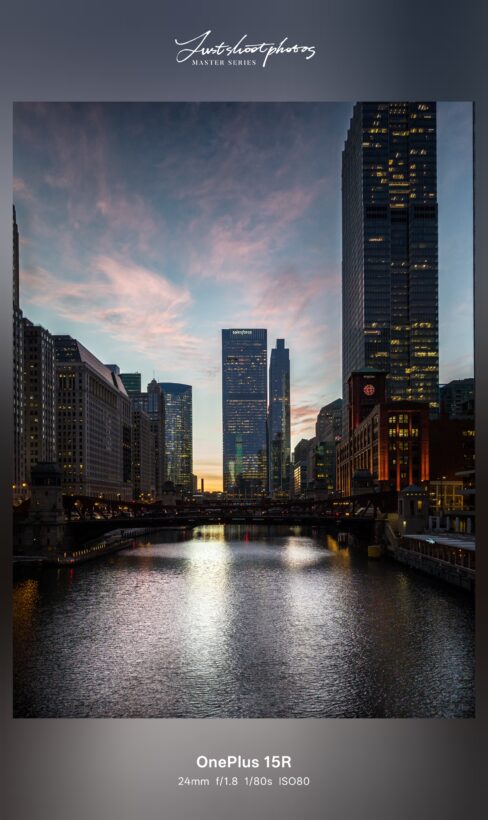
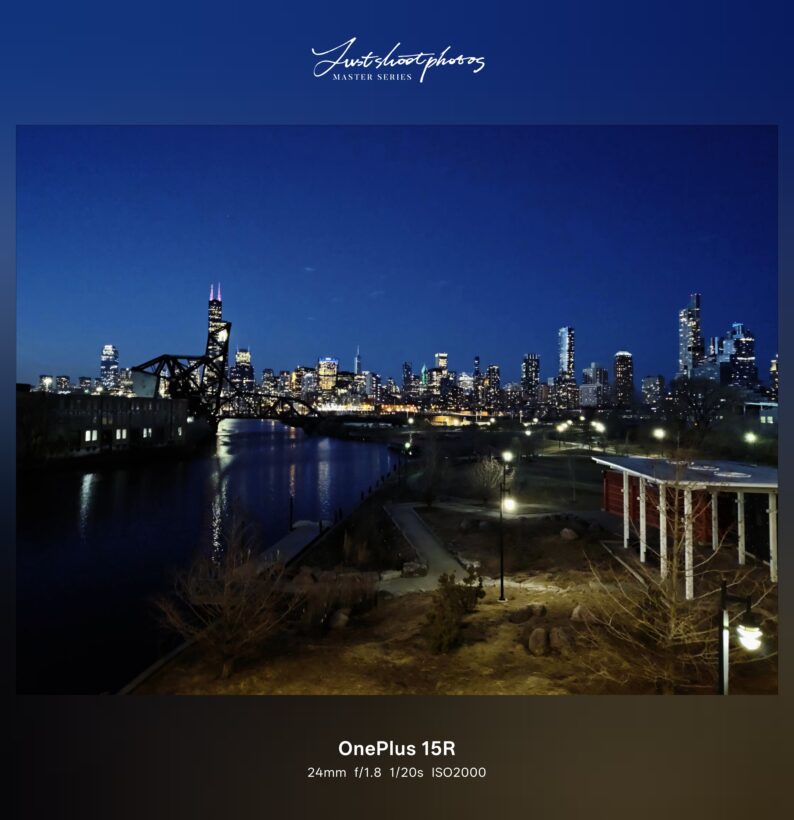
The main is a 50 MP Sony IMX906, a 1/1.56-inch sensor at f/1.8 and 24mm equivalent, with OIS and omnidirectional PDAF, shooting up to 4K120. It is the identical part OnePlus put in the 15. It is also the identical part OnePlus has put in nearly every phone it has shipped since the 13R, to the point where GSMArena called it the most overused camera in OnePlus history, and that is the correct read (I guess they stock a bunch of them, or they don’t want to spend time to tune a new sensor, cutting corners or resources on it again).
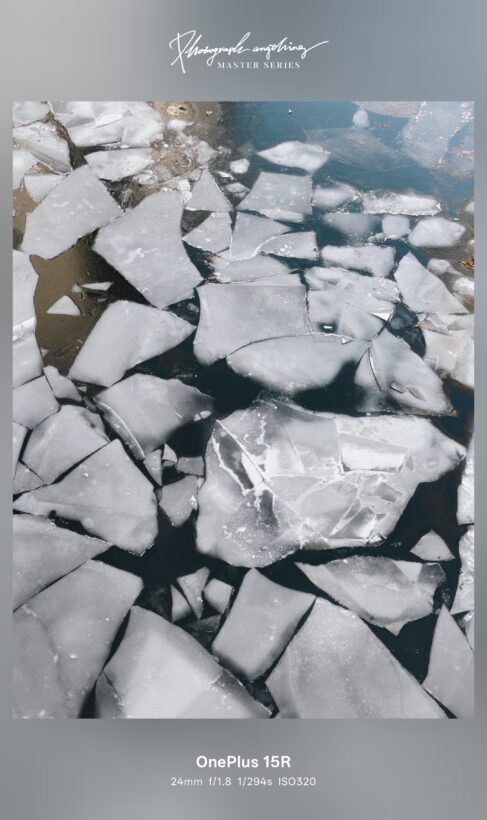
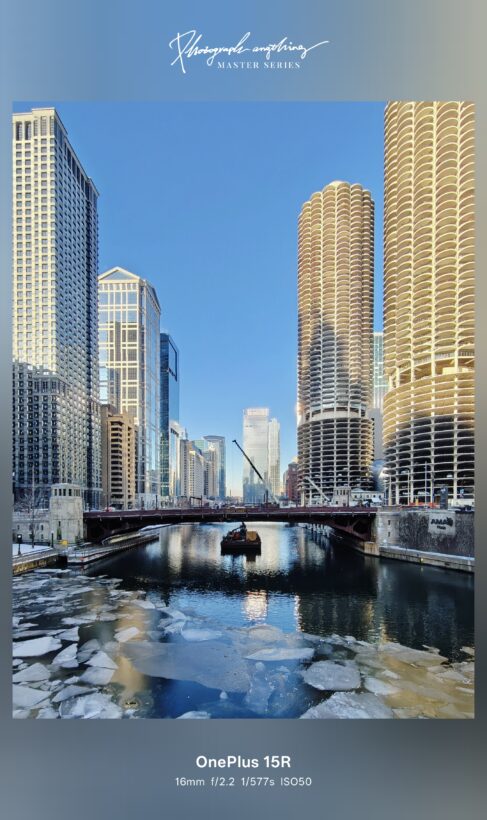
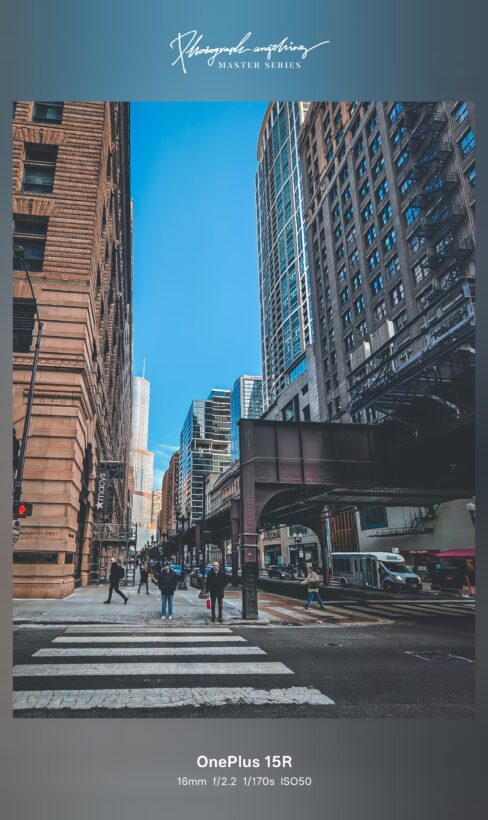
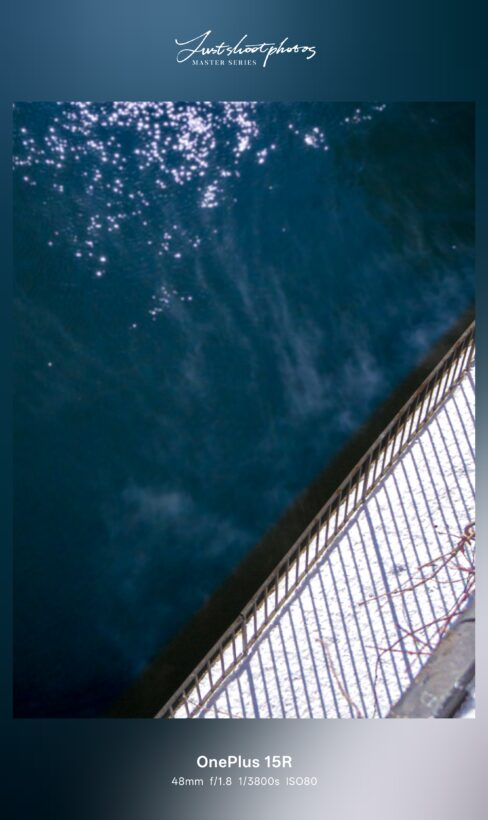
But the tuning part is the new DetailMax Engine, which replaced the Hasselblad partnership this generation, and the results are better than that sentence deserves: reliable white balance, restrained processing, strong dynamic range, and an optional 26 MP high-res mode that kicks in outdoors if you go turn it on manually. In the dark it holds up better than it has any right to. But it is only for this sensor.
Everything around that sensor is where I lose patience (and anyway the limit of their new engine, no miracle here, hardware will always be the key here).
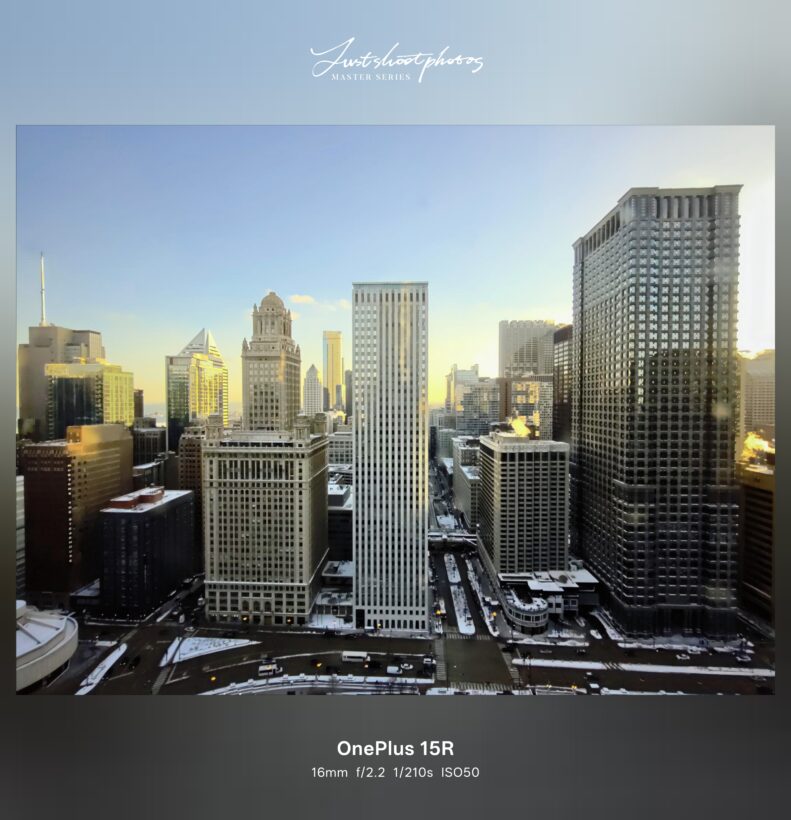
The ultrawide is an 8 MP Sony IMX355 on a 1/4.0-inch sensor behind a fixed-focus f/2.2 lens at 16mm, capped at 1080p30 video. OnePlus has been recycling that exact part since the OnePlus 12R (hashtag surprising). Fixed focus means no macro, so the 15R loses close-up work to the cheaper Nord 5, which has autofocus on its own anemic 8MP ultrawide. Here is the detail that made me laugh out loud: the Nothing Phone that has been sitting on my desk all month uses the same 8 MP IMX355, on a phone that starts at $£349. When a budget phone and a $699 phone ship the identical ultrawide, that part is not a choice; it is a shelf.
The telephoto is the loss that actually costs you pictures. The 13R had a 2x, a small sensor without OIS, and it still made that phone meaningfully more versatile. The 13 had a proper LYT-600 periscope at 73mm. The 15 has an 85mm periscope. The 15R has a crop of the main sensor and a marketing bullet about 2x quality. For a phone otherwise punching at flagship weight, no optical reach is the one spec-sheet hole you feel every time you shoot.
The selfie camera did get a real upgrade, 32 MP with autofocus, a first for the R-series, though it is a quad-Bayer sensor upscaling to 32 MP when it should hand you clean 8 MP files, and the 50 MP front camera on the cheaper Nord 5 beats it in low light. I am not doing a full imaging breakdown here; the LUT work and low-light samples are their own post, but the short version is that the main sensor is trustworthy and the system around it is thin (at best).


OxygenOS 16 went the wrong way, and I am not the only one who noticed
I want to be careful here, because I disliked OxygenOS 15 a lot (and the one before, and the one before too). Before all of that, it was fast, light on bloat, and had the best customization in the business without the second app store that comes with the alternatives. And ColorOS came (yeah, same code; let’s call a cat a cat), and everything went south. Yes, OxygenOS 16, on Android 16, is the version where a new drift became visible because of all this AI BS and how it is handled.
The good parts are quite real (and marketed). Animations are technically improved (but don’t care I deactivate them in dev option), the 5×7 home grid is nice (that I use), layered lock screen clocks with depth effects are nice (but no AOD), expandable app icons are something (and Xiaomi does that too). The headline feature is Mind Space, which is the Plus Key’s entire reason for existing: press it, and the system screenshots what is on screen, has AI pull the URL and headline and a summary, and files it as a card you can later interrogate through Gemini, which is the default assistant. Some reviewers call it the best on-device AI implementation going. And you will never know where your data will be backed up or used by third parties. Trading the Rocker key for that… Give it back, period.
To me, it is the Google Screenshots app with extra steps and a mandatory “in Mind Space” suffix on every prompt, and I stopped using it inside a week (1 day). And that is the charitable complaint. The uncharitable one is that OxygenOS 16 is heavier than the thing it replaced: deliberate, still sludgy animations on the app drawer (I guess Chinese user just like their icons on the Home screen anyway) and quick settings that make a phone with a 3.08-million AnTuTu score feel slower than it is, a Categories tab in the app drawer lifted straight off iOS, Liquid Glass effects strewn around at random, and a Plus Key settings page that is a worse copy of Apple’s action button screen (You can copy if only you improve it). Notifications still arrive later than on a Pixel (thank you, super aggressive deep sleep). These are not new bugs; they are old bugs that survived a redesign and were left unaddressed. Be pretty and shut up kind of situation.
The community threads tell the same story from the other side: the 16.0.8.300 rollout brought app crashes on the 15R, and 13R owners reported their 120 Hz panels behaving like 60 Hz after the Android 16 jump. Every OEM shipped a rough Android 16, so I am not going to pretend this is unique. What is unique is that this one arrived from a company that was already unraveling.
The update policy and the asterisk that just got much bigger
OnePlus promises the 15R four years of Android OS upgrades starting from OxygenOS 16, plus six years of security patches. Same as the OnePlus 15. Support tables put the 15R’s end date around December 31, 2031.
Two asterisks on that even before today’s news. First, OnePlus has a form on how it counts. When the 13 and 13R launched, the North America PR team told the press that the out-of-box Android version counted as one of the four updates, which would have quietly turned four years into three; global PR later reversed that and confirmed the shipping build does not count. That is not a rounding error; that is a whole Android version, and the fact that the answer depended on which office you asked tells you how load-bearing the promise is. Second, OnePlus does not ship security patches monthly. It runs roughly bi-monthly, in batched incremental rollouts, which is fine right up until a serious CVE lands in an off month.
Against the field, it is not close.
| OS upgrades | Security | Cadence | |
|---|---|---|---|
| Google Pixel 10 | 7 years | 7 years | Monthly, day one, quarterly Feature Drops |
| Samsung Galaxy S25 FE / S26 | 7 years | 7 years | Monthly, OS lands 2-3 months behind Google |
| OnePlus 15 / 15R | 4 years | 6 years | Roughly bi-monthly, batched rollouts |
| Nothing Phone (4a) | 3 years | 6 years | Timely for a small OEM, not day one |
| Motorola Hello UI | ~2, varies | up to ~5 years | Slow, inconsistent, upgrades not guaranteed |
Four OS versions on a $699 phone in 2026 was already the weakest column on the sheet. OnePlus’s public defense has always been that TÜV SUD testing showed four years is where a phone stops feeling smooth anyway, which is a fine argument if you are the one who decided when to stop supporting it. Every year that answer holds while Google and Samsung give you seven, it reads worse.
So what actually happens to your 15R now
This is the part I would want to know if I owned one, so let me be direct about what is known and what is not.
What is known: Bloomberg reported this morning, July 15, that OnePlus will begin ceasing operations in the US and Europe as early as this week, as part of a restructuring at parent company Oppo, with Realme pulled out of China in the same move. The wind-down is expected to reach the rest of the world, India included, at some point in 2027. Existing stock gets sold off with no restocks. The regional websites have already started redirecting to Oppo pages. None of this was announced with a founder’s letter, and I wrote about how this exit surfaced through closed-door briefings rather than any statement to customers two days ago, before Bloomberg put its name on it.
What is reported but not confirmed is that OxygenOS will be folded into ColorOS across Oppo’s brands, phasing out both OxygenOS and Realme UI. If that lands, the software I just spent four paragraphs criticizing becomes a dead branch anyway, and the interesting question is whether a 15R gets ColorOS pushed to it or simply stops.
What is unknown, and this is the important column: whether the four years of OS updates and six years of patches survive a market exit. Nobody has rescinded them. Nobody has reaffirmed them either. Oppo is large enough to honor them cheaply and has every incentive to keep shipping security patches, because CVE headlines are worse than the cost of the patch. My read is that patches probably hold on a slower cadence and major OS versions are the thing that quietly slips, first arriving late on the global ROM versus the Indian one, then not arriving. That pattern was already visible before the exit was official.
What is already breaking: after-sales. Third-party repair shops have been reporting six-to eight-week waits on parts that used to take one. No US carrier stocks the current generation. If you own one of these and it is defective under warranty, file the claim now rather than in September, because the friction only goes one direction from here. This is not a surprise ending. It is the last chapter of a book I have been writing for a year, from the Open 2 cancellation through the formal absorption of OnePlus and Realme into an Oppo product center.
What you buy instead, in the US, today
The competitive picture has moved hard since December, and every one of these is now a phone from a company that will still sell you a charger in 2028.
The Pixel 10 is the one that ends the argument for most people. It launched at $799, it has been at $549 to $599 at Amazon for months, and it gives you seven years of OS and security updates, a Tensor G5, an actual telephoto, wireless charging, and the best computational photography in the price band. It also has a 4,970 mAh battery, which is 2,430 mAh less than the 15R, and that is the whole trade: you give up a day and a half of endurance and sustained gaming frames, and you get a phone that will be getting new Android versions in 2032 from a company headquartered in Mountain View. For most buyers, that is no longer a close call.
The Galaxy S25 FE is the direct spec rival, and it undercuts the 15R on price, listing at $649 and street-pricing under $600 for the 8/256 model, sometimes far under. It runs an Exynos 2400 that the 8 Gen 5 stomps, a 4,900 mAh battery that is barely two-thirds of the 15R’s, and 45W charging. What it has that the 15R does not: an 8 MP telephoto, so it can actually zoom, a lighter 190g body, Victus+ glass with roughly twice the drop resistance of Gorilla Glass 7i, and seven years of updates. On raw hardware, the 15R wins nearly every row. On the rows that survive three years of ownership, it does not.
Then there is Nothing, which is the joke the universe wrote for me. Carl Pei co-founded OnePlus, walked out in 2020, and built a company in London on the premise that phones should feel like something. His Phone (4a) Pro now sells a 6.83-inch 144 Hz panel, a Snapdragon 7 Gen 4, and a 50 MP 3.5x periscope at 80mm, which is an optical reach the 15R does not have at any price. It also has a 5,080 mAh battery and 50W wired-only charging, so it loses the endurance fight badly, and three OS updates are worse than OnePlus’s four (on paper, if you got them, obviously). The Phone (3) sits above it with a 1/1.3-inch main sensor, a 50 MP 3x periscope, 65W wired plus 15W wireless, and a disappointing 5,150 mAh Si/C cell. The man who left OnePlus is now selling the phone OnePlus used to sell, at the price OnePlus used to sell it, while OnePlus exits the market. I have been tracking that competitive inversion for a while, and it still lands strangely.
The Galaxy S26 at $899 is in a different bracket on paper, but not in practice, because it has been aggressively discounted since launch and carries the 8 Elite Gen 5. And the OnePlus 15 itself, at $799 with bundled earbuds, remains the strangest competitor of all: a hundred dollars over the 15R for the faster chip, 120W charging, 50W wireless, an LTPO panel, and a real 85mm periscope, giving back only 100 mAh and the thermal headroom I opened this review with.
I am skipping the carrier and band situation here, which matters more than usual for an imported-feeling phone on a US network. It should be its own post, and the short version is that mid-band works fine on all three, and mmWave was never supported (nor UWB, or some CA).
Where I land
The 15R is a very good piece of hardware, and it was already a complicated recommendation in December, when the only problem was that a $100 gap separated it from a better phone. It is a much simpler one now, and not in its favor.
If you can find one on clearance in the next few weeks, and you want the longest-lasting Android phone in this bracket and a chip that will not throttle out from under you mid-session, and you can shrug off a missing zoom lens, a slow charger, an update promise with nobody left to enforce it, and a warranty you may end up arguing about with a company that has left the building, it is still a lot of phone for the money. Everyone else should buy the Pixel (at least you know Google won’t leave the US and won’t do such bad moves versus the users, risking destroying their entire business).
What I cannot shake is the sanding-down, and how completely it turned out to be the story. OnePlus spent years (or months) building a phone that felt like a specific thing, and this one performs beautifully while feeling like anyone’s, because by the time it shipped, it was already an Oppo wearing a logo that the head office had stopped believing in. The alert slider was not a casualty of design trends. It was an early symptom. I still do not know whether Oppo honors the last four years of patches once there is no US business left to embarrass, and I am not sure who I would even ask. Nobody is going to ask me when the 16R shows up.
Update, July 16, 2026. The thing I filed under reported-but-not-confirmed lasted about a day. OnePlus made the exit official in two community posts, one for North America and one for Europe, and the software answer came bolted to it: eligible devices in every region, the US and Europe included, can migrate from OxygenOS to ColorOS with the Android 17 update, with owners here able to choose whether to take it, and models outside the update scope kept on maintenance builds instead. So the 15R does not just stop. It gets ColorOS offered to it, and the four years of OS upgrades I picked apart above turn out to be four years of somebody else’s software on a phone I reviewed partly for its software. Whether an opt-out is a mercy or a trap depends entirely on how long the OxygenOS branch keeps getting patched after the migration, and nobody has said. The North American forum where those 16.0.8.300 crash threads live closes August 16 at 11:59PM ET, which answers a question I had not thought to ask: where do you go to complain? OxygenOS 16 is the last one, and the version I liked least is the one on the headstone.