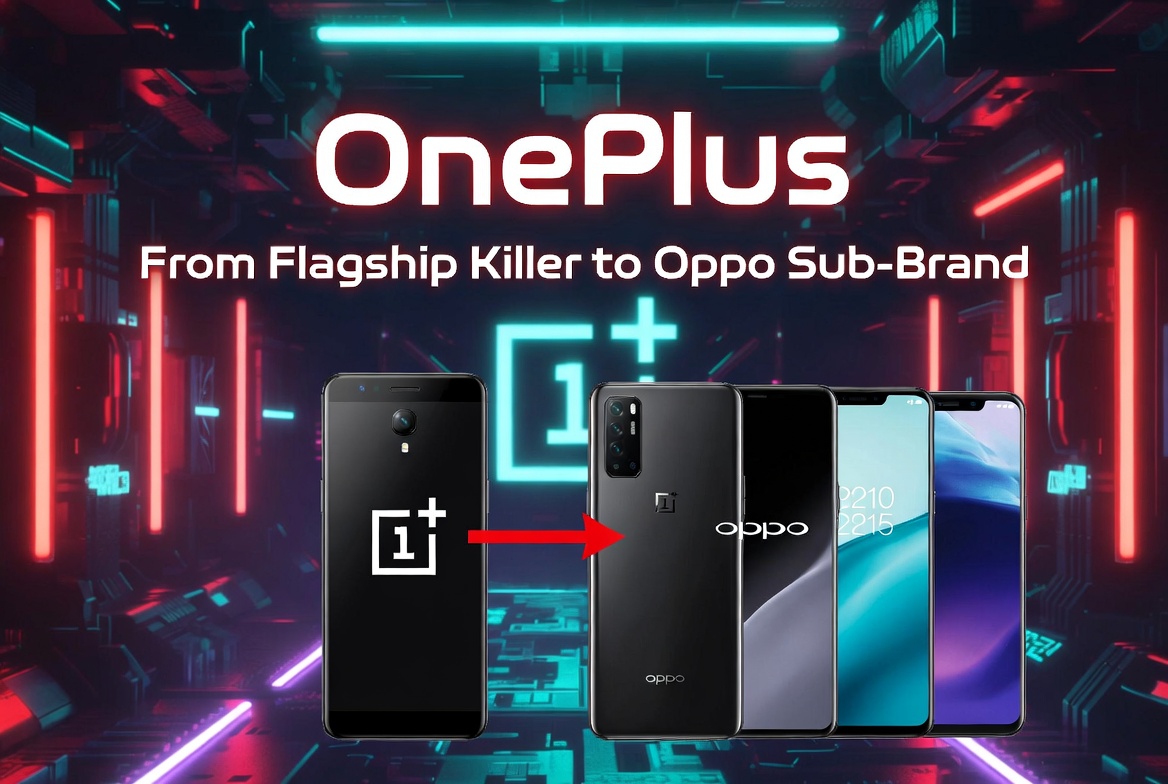
I have been following OnePlus since before the OnePlus One launched. I was part of the early community in France, and I watched as Carl Pei and Pete Lau built what started in that Shenzhen apartment into one of the most compelling smartphone brands in the world. I also watched them lose it. This is the complete story, post by post, from December 16, 2013, to the Realme merger in April 2026 and the product-series consolidation breaking this week. It is not a comfortable story. The rise is a thrill to retell. The fall is harder to sit with. Both are worth understanding.
OnePlus built something that almost no smartphone company has ever built: a community that acted like shareholders, a software philosophy engineers respected, and a pricing position that felt like a standing argument against the incumbents. Then it dismantled all three, one corporate restructuring at a time, while insisting at each step that nothing had changed. By 2026, when the company merged with Realme under an OPPO product center and began closing its Indian retail stores, the gap between what OnePlus was and what it had become was so wide that the brand name was actively misleading about the product beneath it.
Every post in the series
- December 16, 2013: The Founding: Pete Lau, Carl Pei, and a Coffee Table in Shenzhen
- April 23, 2014: OnePlus One: The Flagship Killer That Actually Worked
- 2014: The Invite System: Genius Marketing or Customer Hostility?
- 2014: The BBK Shadow: What the OPPO Relationship Really Meant From Day One
- 2015: The Cyanogen Breakup and the Birth of OxygenOS
- 2015: OnePlus 2 and OnePlus X: When “Never Settle” Started to Settle
- 2016: OnePlus 3 and 3T: The Comeback and the Peak of the Philosophy
- 2017: OnePlus 5 and 5T: Cameras, Community, and the Price Creep Begins
- 2018: OnePlus 6 and 6T: T-Mobile, US Expansion, and the Slope
- 2019: OnePlus 7 Pro: True Flagship, True Flagship Price
- July 2020: The Nord Series: Smart Pivot or Brand Dilution?
- October 2020: Carl Pei Leaves: The Moment the Soul of OnePlus Walked Out the Door
- March 2021: Hasselblad: Aspirational Branding Over a Rotten Codebase
- June 2021: Pete Lau Becomes OPPO CPO: The Merger That Nobody Named
- July 2021: Nord 2 Codebase: The First Lie the Software Told
- September 2021: “OnePlus 2.0”: The Official Death Announcement That Nobody Called a Death
- March 2022: OxygenOS 12: The Disaster That Broke Community Trust
- 2022: The US/Global Community Split: Forums, Carrier SKUs, and the Trust Collapse
- 2022–2023: SKU Multiplication and OPPO Rebranding: When OnePlus Became a Label, Not a Company
- 2023–2024: The Green Line Crisis: A Hardware Disaster That Hit a Brand with No Trust Reserves Left
- 2023–2024: OxygenOS 13 and 14: The Walk-Back That Came Too Late
- 2022–2024: European Market Collapse: From Fan Favorite to “Why Bother?”
- 2023–2025: India: From Premium Darling to Also-Ran (6.1% → 2.9%)
- January–March 2026: The Collapse Accelerates: Robin Liu Exits, Stores Close, R&D Gutted
- April 30, 2026: The Realme Merger: What It Actually Means for OnePlus
- Analysis: BBK’s Invisible Hand: How the Conglomerate Structured Its Brands and Why It Backfired
- 2026: The Competitor Landscape: Nothing, Pixel, Xiaomi, and the Ground That Shifted
- Analysis: Is There Hope? What OnePlus Needs to Do to Stop the Bleeding
- Deep Dive: OnePlus and North America: Past, Present, Future, and the Go-to-Market Strategy
The latest turn: OPPO folds the brands into product series
realme’s India CEO Michael Guo resigned this week, officially for health reasons, and the timing is the tell. Moneycontrol reports the exit came inside a sweeping restructuring that pulls realme into OnePlus under OPPO’s parent structure in India, with Chase Xu from realme Global picking up the market. On its own that looks like routine reshuffling. Set against everything in the timeline above, it looks like the next domino.
The bigger claim in the reporting is the one to sit with. OPPO’s long-term plan is said to bring OPPO, realme, and OnePlus under a single operating structure and run them as product series instead of independent brands. That part is reported rather than confirmed, and the context is India specifically, so I am not going to pretend the global picture is settled. The leaker Yogesh Brar adds that OnePlus is only really active in India and China now, and teases bigger news next month. Treat the edges as soft, but the direction is clear enough.
Strip it to the business logic and the move is about the cost base. Three brands meant paying for the same overhead several times over, marketing and PR and regional management and carrier deals all duplicated for each badge, sitting on a supply chain BBK already runs in common. The software differentiation died years ago, the day OxygenOS became a reskin of ColorOS, so the company was spending to maintain a difference that no longer existed. A single product-series structure covering every price band kills the duplication and stops Nord, realme, and OPPO’s own mid-rangers from knifing each other for the same buyer. As pure operations, it is the right call.
What the spreadsheet misses is the asset being written off. OnePlus was worth something precisely because it was not OPPO. The enthusiast credibility and the community that marketed the phones for free do not survive being relabeled an OPPO product line, and neither does the standing argument against overpriced flagships that the brand was built on. You save real opex, and you torch a decade of brand equity to get it, and the equity does not come back when the savings stop landing in the quarterly. The diehards who care most about independence leave first, and they walk straight to Nothing, which is rebuilding the exact pitch OnePlus abandoned, under the founder who walked out in 2020.
The strategy also tells you who OPPO is actually playing for, and the West is nowhere in it. A product-series model tuned for online sales and tight price tiers is built for India and China first, and for the high-volume markets behind them where realme and OPPO already win. OnePlus India is online-only now, after the store closures. That setup is the template for where the rest of this goes.
North America is where the logic turns into a retreat. OnePlus was the only door BBK ever had into the West. OPPO has no US carrier deals and effectively no US retail, and it sits on the wrong side of the politics that govern Chinese phone makers in America, which is why it has never sold a phone there under its own name and is not about to start. Fold OnePlus into OPPO and the Western beachhead does not move, it closes. The signals are already lined up. The European team has gone quiet, its social channels dark for months. The 15 and 15R came off Best Buy shelves, and the US site is still live but thinner every time I look. The official line is that the regional roadmap is under evaluation. The roadmap looks like a wind-down.
None of this was forced, and that is the part I keep coming back to. OPPO is making a defensible financial decision, and the West is the line item that gets cut to make the math work, because keeping OnePlus alive as an independent Western spearhead would cost money the conglomerate would rather hold. So the brand that spent a decade telling the West it was different ends as a product series sold mostly to people who never heard the pitch. I would love to be wrong about the wind-down. The evidence is not giving me much to work with.
Why this story matters beyond the specs
OnePlus is the most instructive failure in consumer tech brand management of the last decade, with the emphasis on instructive rather than failure, because the failure was not inevitable. The company had everything: a sharply differentiated product philosophy, a community that would evangelize for free, a software experience that reviewers consistently praised, and a pricing position that made the premium Android market feel winnable for an underdog. It had all of that, and it traded all of it for supply chain efficiencies and corporate restructuring savings that, as the market share data now makes clear, were not worth the trade.
The BBK structure, in which OPPO, Vivo, Realme, and OnePlus all operate under the same conglomerate with shared manufacturing but nominally separate brand identities, works well for volume brands. It does not work for a brand whose entire value proposition is that it is unlike other brands. The moment OnePlus began sharing a software codebase with OPPO, the story it had been telling its community for eight years became a lie. The community knew it. The market data that followed confirmed it.
The posts in this series go deep on every product, every corporate decision, and every market shift. They are written by someone who was part of the early OnePlus community in Europe and has watched the trajectory, with the particular frustration of someone who believed in what the brand was trying to be. That frustration is in the writing. So is the honest accounting of where things stand.