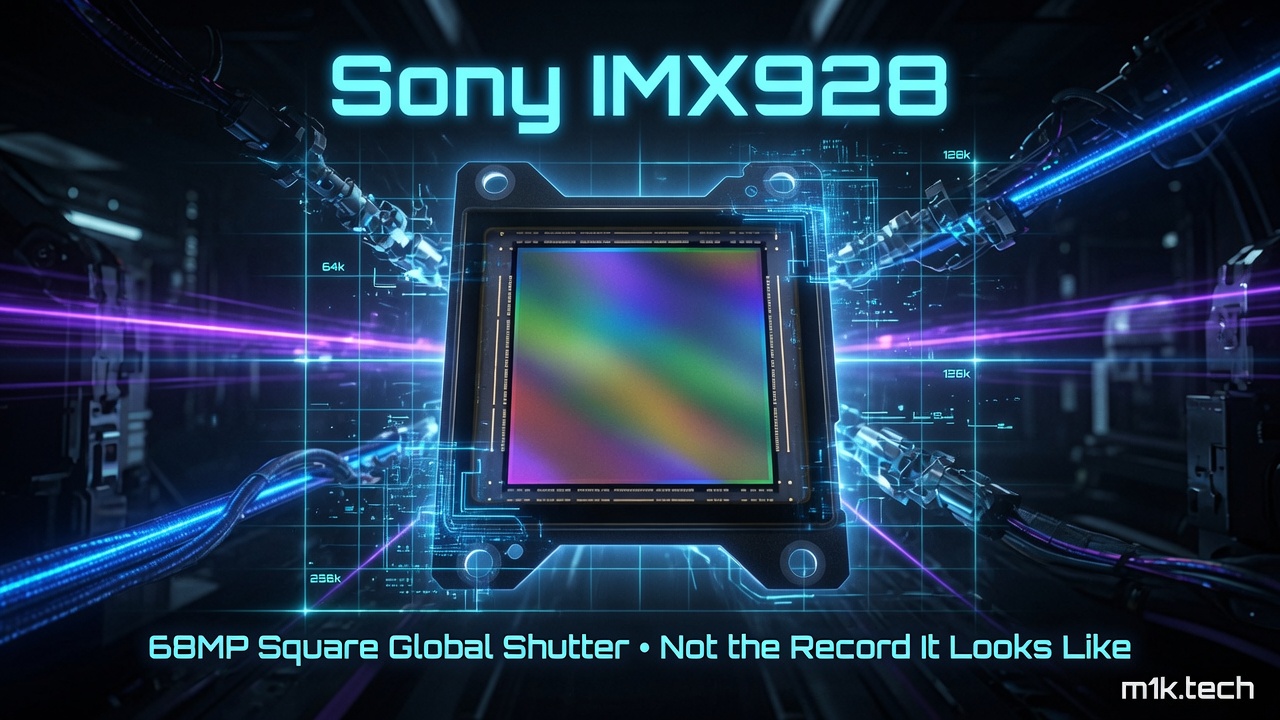
8256 pixels tall, 8256 pixels wide, and not one of them wasted on the wrong aspect ratio. That is the IMX928, the sensor Sony Semiconductor pushed out to industry partners back in February and let the spec sheet do the talking. Sixty-eight megapixels, a perfect 1:1 square, Type 2.0 optical format with a 31.9mm diagonal, and a global shutter that reads the whole frame at once at around 126fps in 10-bit. Sony’s own flyer flirts with the phrase “large format” for it, which is where my eyebrow went up, because this thing is physically smaller than the full-frame sensor sitting in a $2,000 mirrorless body. Sensor-size labels have always had stretch in them, the same marketing elasticity that let Xiaomi bolt a “one-inch” sensor onto a phone and market it as large.
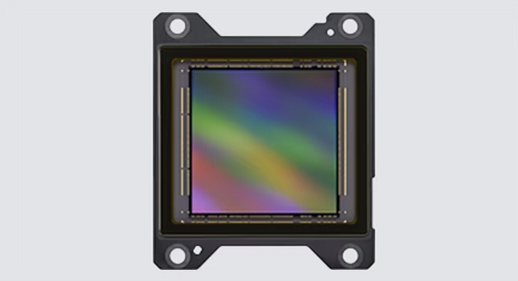
The 126fps figure is the one worth sitting with. Most coverage rounds it to 120, fine, but the point is that pulling 68 megapixels off a chip a hundred and twenty-plus times a second, with every pixel exposed in the exact same instant, is not a trivial thing to build. This is a Pregius S part, Sony’s stacked back-illuminated global shutter architecture, and the whole reason global shutter exists is to kill the skew and wobble a rolling shutter introduces when it reads a fast-moving object line by line. Point one of these at a propeller or a part flying past on an inspection gantry, and it comes out geometrically honest. No jelly, no lean.
The square is the whole point
Here is the part I keep coming back to. A 1:1 sensor sounds like a novelty until you think about who actually buys it. Machine-vision and robotics integrators bolt cameras onto arms that rotate, drones that bank, gantries that traverse. It is the same industrial pull that put dedicated image sensors into cars for driver assistance, only here it is pointed at a factory floor. A square array means you can spin the camera to any orientation and lose nothing off the edges, and you can crop a widescreen 16:9 or a tall portrait strip straight out of the center and never run out of sensor on the short axis. Sony’s pitch is that you buy one part and reframe it in software for whatever the task needs. For a line that inspects round bottle caps one week and long extruded rails the next, that flexibility is the actual product, not the megapixel headline.
What actually changed since the a9 III
Sony has owned the consumer global-shutter conversation since the a9 III landed in late 2023, and that camera is the reference point for how far this jumps. The a9 III runs a 24.6-megapixel full-frame global shutter at 120fps, and for two years it has been the only full-frame mirrorless camera on the market with a global shutter at all. Sony’s own industrial Pregius S parts sat in roughly the same neighborhood, topping out around 24 megapixels. The IMX928 nearly triples that and holds the frame rate. Same speed class, almost 3x the pixels: that is the generational story in one line.
It does not arrive alone, either. Sony revealed it in January as the middle child of a trio: the IMX927 at 105 megapixels and 100fps, the IMX928 at 68MP square, and the IMX929 chasing 8K at roughly 200fps, with the family pushing past 225fps at the top end. Three points on one curve, trading resolution for speed and shape depending on the job.
Sony didn’t set the record. Gpixel did.
Gpixel shipped a 65-megapixel global shutter, the GMAX3265, back in 2018. It followed with a 103MP part, and in 2021 it put out the GMAX32152 at 152 megapixels, which it billed as the highest-resolution global shutter on the market; the GMAX range now reaches all the way to 271 megapixels. So when Sony packs 68 or 105 megapixels into a global shutter and the camera press treats it as a milestone, the real footnote is that a Changchun sensor house mapped out this resolution tier years ago, while the mobile world was off running its own megapixel race past 200. Sony is not breaking new ground on pixel count. It is arriving late to a party it plans to win on other terms.
So what is Sony bringing? Density and speed. The GMAX3265 uses a 3.2-micron charge-domain pixel and needs a 37.4mm diagonal to fit its 65 megapixels. Run the IMX928’s 8256 pixels across its 22.5mm side and the pitch lands near 2.7 microns, which means Sony squeezes a comparable 68 megapixels into a 31.9mm diagonal: noticeably less silicon for the same resolution. That 2.7 microns looks generous next to a phone, where pixels have been shrunk to 0.64 microns, but for a global shutter moving 68 megapixels off the die a hundred-plus times a second, clean 2.7-micron pixels off a stacked BSI process are the harder trick. Wrap that in the Pregius S name that machine-vision integrators have spent a decade standardizing their systems around, and the pitch gets clearer. onsemi’s XGS line, the other default in this market, stops around 45 megapixels, so on resolution Sony leapfrogs it outright. The Sony pitch here was never raw pixel count. It is fitting more of them into less area, moving them off the chip faster, and being the safe supply-chain choice for a factory that cannot afford a sensor to go end-of-life mid-production.
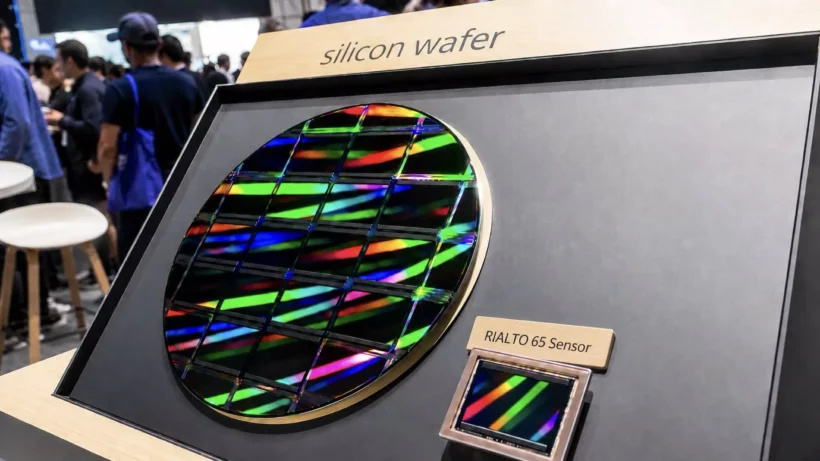
Here is how the field lines up on paper:
| Spec | Sony IMX928 | Sony IMX927 | Sony a9 III | Gpixel GMAX3265 |
|---|---|---|---|---|
| Resolution | ~68MP (8256 x 8256) | ~105MP | 24.6MP | 65MP (9344 x 7000) |
| Shape | Square 1:1 | ~4:3 area | Full-frame 3:2 | ~4:3 area |
| Optical format | Type 2.0, 31.9mm diag | Larger than full-frame | Full-frame, 43.3mm diag | APS-H, 37.4mm diag |
| Pixel pitch | ~2.7µm (derived) | not published | ~6.0µm | 3.2µm |
| Max frame rate | ~126fps (10-bit) | ~100fps | 120fps | not published |
| Shutter | Global (Pregius S) | Global (Pregius S) | Global | Global (charge-domain) |
| Target | Machine vision | Industrial | Consumer sports | Industrial inspection |
Why a photographer should half-care
None of these three sensors is going into a camera you can buy. Sony has not slated any of them for an Alpha or a cinema body, and the 1:1 shape would need a new mount or an adapter on existing full-frame glass anyway. What the industrial parts do is bankroll the R&D and prove the architecture at scale, which is exactly the path the a9 III’s sensor walked before it. The rumor mill already has Sony working toward a higher-resolution full-frame global shutter, something like a 50MP part for an eventual a9 III successor in the 2027 to 2028 window. That is the version I actually care about, because a fast, clean, high-resolution full-frame global shutter with no rolling-shutter compromise is the sensor a lot of us have been waiting on since the a9 III proved it was even possible at 24 megapixels.
I am not touching the parallel rumors about a 180MP medium-format or a 107MP full-frame Sony sensor here. That is a different mess for a different post.
For now the IMX928 is a beautifully engineered industrial part with a clever shape, sitting in a resolution tier Sony did not invent but is about to dominate on quality and supply. The square geometry is the idea I hope trickles somewhere I can hold. Whether any of it reaches a real camera before 2028, or stays bolted to inspection gantries where nobody but a robot ever sees the output, is the thread I can’t close yet. Ask me when the a9 III successor leaks.
Sources
- Sony Semiconductor, global shutter product page (IMX927 / IMX928 / IMX929): sony-semicon.com
- Sony IMX928 flyer (PDF): IMX928-AMB flyer
- Y.M.Cinema Magazine, sample shipping and the 126fps figure: ymcinema.com
- Digital Camera World, testing-phase report: digitalcameraworld.com
- SonyAlphaRumors, IMX927 comparison and dimensions: sonyalpharumors.com
- Gpixel GMAX3265 (65MP): gpixel.com
- Gpixel GMAX32152 (152MP): gpixel.com