A year ago, this company did not make hardware at all. This week, it put a phone on sale that undercuts everything with comparable silicon by roughly half, and the first 300,000 units were gone in 34 hours, before most buyers had laid a finger on one. The Mi 1 is real, it costs 1,999 yuan, about $310, and it is the moment last year’s software experiment turns into something you can hold.
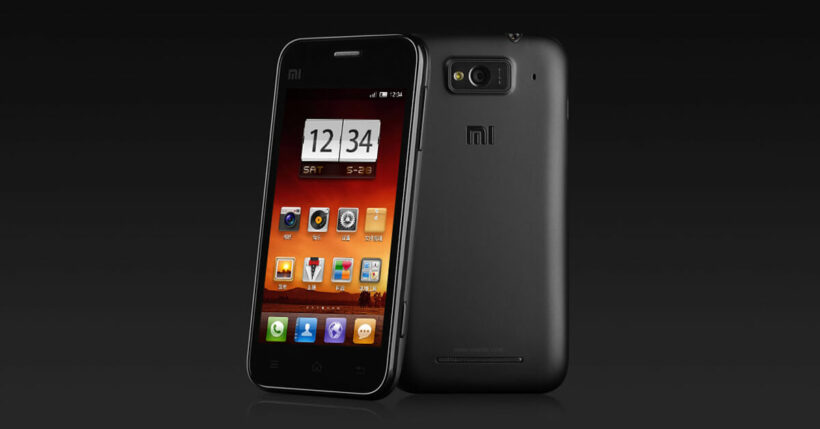
The hardware is a proper 2011 flagship, which is the surprising part at this price. There is a 4-inch screen, a Qualcomm Snapdragon S3, the dual-core MSM8260 running at 1.5 GHz with the Adreno 220 GPU, 1 GB of RAM, 4 GB of storage with a microSD slot, an 8-megapixel camera, and a 1,930 mAh battery, all under MIUI sitting on Android Gingerbread. That is the same dual-core chip Qualcomm is selling into the premium tier this year, and Xiaomi has dropped it into a phone that costs less than half what a comparably specced Galaxy goes for in China. Getting that chip to that price is the entire trick.
So how does the number land at 1,999 yuan when the parts cost what they cost? Xiaomi sells direct, online only, in timed flash sales, with no carrier taking a cut and no retailer stacking margin on top. The phone sells out in minutes, and those minutes double as the marketing campaign. It is a low-margin, high-volume bet of the kind plenty of people have promised and very few have actually pulled off, and the early numbers suggest the demand is there even if the supply is the open question.
This is what the ROM year was for. The Mi 1 ships running MIUI, the software Xiaomi spent a year building a following around before it had any hardware to sell, and the hundred thousand people who were flashing that ROM onto other companies’ phones are now the launch-day crowd for this one. The forum turned into the pre-order list. I said last year I could not tell whether a software following would convert into hardware buyers. Thirty-four hours and 300,000 orders are a reasonably loud first answer.
I am leaving the build quality alone here, because it is a first phone and the plastic shell shows it. What I cannot stop poking at is whether the flash-sale model is brilliance or sleight of hand. Selling in 300,000-unit bursts looks like overwhelming demand, and it might be, but it also conveniently hides how many units Xiaomi can actually produce, and it keeps inventory risk close to zero. Samsung and the local brands cannot touch this price, but they can do the one thing Xiaomi so far cannot: put stock on a shelf you can walk into and buy on a Tuesday.
The Mi 1 is not the best phone in China. It is the best phone for the money in China by a wide margin, and it showed up bolted to a software audience that none of the incumbents thought to build first. If Xiaomi can manufacture these in the volumes the flash sales keep implying, that price becomes a real problem for everyone selling Android above it. If it cannot, this is a clever trick with a forum attached. I lean toward the first, but the factory is the part nobody has proven yet.