The screen is the first thing that gets you. A 6.8-inch 2400×1080 AMOLED at 144Hz, and next to the Logitech G Cloud‘s flat 60Hz LCD it looks like it arrived from a different decade. Razer built the Edge around Qualcomm’s Snapdragon G3x Gen 1, the first chip Qualcomm has designed specifically for handheld gaming rather than phones, and in early benchmarks it runs two to three times faster than the 720G Logitech settled for. Where the G Cloud told you not to bother running games locally, the Edge is built to actually do it.
| Category | Snapdragon 720G (2020) | Snapdragon G3x Gen 1 (2021/2022) | Winner & Notes |
|---|---|---|---|
| Process Node | 8nm Samsung | 4nm Samsung | G3x Gen 1 (much more efficient) |
| CPU | 2× Kryo 465 Gold (Cortex-A76) @ 2.3 GHz 6× Kryo 465 Silver (Cortex-A55) @ 1.8 GHz | Octa-core Kryo (based on Cortex-A78/A55 or equivalent to 8 Gen 1) — higher sustained clocks | G3x Gen 1 (significantly faster & more modern cores) |
| GPU | Adreno 618 @ ~750 MHz (~435 GFLOPS) | High-performance Adreno (730-level or better) with Elite Gaming optimizations | G3x Gen 1 (massive leap in graphics power) |
| Memory Support | LPDDR4X | LPDDR5 (higher bandwidth) | G3x Gen 1 |
| ISP (Camera) | Spectra 350L (up to 192 MP) | Advanced Spectra (strong computational photography) | G3x Gen 1 (better overall) |
| AI / NPU | Hexagon 692 DSP | Stronger Hexagon DSP / AI Engine | G3x Gen 1 (significantly more powerful) |
| Modem | X15 LTE (Cat 15, up to 800 Mbps) | Advanced 5G (X65-level, Sub-6 + mmWave) | G3x Gen 1 (full 5G support) |
| Connectivity | Wi-Fi 6, Bluetooth 5.1, aptX Adaptive | Wi-Fi 6E, Bluetooth 5.2+, FastConnect | G3x Gen 1 |
| Gaming Features | Elite Gaming (basic) | Full Elite Gaming suite + sustained performance optimizations for handhelds | G3x Gen 1 |
| Sustained Performance | Good for phones | Excellent (designed for handheld cooling) | G3x Gen 1 |
| Target Devices | Mid-range smartphones | Dedicated Android gaming handhelds (e.g., Razer Edge) | Segment-specific |
| AnTuTu (approx) | ~280,000–300,000 | ~700,000–900,000+ (depending on device) | G3x Gen 1 (2–3x higher) |
This is the device the cloud handhelds should have been. It ships with a Kishi V2 Pro that clamps around the tablet like detachable Joy-Cons, there is a Verizon 5G version for playing away from Wi-Fi, and it is fast enough to run the heaviest stuff Android has, your Genshins and your Diablo Immortals, without stuttering. Razer looked at the category and decided the answer was more power and a proper screen rather than a subscription to lean on. On its own terms, it mostly works, and I came away impressed in a way I did not expect after the G Cloud.
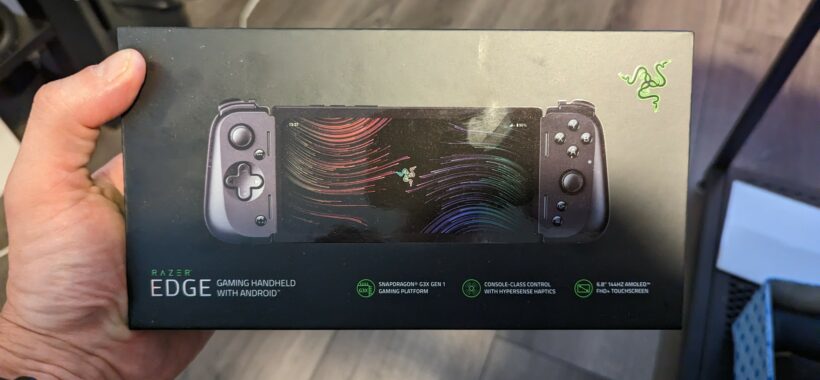
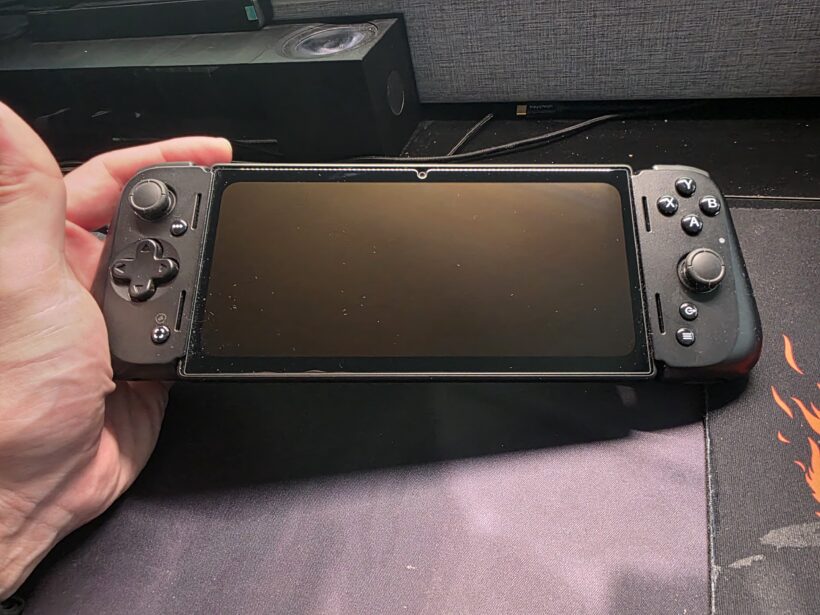
Then reality shows up: a $399.99 price tag. That is Steam Deck money, and the Steam Deck plays actual PC games, thousands of them, locally, no gacha and no mobile ports. The Edge’s ceiling is the Android library, and the Android library at the high end is mostly free-to-play games engineered to extract money from you, dressed up on a gorgeous panel. Spending $400 to play them better is a specific kind of decision. There is also the uncomfortable fact that this is essentially a gaming phone without the phone, and a real gaming phone would at least make calls.
Strategically, Razer chose the harder, more honest path than Logitech did. It spent on silicon, bet on native performance, and used Qualcomm’s new gaming platform as its whole pitch, which is a real vote of confidence in the idea that dedicated Android handhelds are worth building. I want that bet to pay off. The 5G option, in particular, is the one thing this has that a phone and a clip-on controller do not already do better.
I still cannot tell you who this is for. It is too expensive for casual gamers and redundant for anyone who already games on a decent phone. And the people willing to spend $400 on portable gaming mostly bought a Steam Deck. The Edge is the best-executed handheld of its kind I have used, and it is competing for a slice of a market that may not yet exist. Ask me in a year whether Qualcomm’s gaming chips found a home, or whether this generation was the industry talking itself into a category before the buyers showed up.