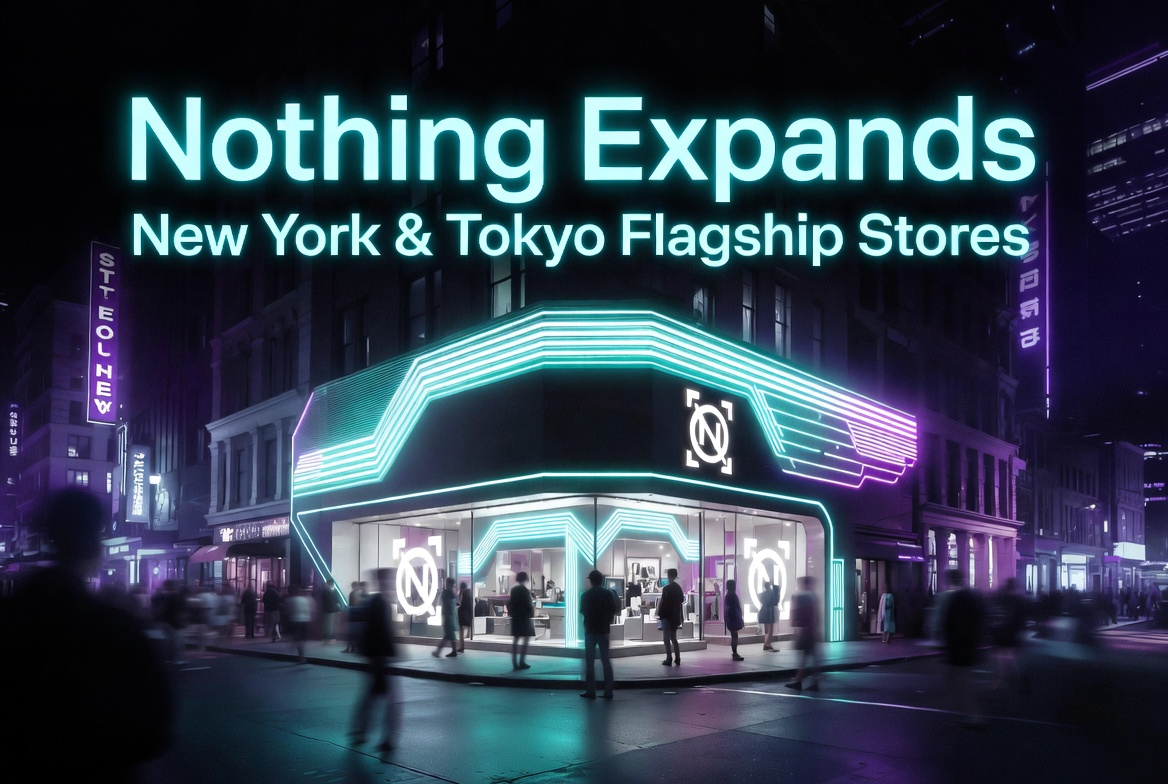
Nothing is expanding its retail presence to SoHo in New York and an unannounced Tokyo location, following the February 2026 Bengaluru flagship opening. SoHo targets design-conscious, unlocked-phone buyers in a market where carrier partnerships and subsidized pricing remain the dominant purchase path.
The Tokyo entry, led by the Phone (4a) rather than a flagship, tests whether Nothing’s brand identity can overcome strong Japanese consumer loyalty to Apple and domestic brands. Both openings must build community without the years of groundwork that preceded Bengaluru, and are backed by Series C capital.
May 1, 2026. The Bengaluru flagship has been open for two and a half months. Nothing has confirmed New York and Tokyo as the next locations. SoHo for New York, a Tokyo address not yet announced. I want to think through what these two stores actually represent and what they need to accomplish, because the photo KPI theory that Carl Pei uses to explain the retail strategy is interesting, but it is not the whole story.
Why SoHo for New York
Nothing’s US business has been growing without carrier partnerships, without subsidized pricing, without retail shelf space at major US carriers. The direct-to-consumer model that launched the Phone (2) in 2023 built an American buyer community through tech media, YouTube reviews, Reddit, and peer recommendations. That community is real but it is also small relative to the overall US smartphone market, where the majority of purchases happen through carrier stores with subsidized prices.
SoHo is not a strategy for reaching the majority of the US smartphone market. It is a strategy for reaching the specific slice of it that Nothing can reach without carrier deals: design-conscious consumers in urban markets who buy unlocked, who care about brand identity, and who have the income to pay full retail for a phone that interests them. SoHo has the highest concentration of that buyer profile among New York’s retail corridors. Supreme, Palace, and every other brand whose competitive advantage is identity rather than price have a presence there for exactly this reason.
Why Tokyo
Japan is difficult for foreign consumer electronics brands. Consumer loyalty to Apple and domestic brands is extremely high. Android alternatives from Samsung and Google have taken years to build meaningful share despite their scale. Nothing’s decision to enter Japan with the Phone (4a) rather than wait for a flagship suggests the company believes its brand identity and community approach will translate to Japanese design-conscious consumers without needing the halo of a flagship price point. That is a real bet, and Harajuku and Shibuya are the neighborhoods where that bet either pays off or does not.
The stores are currently in development. The Bengaluru opening is the most recent real data point. The Bengaluru result, supply shortages across the city’s retail partners in the weeks after opening, is the benchmark against which the New York and Tokyo openings will be measured. In Bengaluru, five years of Indian community building preceded the store. In New York and Tokyo, the stores have to do some of that community work themselves. That is the harder version of the bet, and it is the one Nothing is currently making with Series C capital behind it.
Part of Nothing Company: The Complete Story, my running diary of Nothing from founding to global expansion.