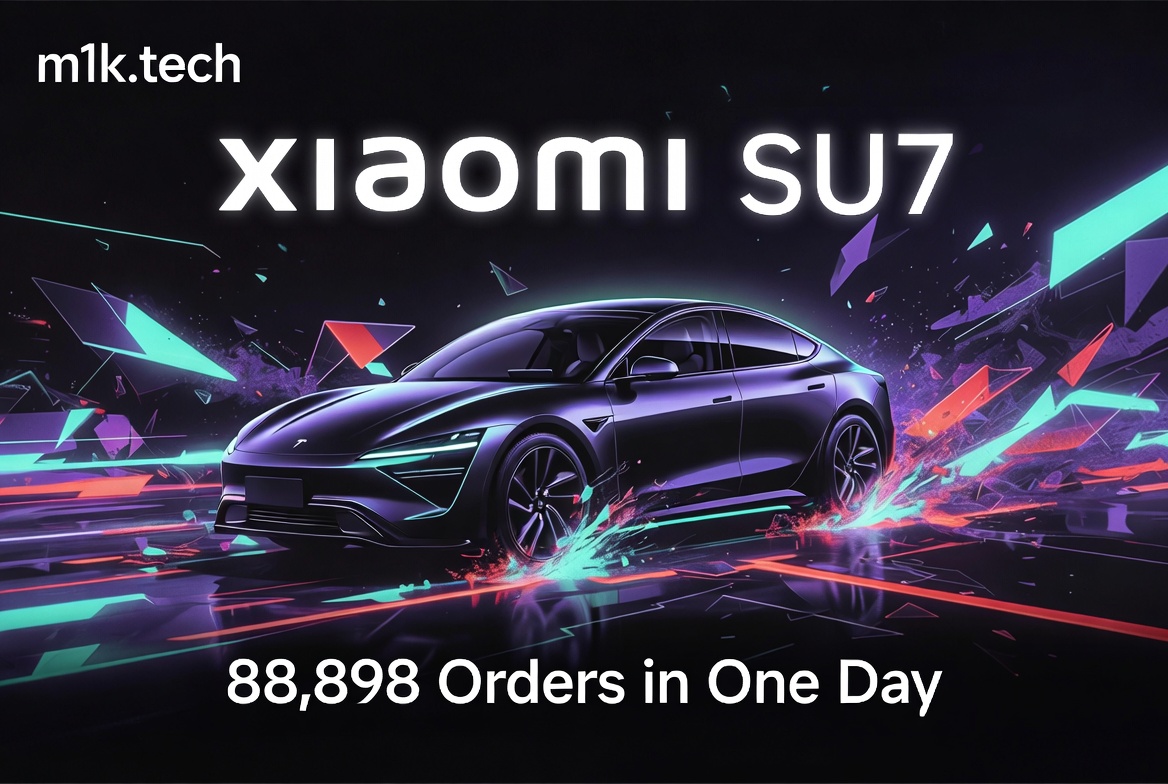
88,898 orders in twenty-four hours. Fifty thousand of them were locked in within the first twenty-seven minutes, and by the end of the day, the entire planned 2024 production run of 120,000 cars was spoken for. Three years ago Xiaomi’s car was a checkbook and a promise; tonight it went on sale in Beijing and people threw money at it faster than Xiaomi can build them. The SU7 is real, and the launch went about as well as Lei Jun could have scripted.
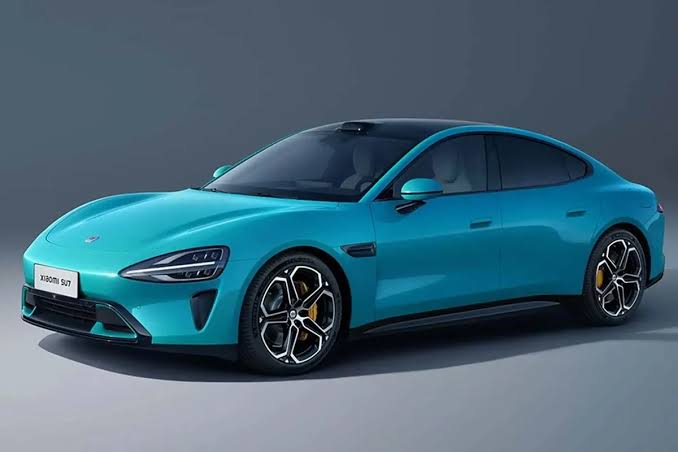
The price is the weapon. The base SU7 starts at 215,900 yuan, which Xiaomi deliberately parked just under the Tesla Model 3 in China, and Lei Jun stood on stage and claimed the SU7 beats the entry Model 3 on more than 90% of its specifications. The Pro sits at 245,900 and the Max at 299,900, a clean ladder that lets Xiaomi quote a headline-grabbing entry number while pushing buyers toward the fatter margins higher up.
The Max is where the swagger gets technical. It runs a 101 kWh CATL Qilin pack on an 800-volt architecture that peaks at 871 volts, makes 495 kW through dual motors, does zero to 100 in 2.78 seconds, claims 800 km on the optimistic CLTC cycle, and refills from ten to eighty percent in nineteen minutes. The base rear-drive car gets a 73.6 kWh battery, 700 km of range, and a still respectable 5.28-second sprint. Xiaomi quotes a drag coefficient of 0.195, calling it the lowest of any production car, and benchmarks the SU7 against the Porsche Taycan and Tesla Model S rather than anything in its actual price bracket, which tells you how the company wants this read.
What makes it a Xiaomi, though, is the part you cannot photograph. The 16.1-inch 3K center screen runs HyperOS on a Qualcomm 8295, the same software spine as the phone in your pocket, so the car, the handset, and the smart home all speak the same language. “Human x Car x Home” stops being a slogan the moment your phone unlocks the car and your car arms the apartment. The Xiaomi Pilot driver-assist suite runs on Nvidia’s Drive Orin, with highway navigation working from day one and city driving promised later. No legacy automaker can offer that ecosystem hook, because none of them already live on a few hundred million phones.
My favorite detail from the launch is the room. William Li of Nio, He Xiaopeng of Xpeng, Li Xiang of Li Auto, and the chairmen of Great Wall and BAIC all turned up to watch Xiaomi’s debut. Rivals attending your launch is part respect and part reconnaissance, and in China’s EV bloodbath, it is mostly the second thing. Xiaomi just walked into the most brutal car market on earth carrying a phone brand’s marketing machine, and everyone in that room knows exactly what that machine did to the smartphone business.
I am not going to pretend to answer the can-they-actually-build-these question here, because that answer lives inside a Beijing factory I have not walked through. Pre-orders are not deliveries. The wait is already stretching toward four or five months, reservation hype has flattered better-funded startups before, and the margins on a 215,900-yuan car you spent ten billion dollars to even be capable of building are going to be ugly for a good while.
The genius here is not the car; it is the funnel. Hundreds of millions of people already own a Xiaomi product, trust the brand, and run its software. The SU7 is simply the most expensive item Xiaomi has ever asked them to add to the cart, and a startling number said yes on day one. Deliveries start April 3. Whether the factory can keep pace before the goodwill cools is the only question left that matters, and it is an industrial one, not a marketing one.
Related: Five Years Inside the Xiaomi Ecosystem, my history of how Xiaomi built the machine that got it here.