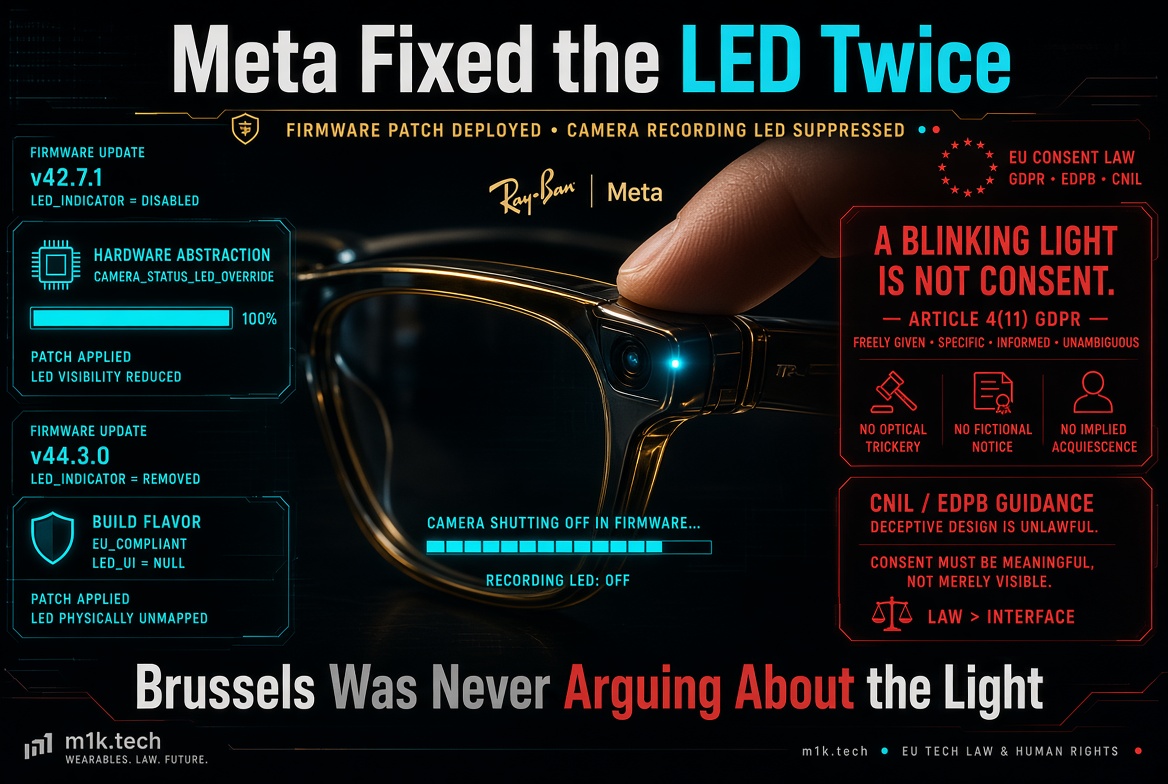
Cover the recording LED on a pair of Ray-Ban Metas with a fingertip or a strip of tape, and until this week, the camera kept rolling anyway. Alex Himel, who runs Meta’s wearables division, posted the fix on Threads on August 27: the camera now shuts off the moment the LED gets covered mid-capture, closing a loophole that never needed much sophistication to exploit.
This is the second time Meta has patched this exact category of problem in two months. The earlier fix disabled the camera entirely if someone physically drilled the LED out of the frame, which people were doing. Both updates shipped after millions of these glasses were already on faces, which is the part I keep getting stuck on: the fix always arrives downstream of the harm it’s meant to prevent, because that’s structurally how firmware updates work on hardware people already bought and already wore into a locker room or a Target checkout line.
Himel isn’t promising this is the last patch either. Meta will “keep rolling out updates like this to make sure the capture LED can reliably alert bystanders when photos or videos are being captured,” he wrote, alongside a new ad campaign built around explaining what the light actually means. I’ll give Meta credit for treating this as an engineering problem worth solving properly instead of a PR headache to wait out. I just don’t think that’s the problem that will determine whether this product line survives regulatory scrutiny in Europe.
France’s CNIL said as much back in June, and said it plainly: technical notification devices “have only a limited range and therefore appear insufficient,” and the obligation to respect a bystander’s privacy and obtain consent where appropriate sits with the person wearing the camera, not with whoever happens to notice a light. That’s a completely different complaint than “the LED can be defeated.” It’s an argument that the LED was never going to be sufficient even working exactly as designed, because a blinking light forty feet away in a crowded restaurant isn’t consent under European law no matter how reliably it blinks. Hamburg’s data protection commissioner has gone further, saying the glasses may already breach German rules against concealed recording equipment outright. Meta’s ad campaign asks bystanders to learn what a signal means. European law puts the actual obligation on the recorder, which is the exact inversion of what the campaign is selling.
The timing is what makes this worth writing about now rather than filing away as another incremental firmware note. The European Data Protection Board has a report on smart glasses due by the end of the summer, and Meta Connect opens September 23 with new hardware expected. Brussels has been circling this for a while: two Italian MEPs wrote to Ireland’s regulator back in March over reports that footage captured by these glasses gets reviewed by contracted moderators in Kenya, which is its own consent problem layered on top of the bystander one, since the person being filmed never agreed to a stranger’s recording being watched by anyone at all, let alone by a content-review pipeline on another continent. A patch that stops recording when the LED is covered does nothing to that chain.
I’ve watched this same tension play out from every side of the market this year. Institutions stopped waiting for regulators to draw the line and started drawing their own: UK cinemas restricting the hardware over piracy and privacy, English and Welsh courts banning it outright, Burning Man writing camera glasses explicitly into its consent-to-record policy, and just this week a Queens techno club called Basement banning the hardware outright, worn or carried, because its staff can’t reliably spot who’s discreetly recording. RayNeo’s answer was to ship a pair with no camera at all. Apple’s answer was to delay its own glasses to 2027 rather than ship the same camera-first design Meta is now patching around, specifically because it watched what happened to Meta and didn’t trust its own privacy story enough to ship on the original timeline. Both are more honest responses to the actual problem than an LED firmware update, because both change what the hardware does instead of asking bystanders to trust it more.
I wrote a few weeks ago that trust, not specs, had become the actual product being sold in this category, and this week is the cleanest proof of that yet. Samsung is still trying to win the argument on durability and drop-test numbers rather than cameras, which tells you it already knows specs alone stopped being the differentiator a while back. Meta is the only major player still betting it can out-engineer a consent problem instead of redesigning around it, and it’s about to find out whether that bet survives an EDPB report landing days before its biggest showcase of the year.
Sources
- The Next Web, Meta’s glasses now stop recording if you cover the LED, August 28, 2026
- CNIL, Smart glasses: the CNIL calls for vigilance, June 2026
- CNET, Meta Keeps Trying to Fix Glasses Privacy Concerns With New Update, August 28, 2026
- New York Post, Buzzy NYC nightclub announces ban on smart glasses, August 28, 2026