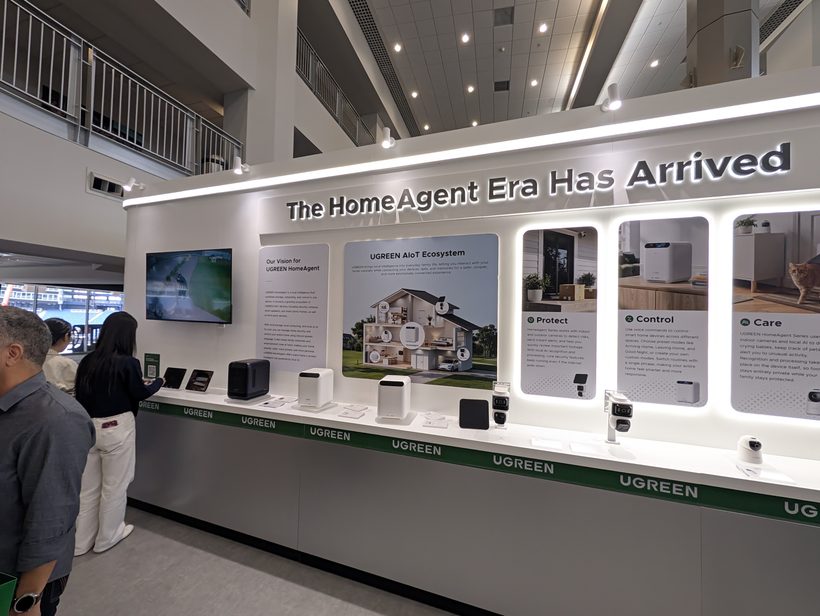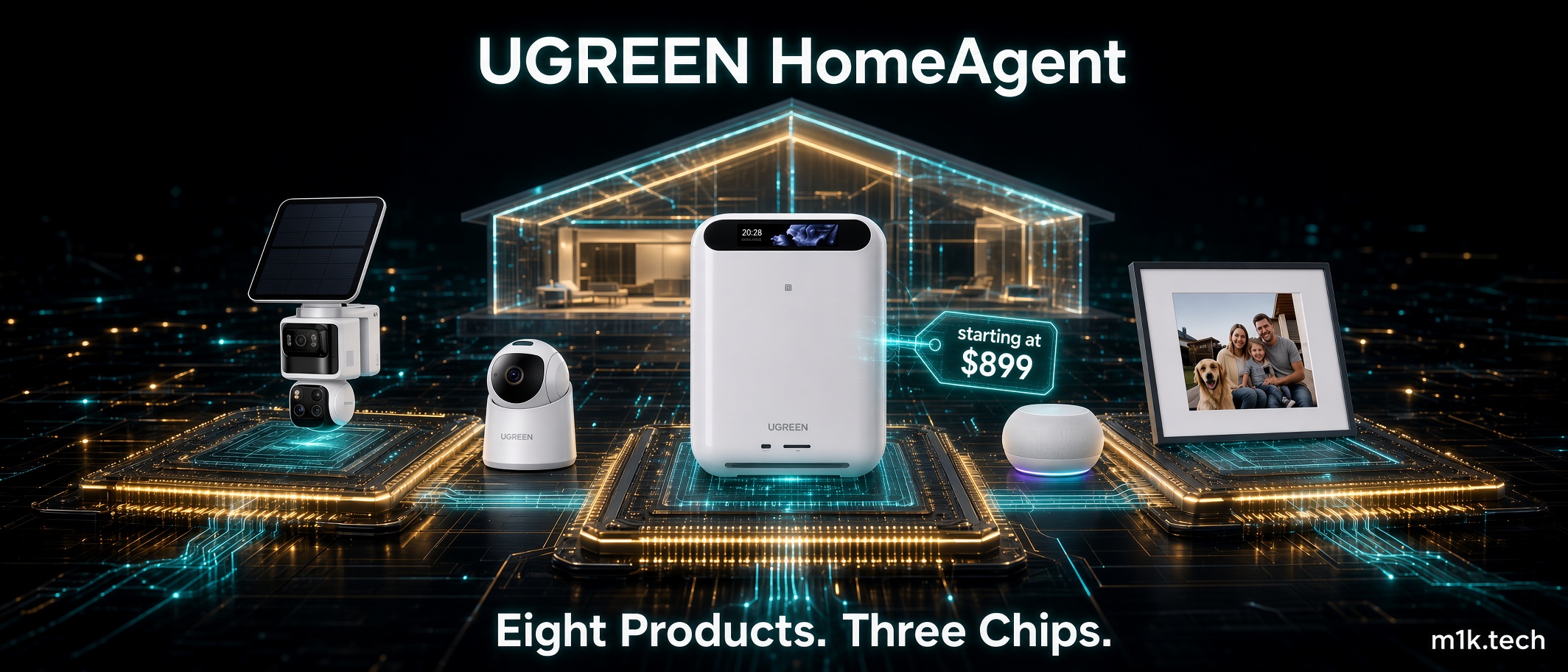
I was in the room for the UGREEN HomeAgent launch at Gillette Stadium, home of the Patriots, a strange venue for a NAS company until you remember UGREEN just became a Patriots sponsor and put cornerback Christian Gonzalez in front of the cameras as a brand face.




Hundreds of media and PR people filled the place, with plenty of demo stations set up around the room that looked like the ideal setup for actually testing Uliya hands-on. They weren’t. Every unit I went to- HA100, the cameras- was powered off. I got close enough to the MasterAgent MA100 to photograph it from every angle; it wasn’t running either. So none of what follows is a hands-on report on whether Uliya actually works. As far as I could tell, nobody in that room with me got that either. One HA100 Pro sat on a table for some voice-command tests.
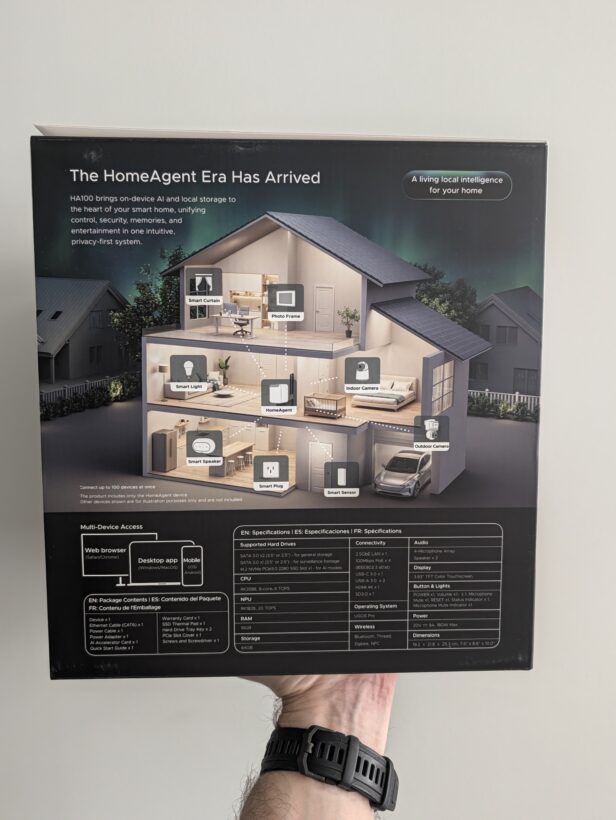
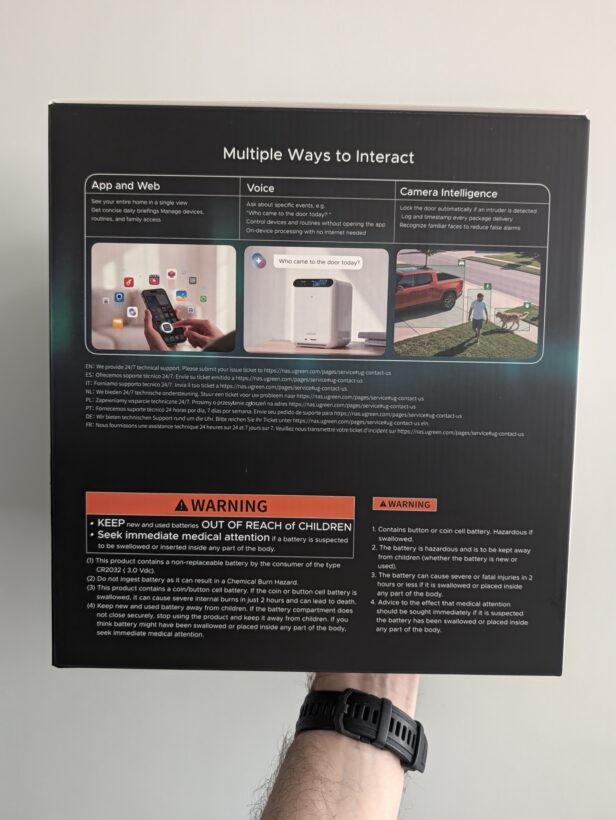
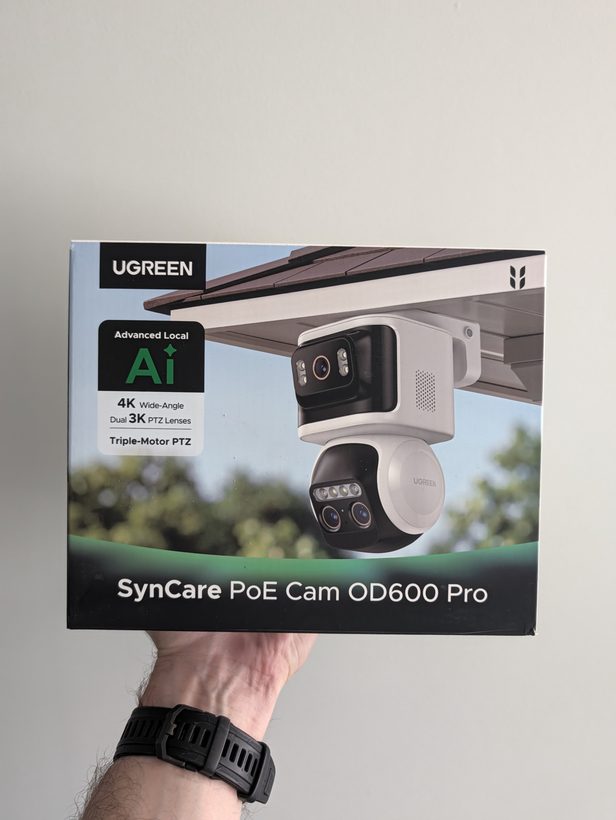
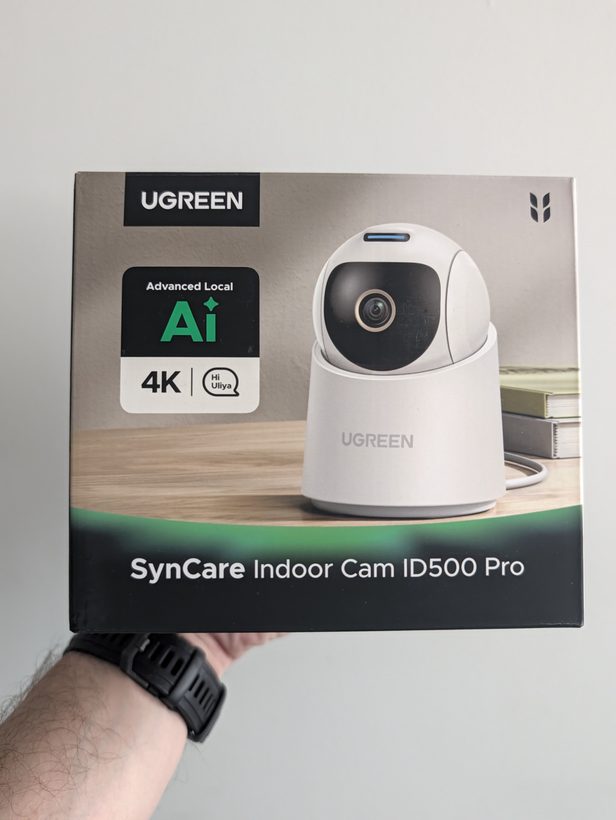
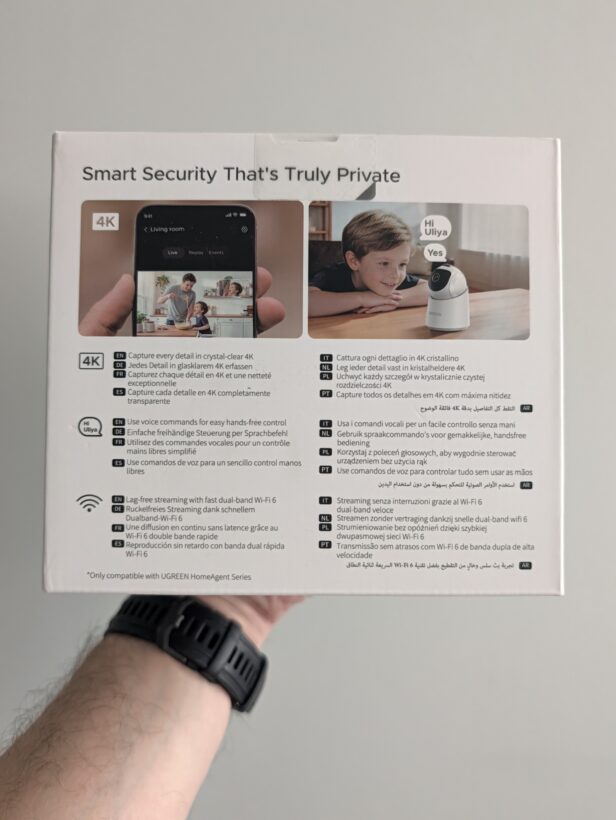
I’ve got the review units already, HA100, the SynCare ID500 Pro, and the OD600 Pro, sitting at home waiting for a proper multi-week test, and that’s going to be its own piece once I’ve actually lived with them. This one’s about what UGREEN put in front of a stadium full of press this week: three hub tiers, three cameras, a speaker, and a photo frame, and the chip story underneath it all is worth the length on its own.
Three boxes, three unrelated chips
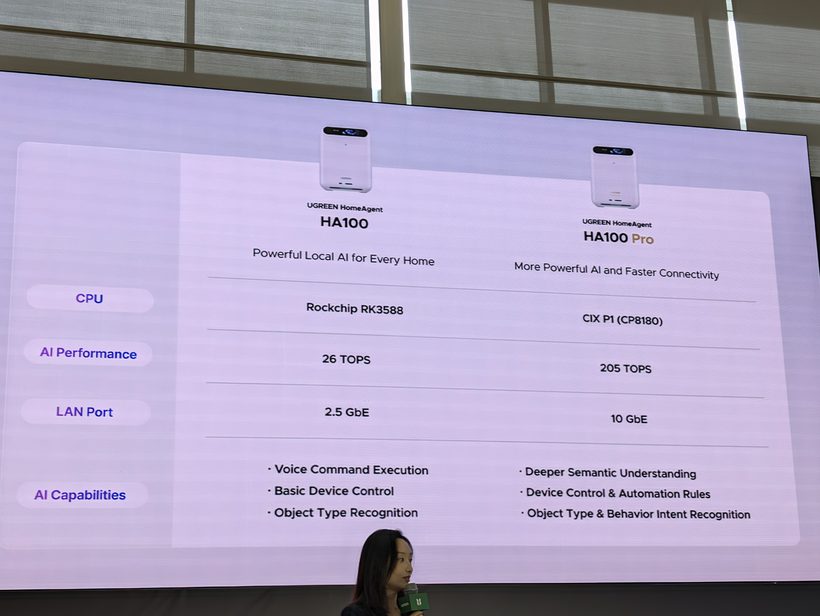
Here’s the thing that would be a minor footnote in most product launches, but is the entire premise of this one: HA100, HA100 Pro, and MA100 don’t share a processor family. They’re not a small/medium/large tier of the same silicon the way a phone maker ships a base chip and a “Pro” bin of the same die. UGREEN picked three completely different companies’ Arm platforms and built a different logic board around each one, part of the same industry-wide scramble toward on-device inference that’s reshaping edge silicon roadmaps everywhere this year.
| HA100 | HA100 Pro | MasterAgent MA100 | |
|---|---|---|---|
| Platform | Rockchip RK3588 | CIX P1 CP8180 | NVIDIA Jetson Thor T5000 |
| CPU | 8-core Armv8.2-A: 4x Cortex-A76 @2.4GHz + 4x Cortex-A55 @1.8GHz | 12-core Armv9.2-A: 4x Cortex-A720 @2.6GHz + 4x Cortex-A720 @2.4GHz + 4x Cortex-A520 @1.8GHz, 12MB L3 | 14-core Arm Neoverse-V3AE, clock undisclosed |
| GPU | Mali-G610 MC4 | Immortalis-G720 MC10 | 2,560-core NVIDIA Blackwell, 5th-gen Tensor Cores, up to 1.57GHz |
| Native NPU | Triple-core, 6 TOPS (INT4/INT8/INT16/FP16/BF16/TF32) | 30 TOPS NPU | No separate NPU; AI runs through the Blackwell GPU/Tensor Cores |
| Add-on accelerator | UGREEN T20 card (Rockchip RK1828, 5GB memory, 20 TOPS) | Unnamed accelerator, 160 TOPS | N/A, it’s already an AI-first module |
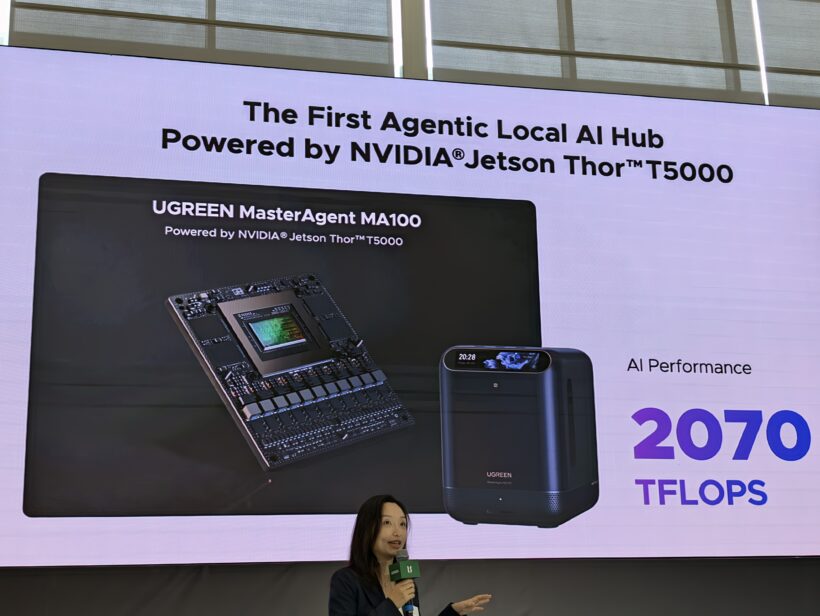
| Advertised total AI compute | 26 TOPS | 205 TOPS | Up to 2,070 FP4 sparse TFLOPS |
| Memory | 16GB LPDDR5 | 32GB LPDDR5 | 128GB 256-bit LPDDR5X, 273GB/s bandwidth, one unified pool |
| System drive | 64GB eMMC | 128GB NVMe | 256GB NVMe |
| Storage bays | 3x SATA (2 NAS + 1 NVR), 1x PCIe 3.0 x1 M.2 | 3x SATA (2 NAS + 1 NVR), 1x PCIe 4.0 x4 M.2 | 4x SATA (3 NAS + 1 NVR), 2x PCIe 3.0 x4 M.2 |
| Network | 2.5GbE | 10GbE | 10GbE |
| Camera PoE | 4x 10/100Mbps | 4x 10/100Mbps | 4x Gigabit |
| Power draw | Not stated | Not stated | Jetson Thor module rated 40W to 130W |
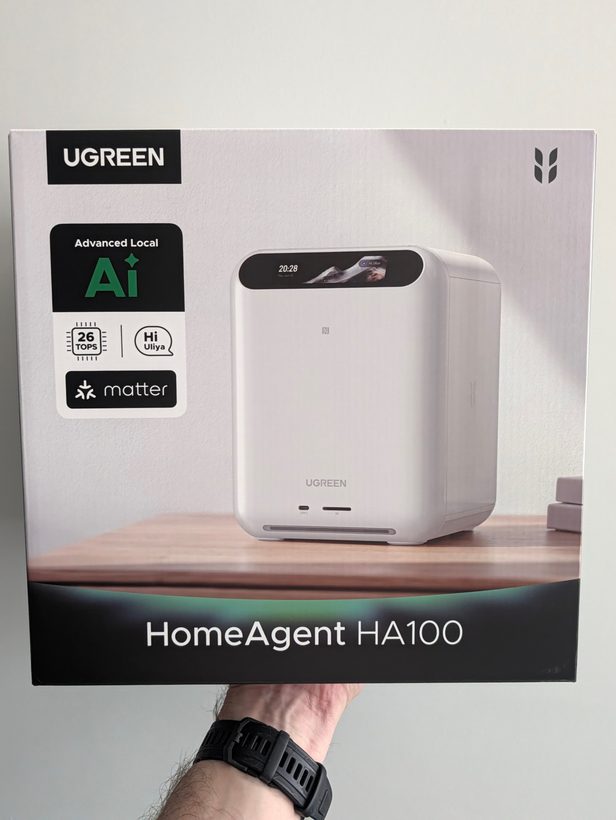
Start with the HA100, since that’s the one I’ll actually have running soon. Rockchip’s RK3588 is not exotic. It’s an 8nm chip that’s been in mass production since 2022 and shows up in half the ARM single-board-computer world: Radxa’s Rock 5B, Orange Pi 5, a long list of AliExpress NVR boxes. Four Cortex-A76 cores for anything heavy, four Cortex-A55 cores for the rest, a Mali-G610 GPU handling 8K video decode, and a built-in triple-core NPU that Rockchip rates at 6 TOPS. On its own, that NPU is enough for the vision-recognition side of HomeAgent, the person/vehicle/pet/package detection running against your camera feeds. It is not enough to run a language model without the whole system grinding to a halt, and that’s where the second chip comes in.
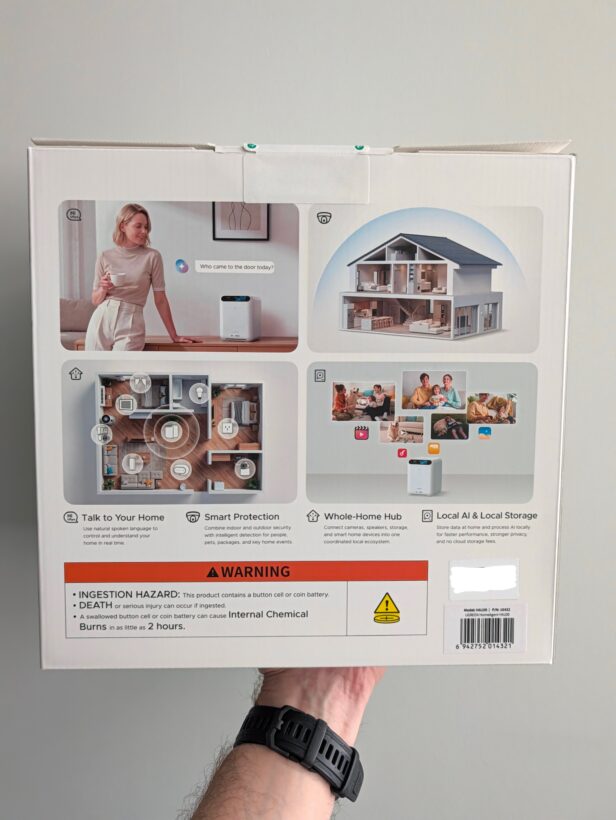
UGREEN’s T20 accelerator card is built around Rockchip’s RK1828, a part that only started mass production this year, and it’s a genuinely strange piece of engineering for a $900 consumer box. Rockchip and memory maker GigaDevice co-developed a custom 3D-stacked DRAM package for it, stacking memory directly on top of the compute die and wiring it through tens of thousands of through-silicon vias instead of a shared system bus. That gets you close to a terabyte per second of memory bandwidth on a chip that draws around 5 watts and needs no fan, with 5GB of that stacked memory dedicated entirely to running the Uliya voice model. Rockchip’s own benchmarks, plus third-party dev-kit numbers from Firefly and Geniatech, show it’s bad at computer vision, no real advantage over the RK3588’s own NPU there, and very good at one thing: feeding a 7-billion-parameter class language model fast enough that a voice assistant doesn’t feel like it’s thinking. That’s the whole design brief, and it’s the same dual-brain logic I’ve seen other hardware makers reach for when one chip has to handle real-time sensing and a second, unrelated chip has to handle language. Add the RK1828’s 20 TOPS to the RK3588’s 6, and you get the 26 TOPS UGREEN advertises, though I’d flag that combined-TOPS marketing math the same way I’d flag it from any Arm SoC vendor: it’s two different chips doing two different jobs off two separate memory pools that never touch each other, not one number describing one thing.
The HA100 Pro is where this launch stopped being “budget local AI box, better local AI box” and started being genuinely confusing, in a way I don’t think is resolved yet. It’s not a faster RK3588. It’s a completely different platform, CIX’s P1 CP8180, a 12-core Armv9.2-A chip with a three-tier core layout (four fast Cortex-A720s, four medium Cortex-A720s, four efficiency Cortex-A520s) and an Immortalis-G720 GPU, the same silicon family Radxa uses in some of its newer single-board computers. Its native NPU is rated at 30 TOPS on its own, five times the HA100’s bare NPU. But UGREEN’s advertised “205 TOPS” for the Pro tier requires adding a second accelerator rated at 160 TOPS that nobody- not UGREEN’s own materials, not the CIX platform documentation- has publicly identified. I asked about it directly and didn’t get a part number back, which either means it’s a board-integrated component UGREEN hasn’t named yet or something I’ll need to chase down separately before the hands-on review.
Then there’s MasterAgent MA100, and this is the one I keep coming back to. NVIDIA built the Jetson Thor platform for humanoid robots and industrial AI, not living rooms, and UGREEN put it in a home NAS box anyway. The T5000 module packs a 14-core Arm Neoverse-V3AE CPU, server-grade Neoverse cores, not the Cortex-A parts in the other two boxes, alongside a 2,560-core NVIDIA Blackwell GPU with fifth-generation Tensor Cores clocked up to 1.57GHz, all sharing a single 128GB pool of 256-bit LPDDR5X memory at 273GB/s. NVIDIA rates the whole module at up to 2,070 FP4 sparse TFLOPS across a 40 to 130-watt power envelope, and I want to be precise about what that number means: FP4 sparse TFLOPS is a floating-point throughput figure measured under specific sparsity assumptions, and it is not directly comparable to the HA100’s or HA100 Pro’s INT8-flavored TOPS totals. Anyone doing straight division between 2,070 and 26 to produce a “roughly 80x faster” headline is doing math on numbers that were never meant to be divided against each other. What is directly comparable is the memory architecture, and there the gap is real and unambiguous: MA100 pools 128GB as one block the whole system draws from, while HA100 splits 16GB and 5GB into two chips that never share a byte.
Building an actual home server around a robotics module was clearly a lot of extra work, and UGREEN did the work: 4 SATA bays instead of 3 (three general NAS bays plus the dedicated NVR bay), two PCIe 3.0 x4 M.2 slots, a 256GB NVMe boot drive, 10GbE, HDMI 2.1 capable of 8K at 60Hz or 4K at 120Hz (a spec that exists for exactly zero home-server use cases I can think of, but there it is), and four full-Gigabit PoE ports for camera power instead of the Fast Ethernet ports the two HA100 models make do with. It’s a legitimately overbuilt machine, based on the unit I stood next to. Whether “overbuilt machine built around a chip designed to help a robot understand a room” is the right description for a $10,000 to $20,000 home appliance is a separate question, and I’m getting to the pricing in a minute.
The cameras got real differentiation, which I wasn’t expecting
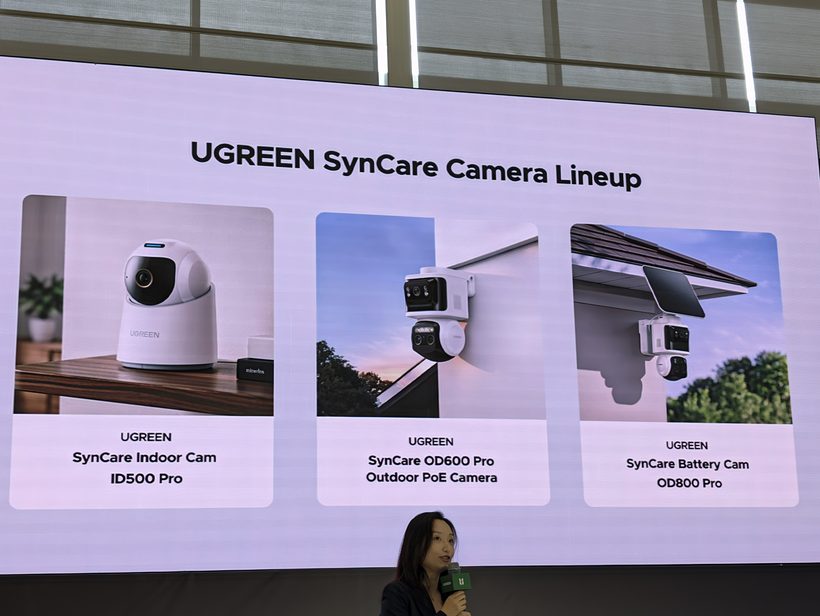
I went into this assuming the three SynCare cameras would be the same sensor in three shells with different price stickers, the way most camera-brand lineups work. They’re not.
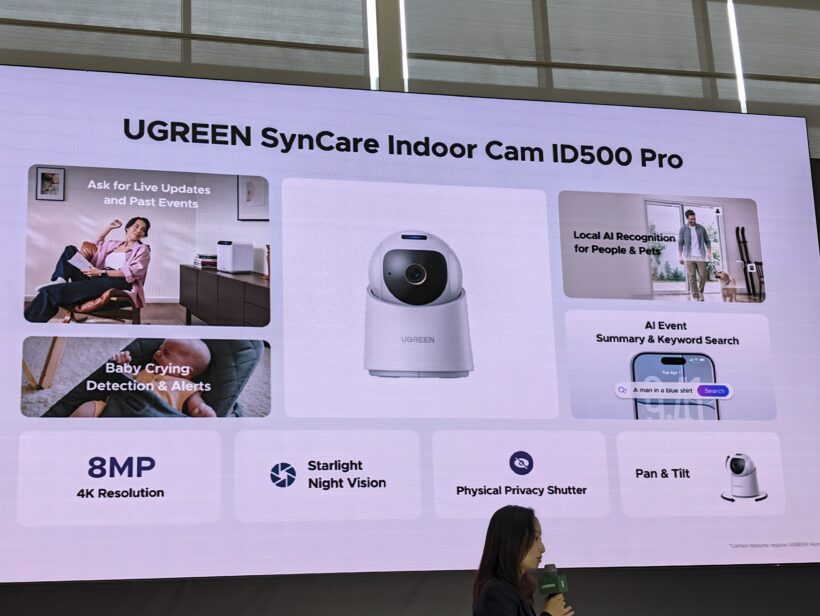
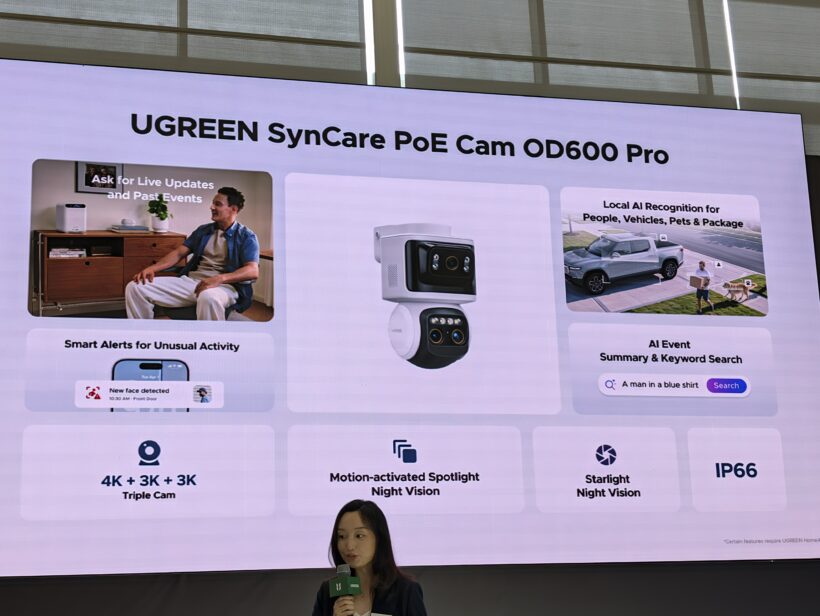
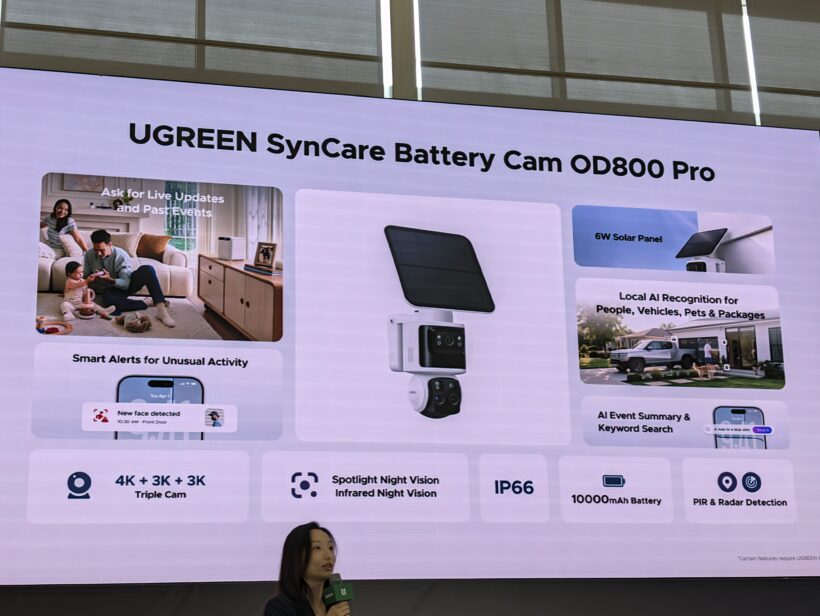
| ID500 Pro (indoor) | OD600 Pro (outdoor, PoE) | OD800 Pro (outdoor, solar) | |
|---|---|---|---|
| Cameras | Single 8MP 4K, 4mm F1.6 | 8MP 4K bullet + dual 5MP 3K PTZ, 3.2/4/12mm F1.6, 9x hybrid zoom | Same triple-lens arrangement as OD600 Pro, 9x hybrid zoom |
| Movement | 360° pan, 111° tilt | Bullet tilt-only, PTZ module pans and tilts | Same as OD600 Pro |
| Night vision | Starlight full-color | Motion-activated spotlight + starlight | Spotlight + infrared |
| Detection | People and pets, AI motion tracking | People, vehicle, pet, package | Same, plus PIR and radar fusion |
| Power | DC 5V/2A | PoE or DC 12V/1.5A | Detachable 10,000mAh battery + 6W solar panel |
| Deterrent | None | 106dB siren + flashing light | 103dB siren + flashing light |
| Rating | Indoor only | IP66 | IP66 |
| Extra | Physical privacy shutter | Waterproof PoE connector kit included | No wired option at all |
The ID500 Pro is the conventional one, and even it’s overspecced for an indoor cam at this price tier: 8MP is above what most TP-Link or Wyze indoor cameras run, and the physical privacy shutter is a real mechanical cover, not a software “privacy mode” that still leaves the sensor capturing frames behind a black rectangle in the app. It’s one of the two I’ll be living with for the actual review.
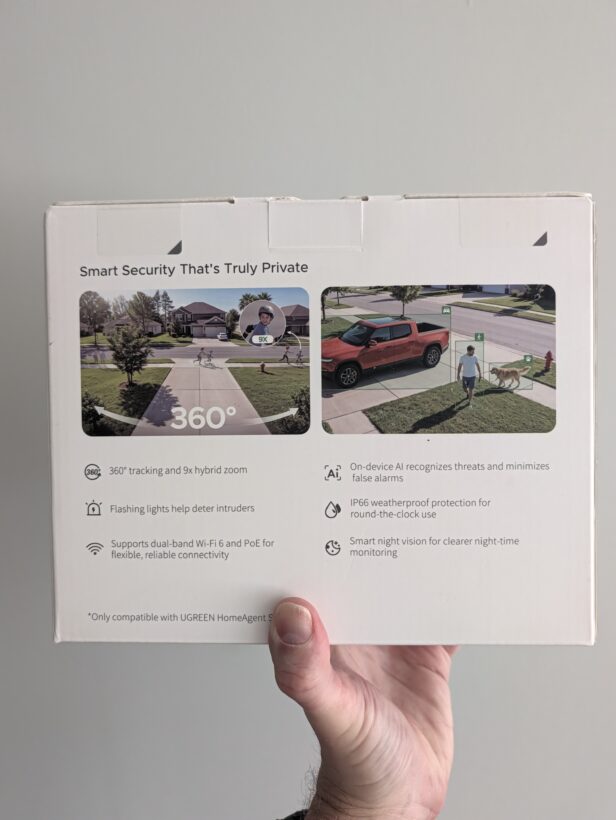
The two outdoor cameras are the more interesting design decision. Both use a three-lens rig, one fixed 8MP wide bullet camera bolted to a separate 5MP-times-two PTZ head underneath, giving you a static wide view and an independently steerable zoomed view from the same physical unit, up to 9x hybrid zoom on the PTZ side. That’s unusual for this price bracket; it means the wide shot never loses coverage while the PTZ module chases a person walking across the yard, instead of the more common approach where one camera has to choose between wide coverage and zoomed tracking at any given moment. My review unit is the OD600 Pro, the PoE version with a proper spotlight-plus-starlight night vision mode and a 106dB siren, meant to be hardwired and left alone. The OD800 Pro swaps the wired connection for a detachable 10,000mAh battery and a 6W solar panel, drops the deterrent siren slightly to 103dB, and adds radar-plus-PIR fusion, but that one’s not in my hands, so I’m working entirely from UGREEN’s spec sheet.
The speaker and the frame are the parts nobody’s fighting over
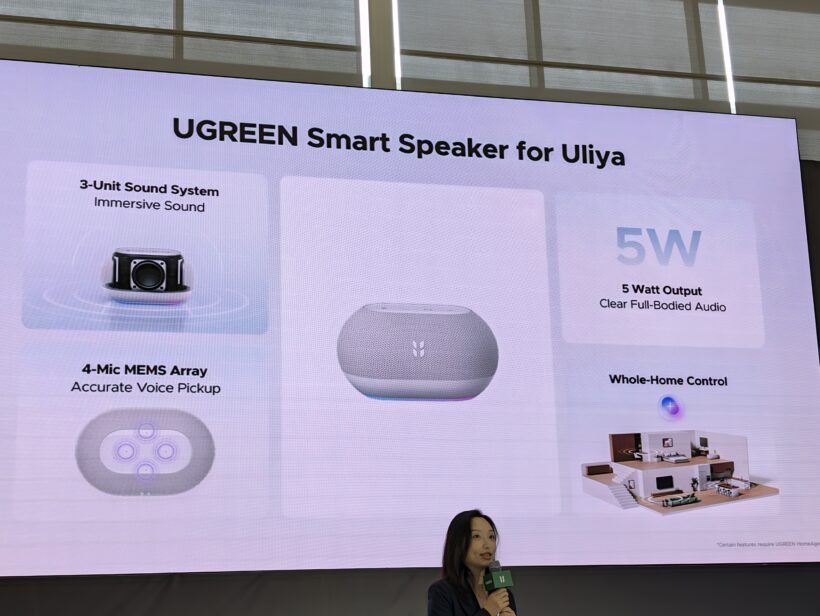
The Uliya speaker is a three-driver unit with 5 watts of audio output, a four-microphone MEMS array, and it exists mainly as a relay: say “Hi Uliya” from a room the hub can’t hear, and the speaker passes your command along the local network. UGREEN hasn’t published its wireless standard, input power, or supported audio codecs yet, which is a strange gap for a device shipping this week, but the functional pitch is simple enough that it doesn’t need much more explaining. $69 early-bird, $99 at retail, putting it right in the same size and price bracket as an Amazon Echo Show 5 with the screen removed.
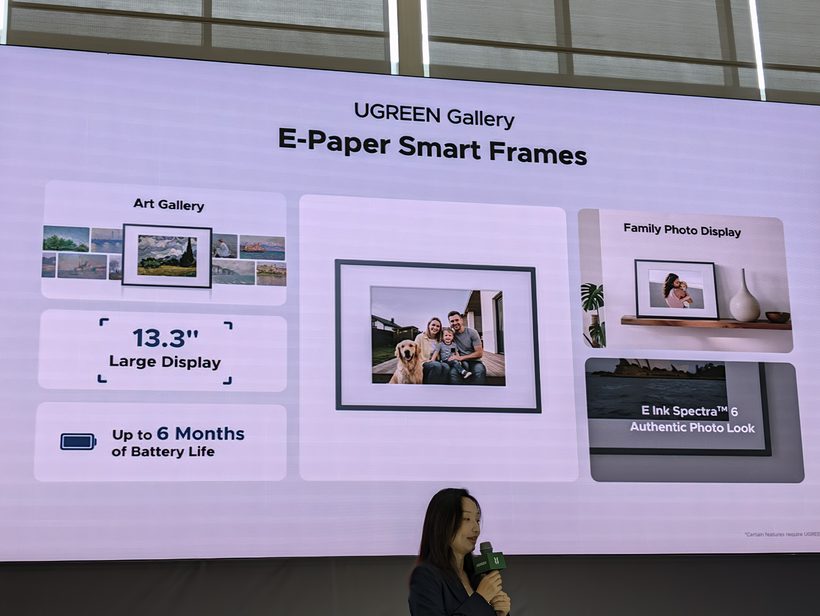
The Gallery frame is the one product in this lineup I’d actually recommend to someone with zero interest in the rest of the ecosystem. A 13.3-inch E Ink Spectra 6 color panel, 1600×1200 at 150dpi, the same underlying resolution and panel class as the Aura Carver and other higher-end e-paper frames already on the market, except this one pulls its slideshow from a HomeAgent library instead of a subscription cloud service. No backlight, near-zero standby draw, a 10,000mAh battery UGREEN claims lasts roughly six months on a once-a-day refresh, and a MicroSD slot up to 512GB for anyone who wants it to work completely offline, with zero dependency on the rest of the ecosystem being turned on. $299 early-bird, $439 retail, squarely in line with what other E Ink frames of this size already cost.
The money, finally
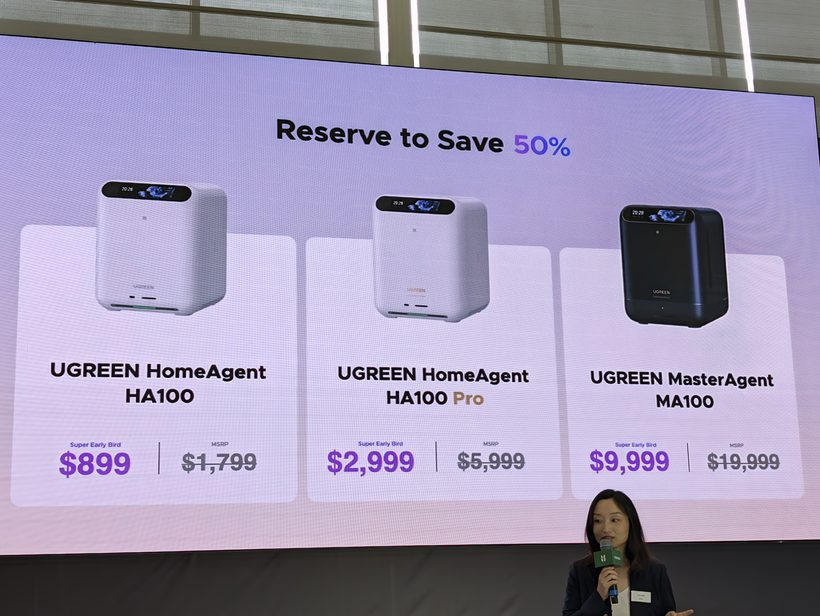
Here’s the full spread, because after weeks of “TBD” on every price line, UGREEN put real numbers on all eight products this week.
| Product | Early-bird | MSRP |
|---|---|---|
| HomeAgent HA100 | $899 | $1,799 |
| HomeAgent HA100 Pro | $2,999 | $5,999 |
| MasterAgent MA100 | $9,999 | $19,999 |
| SynCare ID500 Pro | $89 | $149 |
| SynCare OD600 Pro | $159 | $269 |
| SynCare OD800 Pro | $199 | $399 |
| Smart Speaker for Uliya | $69 | $99 |
| Gallery E-Paper Frame | $299 | $439 |
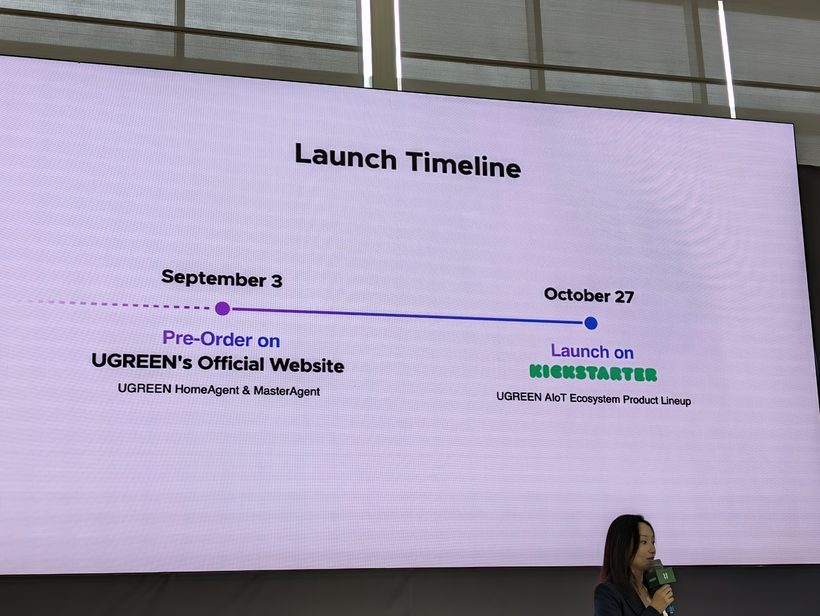
UGREEN opened deposit reservations on its own site today, holding that early-bird pricing until October 27, when the entire HomeAgent AIoT range moves to a Kickstarter campaign running through the end of the year. Shipping is targeted for January 2027.
The cloud-subscription-versus-one-time-cost argument I heard in Boston is real, not just marketing spin; storage subscriptions genuinely add up over years, but it gets weaker fast the further up the lineup you go. The HA100 at $899, or even $1,799 at full retail, is a real number for a NAS-plus-camera-hub-plus-voice-assistant that also replaces a Ring subscription and a Google Photos plan. The MA100 at $9,999 early-bird, climbing to $19,999 at retail, is enterprise-workstation money for a device that, as far as I could tell standing next to it in Foxborough, wasn’t turned on for anyone that day.
I like this launch more than I expected. Three genuinely different chip platforms in three genuinely different price tiers, each one clearly chosen for what it’s supposed to do rather than binned off the same die to hit a price point, is more engineering honesty than I usually get from a “smart home ecosystem” announcement. The camera lineup earned its price differences instead of just painting the same board in three colors.
So as I mentioned, stay tuned, as an early review might come sooner than you might think.
Additional Photos: