Phytium Has Shipped 13 Million Arm Chips. Almost Nobody Chose Them.
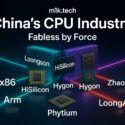
By the end of 2025, Phytium shipped over 13 million processors, primarily to Chinese government entities, driven by mandates rather than market demand. Despite…
Zhaoxin, a joint venture with VIA Technologies, holds a unique position as China's lone x86 chipmaker without U.S. sanctions. Despite being behind in technology,…
The article discusses the challenges faced by Chinese CPU companies due to reliance on foreign technology and sanctions. It outlines five key players navigating…
TSMC is raising prices across every node, even mature 7nm. Why this semiconductor cost reset is structural, what's driving it, and who bleeds most.
In 2005, SMIC, China’s semiconductor champion, faced a dramatic journey, building advanced fabs with foreign technology while accumulating losses. Despite early successes and optimism…
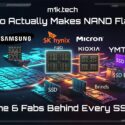
In 2026, storage prices are rising due to DRAM and NAND shortages, pushing some companies toward failure. Most brands are assemblers rather than manufacturers,…
Intel 14A uses High-NA EUV and may not be built at all unless outside foundry customers commit, the node where Intel Foundry either becomes…
Intel 20A was the leadership node carrying RibbonFET and PowerVia, until Intel cancelled it in 2024 to save 18A, and built Arrow Lake at…
Intel 3 marks a pivotal point in Intel's strategy, serving as its first foundry node designed for external customers. As the company aims to…
SMIC 5nm means leading-edge logic on DUV at punishing cost, driven by China's need to build Huawei's Ascend AI chips after the US banned…
Intel 4 is the company's first EUV node, in Meteor Lake, finally adopting the lithography Intel refused at 10nm and that the foundries shipped…
SMIC 7nm shipped in the Huawei Mate 60 Pro's Kirin 9000S, a DUV-built chip that proved export controls could not cap China at 14nm.…
Samsung 3nm beat TSMC to gate-all-around with its MBCFET transistor, but poor yields and thin customers meant the world's first GAA node barely mattered.
Samsung 4nm built the Snapdragon 8 Gen 1, which ran so hot Qualcomm moved the refresh to TSMC, where the same chip ran cooler.…
Intel 7 renamed the 10nm node, Alder Lake brought Intel back, and Gelsinger's IDM 2.0 turned the company that disdained foundry work into a…
One maker's tech digest, weekly. Chips, AI, gaming, EVs — no spam.